




























Slovenia faces political uncertainty after near-final results show Robert Golob’s Freedom Movement and Janez Janša’s SDS virtually tied in parliamentary vote held on Sunday.
Slovenia's ruling liberals and the main right-wing party were tied, according to nearly-final preliminary figures from Sunday's parliamentary election.
 ADVERTISEMENT
ADVERTISEMENT
ADVERTISEMENT
After tallying about 99% of the votes, the State Election Commission reported the centre-left Freedom Movement, led by Prime Minister Robert Golob, received 28.5% of the vote, while the right-wing Slovenian Democratic Party (SDS) led by former Premier Janez Janša received 28.1%.
With the nearly equal results, none of the main parties will have a majority in the 90-member parliament, and whoever forms a future government will have to depend on smaller parties that will act as kingmakers.
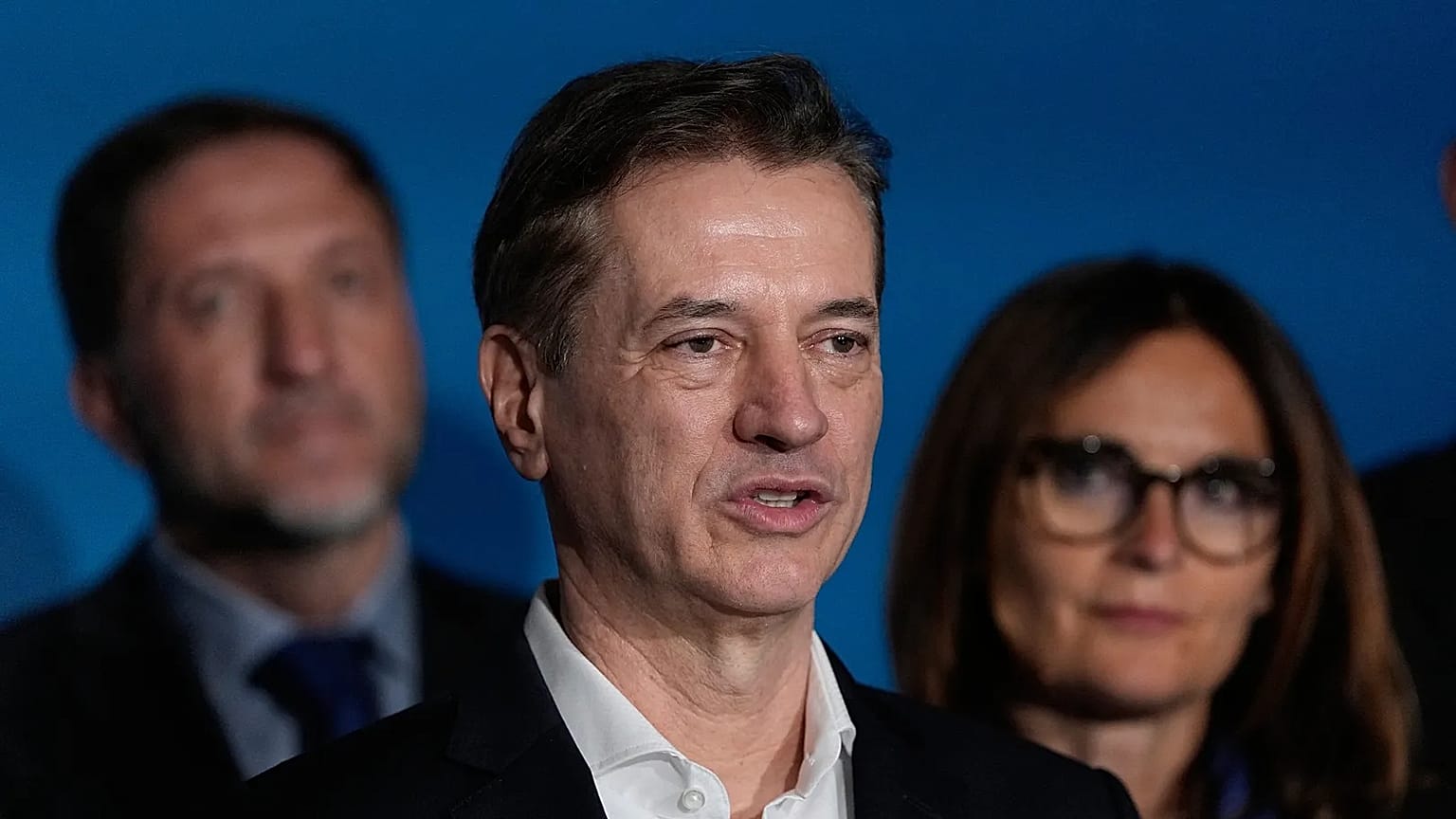
Speaking after the results were released, Golob expressed confidence his party will form the next government.
"Thank you to all of you, who have worked hard since last year, four years. To all of you who have fought in parliament for four years. To all of you who have done this campaign so that we could repeat our mandate," Golob told his supporters.
Polls reflect deep divisions
The vote on Sunday reflects deep divisions among Slovenia's 1.7 million eligible voters.
Golob’s government has been a strong liberal voice in the 27-member EU. SDS leader Janša, a close ally Hungarian Prime Minister Viktor Orbán, has platformed on patriotic messaging.
The vote came after an election campaign marred by claims that a string of secret video recordings showing alleged government-tied corruption aimed to sway the voters.
Authorities have opened an investigation into allegations that Janša’s party and a private foreign agency were linked to the recordings. Janša denied the allegations of election interference.
The company, run by two former Israeli intelligence agents, has been involved in a number of controversies over the years, including an undercover operation on behalf of the film mogul Harvey Weinstein to discredit his accusers in multiple sexual abuse cases, allegations it denies.
A former energy company manager, 59-year-old Golob and his party were seen in 2022 as a new hope for disillusioned voters.
The government, however, has since been shaken by a series of reshuffles, problems with health care reform, and frequent changes in tax policy.
Internationally, Golob’s government has taken a strongly pro-Palestinian stance, recognising the Palestinian state in 2024 and banning top Israeli officials from entry.
Janša, on the other hand, has strongly criticised the recognition of Palestine.
Slovenia, an Alpine nation of 2 million people, joined NATO and the EU in 2004 after declaring independence from the former Yugoslavia in 1991.