


















Spring is coming to Brussels, but all your reporter hears when he goes outside are three letters: ETS. That is because ten EU countries are in open revolt against the bloc's flagship climate policy. But hold on: what actually is the ETS, and why is there such a massive backlash against it?
ETS, so Emissions Trading System, is essentially Europe's carbon market.
 ADVERTISEMENT
ADVERTISEMENT
ADVERTISEMENT
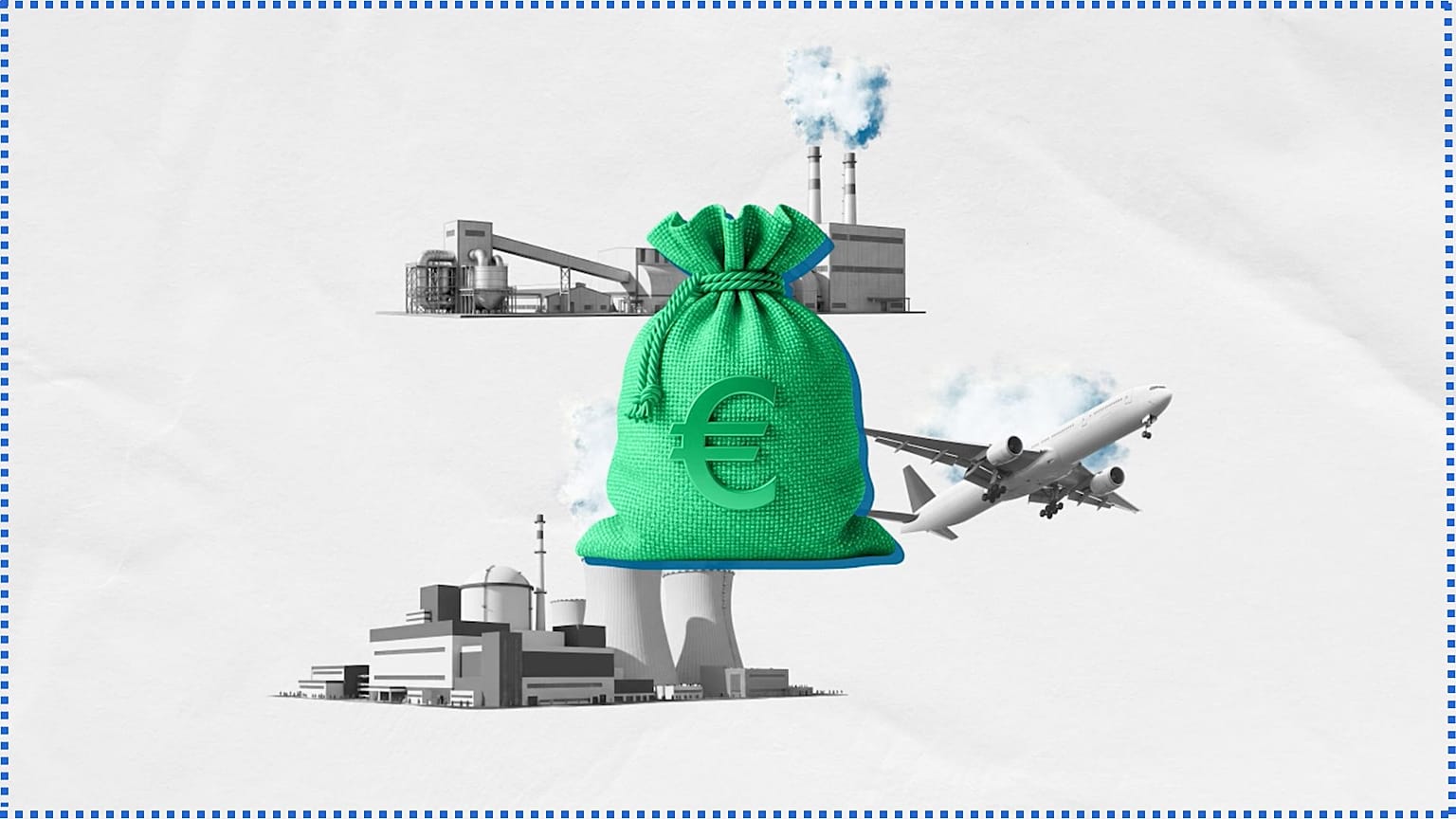
It works on a simple "polluter pays" principle. Heavy industries, power plants, and airlines must buy allowances to cover the carbon they emit into the atmosphere.
It is used for two main goals: to force companies to cut their greenhouse gas emissions, and to push them to invest in sustainable, green technologies.
Since 2005, the ETS has slashed greenhouse gas emissions by 39 percent and has generated over 260 billion euros to fund clean energy.
But 10 member states, including Italy, Poland, and Austria, say the system is moving too fast. Italian Industry Minister Adolfo Urso even called the ETS a tax with a "perverse effect," warning it prevents Europe from competing globally.
And critics argue that with energy prices already soaring from the war in Iran, adding high carbon costs creates an existential risk for European businesses.
The chemical sector alone reports that over 100 facilities have shut down, wiping out 75,000 jobs.
Now, they are issuing an ultimatum. Italy is pushing to suspend the system entirely and the rest demand the EU extend free carbon allowances beyond 2034.
Look - I know all of that sounds technical but one thing is clear: the energy transition is no longer just a climate goal. It has become a battle for European security and industrial survival.
Watch the Euronews video in the player above for the full story.