













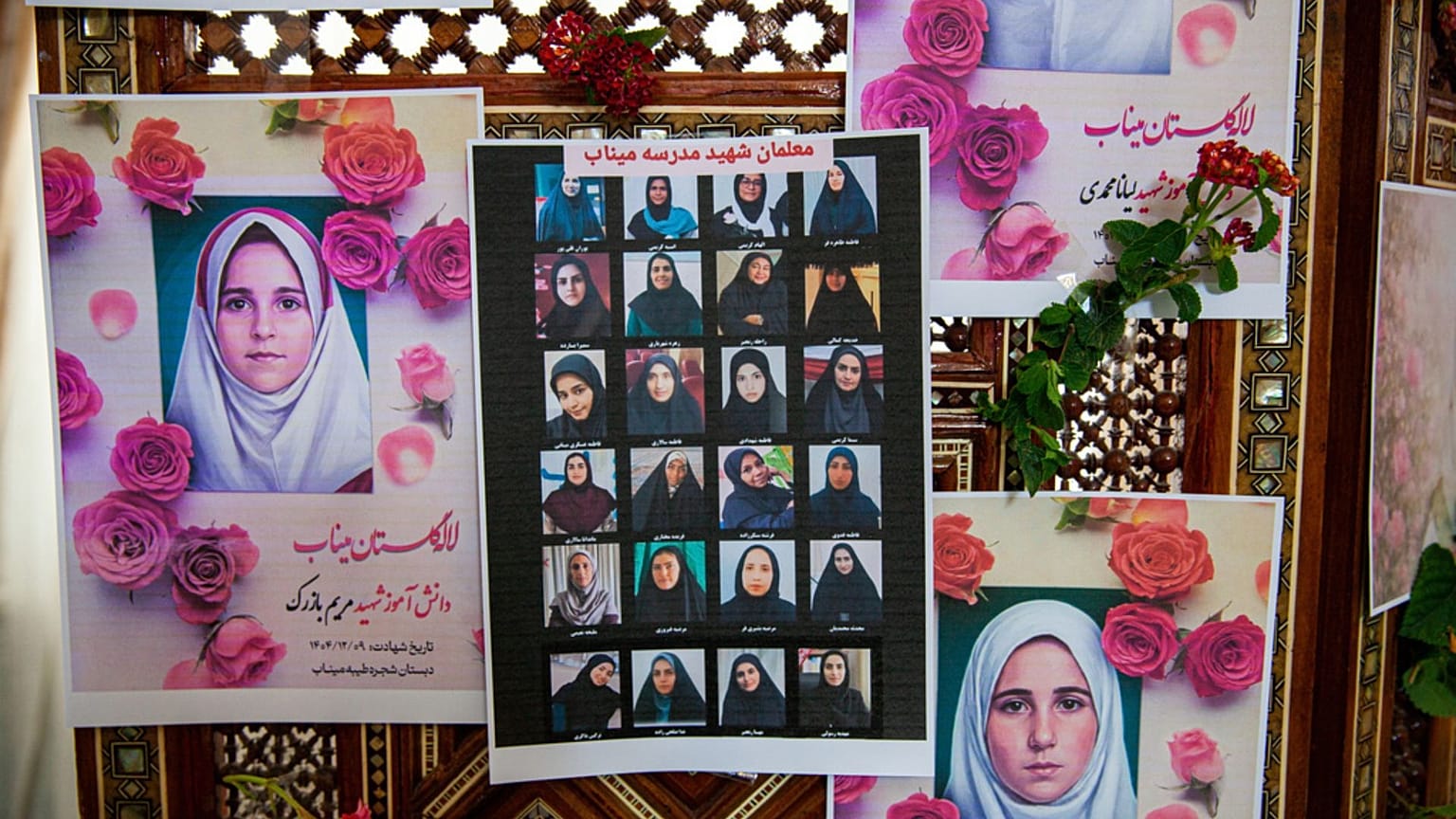














Conflicting narratives have emerged following the bombing of a school in Iran amid US-Israeli strikes in the country. The Cube breaks down satellite images and news reports that claim to show what happened.
A missile strike that hit the Shajarah Tayyebeh primary school in southern Iran, killing more than 170 people, has sparked international outrage as the Iran war continues.
 ADVERTISEMENT
ADVERTISEMENT
ADVERTISEMENT
UNESCO called it a "grave violation of humanitarian law", with authorities and news outlets widely labelling it the deadliest attack of the conflict so far.
The US and Iran were quick to point the finger at each other, with an investigation into what exactly happened and who is responsible underway.
Euronews' fact-checking team, The Cube, looked at satellite imagery and news reports to dissect how the events leading up to and following the tragedy have unfolded.
The timeline
The school was struck in the morning of 28 February, with reports from Iranian state media stating that more than 100 children were among those killed.
It happened at the same time as an attack on an adjacent naval base run by the Islamic Revolutionary Guards Corps (IRGC), with satellite imagery showing that they are in proximity to each other.
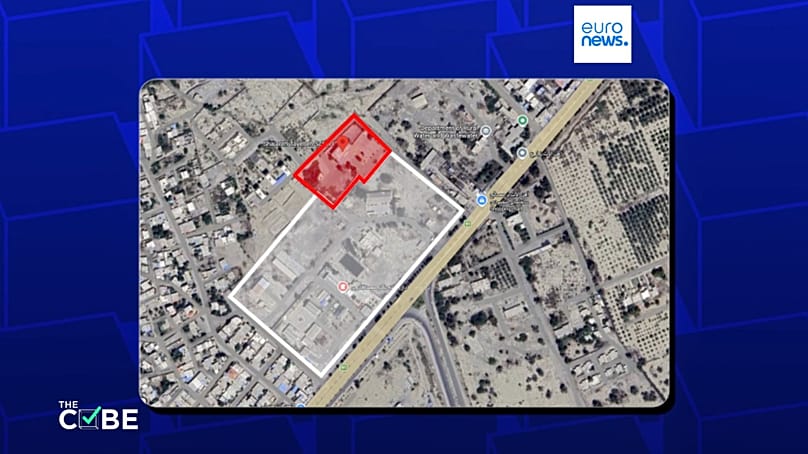
Official statements by US forces show that they were attacking naval bases in the area, suggesting that they were likely to have targeted this base, too.
During a 3 March briefing, US Central Command said that its attack on Iran — dubbed Operation Epic Fury — prioritised the destruction of IRGC command and control centres along the Hormozgan coastline in the country's south, to prevent them from closing the Strait of Hormuz.
Videos show that the strikes used Tomahawk missiles, and the US is the only country involved in the conflict that uses them — they are not generic missiles, as US President Donald Trump claimed.
"Well, I haven't seen it, and I will say that the Tomahawk, which is one of the most powerful weapons around, is sold and used by other countries," Trump said during a 9 March press conference. "And whether it's Iran — [who] also has some Tomahawks, they wish they had more — but whether it's Iran or somebody else, the fact that a Tomahawk... a Tomahawk is very generic. It's sold to other countries."
Contrary to the president's claims, the only countries aside from the US that use or have purchased Tomahawk missiles are Australia, Japan, the Netherlands and the UK, none of which are participating in the war in Iran.
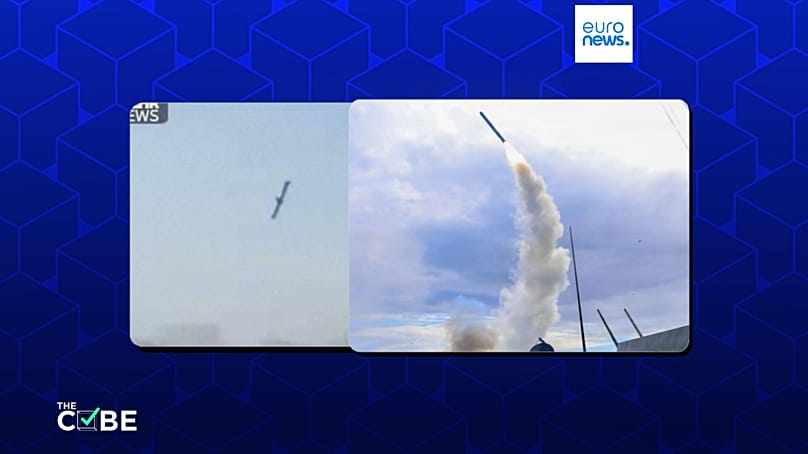
The investigative group Bellingcat, which also geolocated the footage released by Iran's semi-official Mehr News, said that the video appears to contradict Trump's claim that Iran was responsible.
The school, it reported, was likely struck by a Tomahawk missile amid a quick succession of bombs dropped on the compound.
Who blames whom?
Nevertheless, Trump has attempted to blame Tehran for the attack. "Based on what I've seen, that was done by Iran," he said on 7 March. "We think it was done by Iran because they are very inaccurate, as you know, with their munitions. They have no accuracy whatsoever. It was done by Iran."
US Secretary of Defence Pete Hegseth, meanwhile, said that the US is doing everything in its power to make sure civilians aren't targeted, and that it will thoroughly investigate any reports to the contrary.
Iran has blamed the US and Israel, with Foreign Minister Seyed Abbas Araghchi stating that such "crimes against the Iranian People will not go unanswered".
Israel, meanwhile, which has been the US's key partner in the war in Iran, has denied any involvement in the strike on the school.
"We have checked multiple times and have found no connection between the IDF [Israel Defense Forces] and whatever happened in that school,” Israeli military spokesman Lieutenant Colonel Nadav Shoshani said.
US at fault, says prelim report
However, the New York Times published an article on 11 March stating that a preliminary investigation found that the US was indeed at fault for the strike on the school.
People familiar with the probe, including US officials and others briefed on it, reportedly said that the school was hit by mistake due to outdated targeting data from the Defence Intelligence Agency, which wrongly labelled the school as a military target.
The investigation is still ongoing, with the New York Times reporting that questions remain over why old information was used and who failed to verify it.
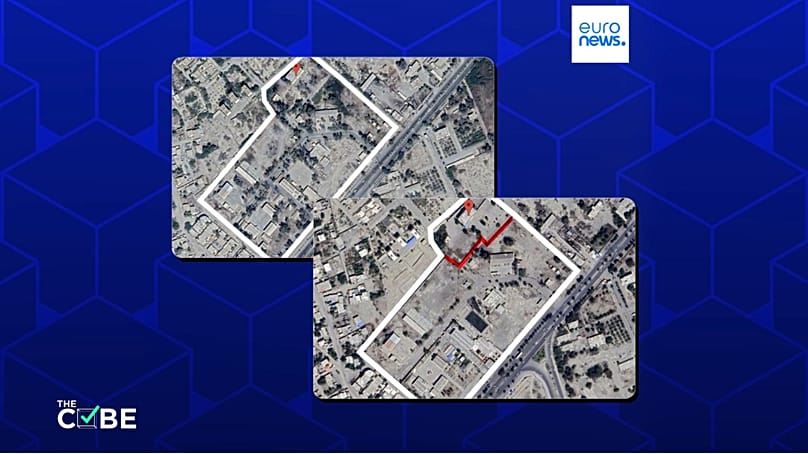
Local news outletsstate that the school was indeed used as a military facility in the past before being converted.
The Cube identified satellite images from 2013 showing it was part of the same compound as the base, but more recent photos reveal that it has since been fenced off.
Questioned about the ongoing investigation, Trump has said that he doesn’t know anything about it, but the president is facing increasing pressure at home over the way he has handled the attack on Iran.
Democrats have decried the "horrifying" attack on the Shajarah Tayyebeh primary school and called for a swift probe into the matter, while European leaders call for maximum restraint and assurances that civilians will not be harmed as the war continues.
What does international law say about schools being near military targets?
Under international humanitarian law, schools are considered civilian objects, alongside other structures such as houses and hospitals, meaning they should be protected from attacks.
The Geneva Conventions state that the parties to a conflict must do their best to protect civilians, which may include moving civilians and civilian objects under their control if they are close to military objectives.
As such, an attack on Shajarah Tayyebeh would be unlawful, according to experts, and raises the question of whether enough precautions were taken to identify it as a school.
“On its face this attack appears unlawful, because either [the perpetrators] knew it was a school and proceeded anyway, or they didn't know because they failed to take all feasible steps to identify the target, which they are obliged to do before attacking” Helen Duffy, professor of international human rights and humanitarian law at Leiden University, told The Cube.
"Even so-called errors can potentially be violations and even war crimes… if there was a reckless approach or a failure to exercise duties of protection," she said. "If there is doubt about the nature of a target, it should be presumed civilian, to safeguard this fundamental rule of civilian protection."
Duffy added, though, that Iran would also have been obliged under international law not to expose civilians to danger by putting them next to legitimate targets.
Indeed, the Geneva Conventions indicate that countries participating in a conflict should avoid locating military objectives near densely populated areas. Under an obligation to protect civilians from harm, warring parties are obliged to take all feasible steps to shield civilians from attacks, including where they locate military objectives.
Nevertheless, even if there was negligence on the Iranian side, law stipulates the school should not have been targeted in the first place.
"International law isn't just an agreement between states, where if one violates, others can too. It is a promise to humanity to protect civilians," Duffy said. "Even if the school shouldn't have been there, it doesn’t change the legal questions, and the apparent unlawfulness and disproportionate civilian harm of attacking in this case."
She also called for a swift, independent investigation into the matter.
"There are international obligations to conduct a prompt, thorough, independent investigation into what happened," she said. "There needs to be safeguards that it will be genuine and independent, and lead to accountability if war crimes were committed."
"We have little reason to be confident at the moment that international law will be respected in this way either."
The Pentagon has opened a formal command investigation into the incident, which is currently ongoing.
- Noa Schumann contributed to this report.
- This article was updated on 18 March to include comments from Helen Duffy.