

















The European Union wants to renew the individual sanctions on Russia by 15 March. But Hungary and Slovakia are blocking the decision. Tensions are running high between the three over the damaged Druzhba oil pipeline.
Hungary and Slovakia are resisting a renewal of sanctions from the European Union on over 2,700 individuals and entities in response to Russia's full-scale invasion of Ukraine, just days before a 15 March deadline as tensions over a damaged oil pipeline drag on.
 ADVERTISEMENT
ADVERTISEMENT
ADVERTISEMENT
Under EU rules, sanctions have to be prolonged every six months by unanimity.
A first attempt to roll over the individual restrictions on Wednesday afternoon during a meeting of ambassadors in Brussels failed to reach a conclusion.
Hungary and Slovakia opposed the decision after their requests to remove a handful of individuals from the sanctions list were denied, several diplomats told Euronews.
The Slovak demand, involving businessmen Mikhail Fridman and Alisher Usmanov, proved particularly controversial in the room. The talks ended without resolution.
Another meeting is scheduled for Friday, when the stakes will be significantly higher.
If the sanctions are not renewed before 15 March, all the blacklisted names, including Russian President Vladimir Putin and his Foreign Minister Sergey Lavrov, will be automatically released. Oligarchs, propagandists and military companies will regain access to millions of funds held across the EU territory.
This is not the first time that Brussels has been in a race against time.
In March last year, Hungary lifted its veto on the renewal of the individual sanctions less than 48 hours before the deadline. A similar scenario played out six months later.
This time, though, there is a new explosive element: the Druzhba pipeline.
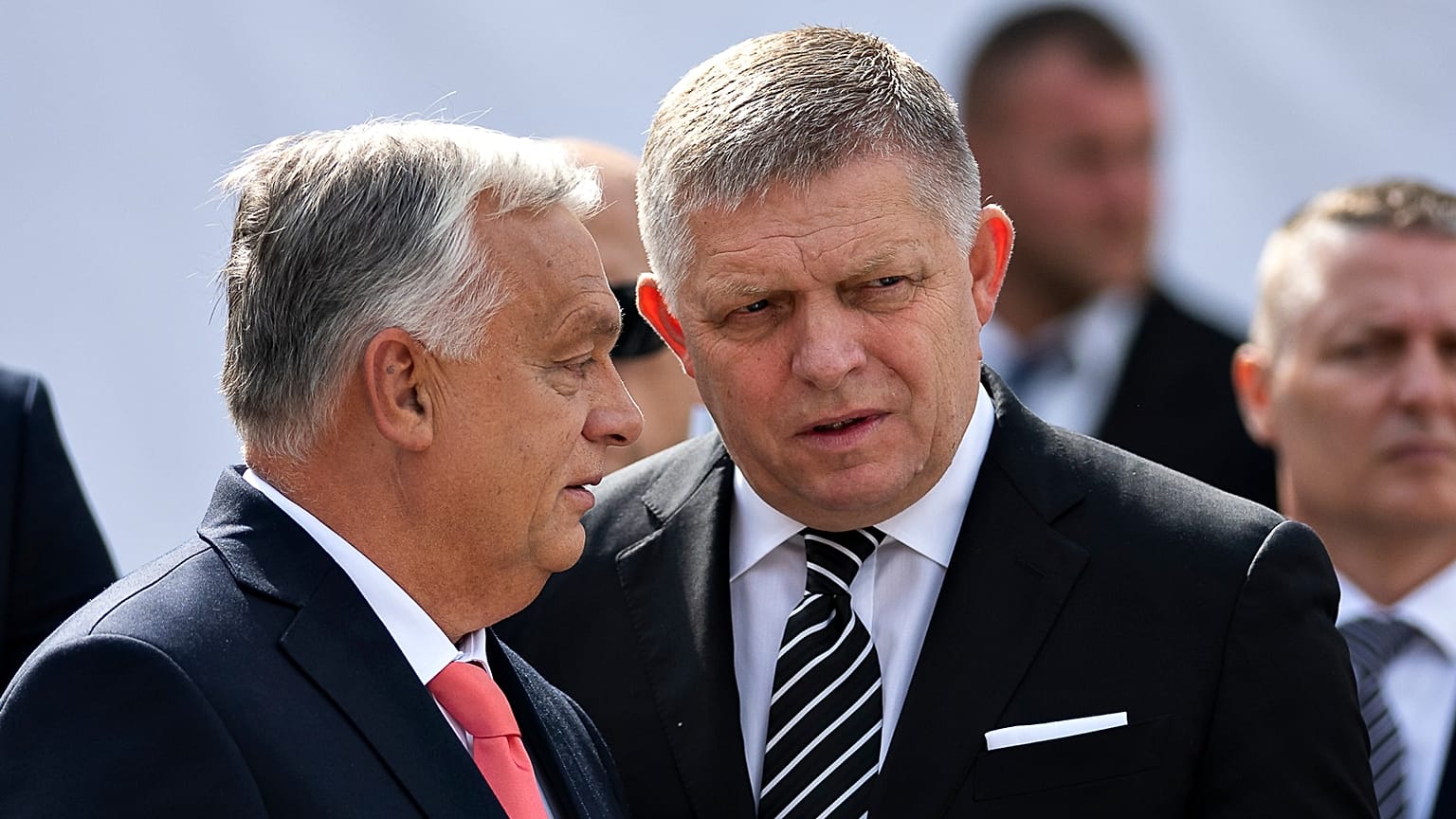
Hungarian Prime Minister Viktor Orbán and Slovak Prime Minister Robert Fico have accused Ukrainian President Volodymyr Zelenskyy of deliberately keeping the pipeline shut for "political reasons". Both insist the conduit is operational.
Zelenskyy counters that the infrastructure was severely damaged by a Russian drone attack on 27 January and has to be repaired, which could take up to one and a half months due to the dangerous conditions on the ground.
The dispute, which escalated dramatically last week, has seen Orbán block a €90 billion loan for Ukraine that EU leaders had agreed in December. Fico said he may maintain the veto if Orbán's party loses the general elections of 12 April.
Caught in the middle, the European Commission has asked Kyiv to accelerate the repairs and Budapest to release the loan. But with Orbán trailing in opinion polls by double digits, the chances of a resolution before the vote are fast decreasing.
Additionally, Hungary and Slovakia are preventing the adoption of a new round of economic sanctions against Russia, which was ready to go before the Druzhba row erupted. The package includes a full ban on maritime services for Russian oil tankers.
In a bid to break the impasse, the Commission is considering providing financial assistance to repair the Druzhba pipeline.