




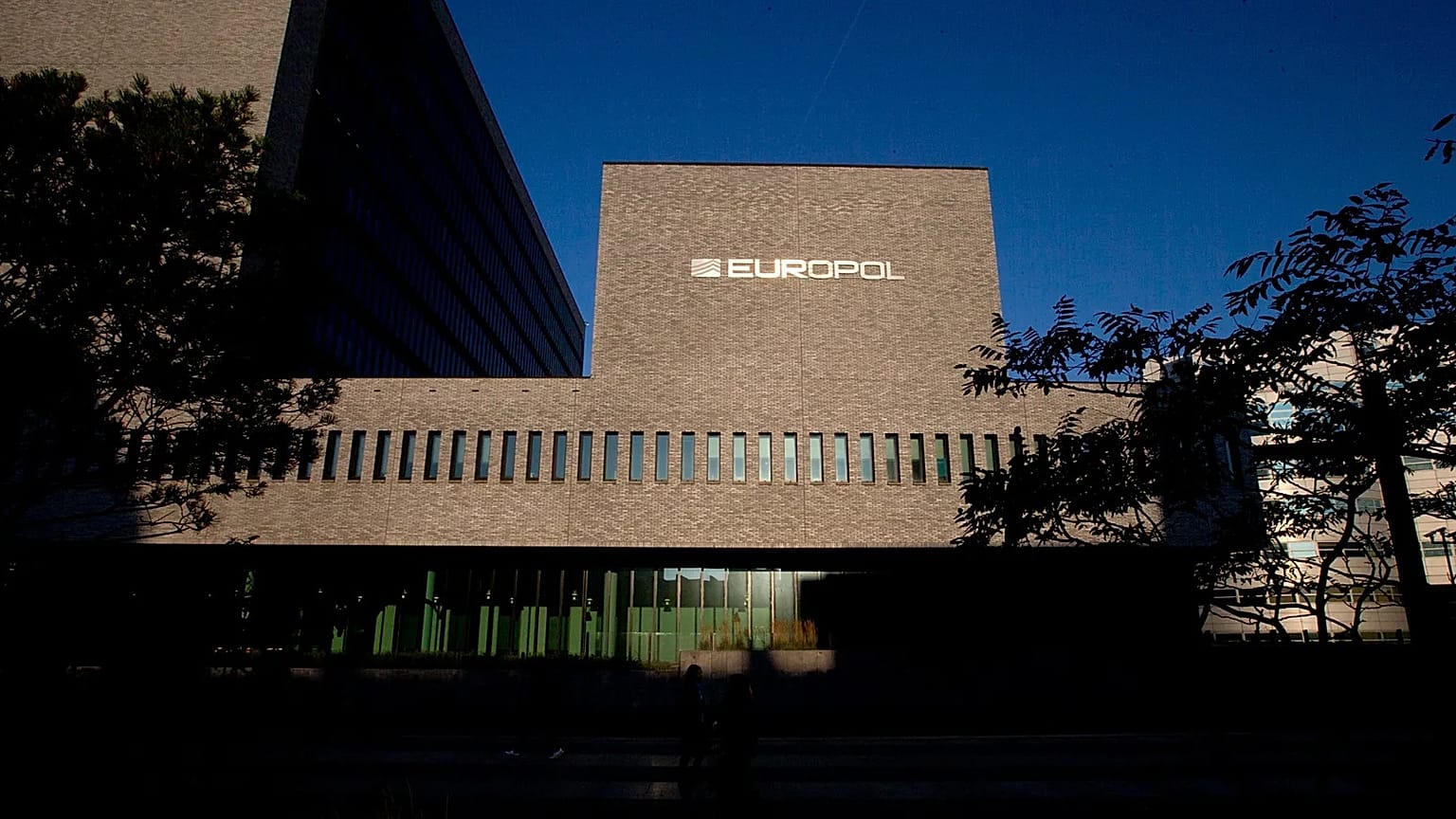













Several EU countries, including France and Germany, have increased security measures as authorities fear potential attacks linked to Iranian networks or extremist actors.
The escalating conflict in Iran is putting Europe on high alert, with international police agency Europol warning of “an elevated threat” of terrorism and “violent extremism” on European soil as well as increased cyberattacks and disinformation campaigns.
 ADVERTISEMENT
ADVERTISEMENT
ADVERTISEMENT
The ongoing US-Israeli war with Iran has “immediate repercussions for serious and organised crime and terrorism in the EU,” Jan op gen Oorth, Europol’s head of communications, told Euronews in an emailed statement. “Key risks are an elevated threat of terrorism and violent extremism, increased cyber-attacks targeting EU infrastructure, a rise in conflict-themed online fraud schemes, and the spread of disinformation and influence campaigns.”
Op gen Oorth added that the terrorist and violent extremist threat level in Europe, which can manifest through “homegrown radicalisation by lone-actors” or “small, self-initiated cells”, was now “assessed to be heightened”, with other threats including “rapid online dissemination of polarising content” that “may accelerate short-term radicalisation pathways in EU-based diaspora and other individuals”.
Europol is raising the alarm about Iran-linked proxy networks in Europe, including groups associated with Iran's so-called “Axis of Resistance" and "criminal networks “believed to operate under the direction of Iranian security institutions”.
The agency's warnings come days after Iran’s Grand Ayatollah Nasser Makarem Shirazi issued a fatwa calling for holy war against the United States and Israel following Ayatollah Khamenei's death in joint US-Israeli strikes Saturday.
Iran has also issued direct warnings to European governments. Esmail Baghaei, spokesperson for Iran’s foreign ministry, said recently that any action against Tehran would be seen as complicity with its attackers and would be considered “an act of war”.
European vigilance increases
Several European governments have already stepped up security measures.
In Germany, North Rhine-Westphalia's Interior Ministry told Euronews there are currently "no findings or indications" of specific threats but acknowledged "a change in the threat situation" is possible "at any time" due to the dynamic situation.
French President Emmanuel Macron said earlier this week that France’s government had strengthened the military security operation “Opération Sentinelle” across the country and increased protection around “the most exposed locations and individuals”.
After meeting with regional security officials, police leadership and intelligence services on Thursday, the country’s Interior Minister Laurent Nuñez said that there was “no known threat” of an imminent terrorist attack on French soil, but that vigilance remained at the highest level.
Although recent major attacks in France have largely been linked to jihadist groups, authorities say Iran-linked threats remain a concern.
One of the most significant recent incidents took place in 2018, when Iranian operatives were accused of planning to bomb an Iranian dissident rally near Paris.
The attack would have targeted a gathering in Villepinte organised by the People's Mojahedin Organisation of Iran, but it was ultimately thwarted by European intelligence services.
France has previously been targeted by Iranian-linked attacks. Between 1985 and 1986, a series of bombings in Paris killed 12 people and injured more than 200.
But according to French media, what the country’s intelligence services fear most are attacks intended to shock public opinion.
“The regime is fighting for its survival at home, so it may be tempted to provoke instability within countries it considers to be supporting what is currently happening at the regional level,” David Rigoulet-Roze, a researcher at the French Institute for Strategic Analysis, told France info radio.