

















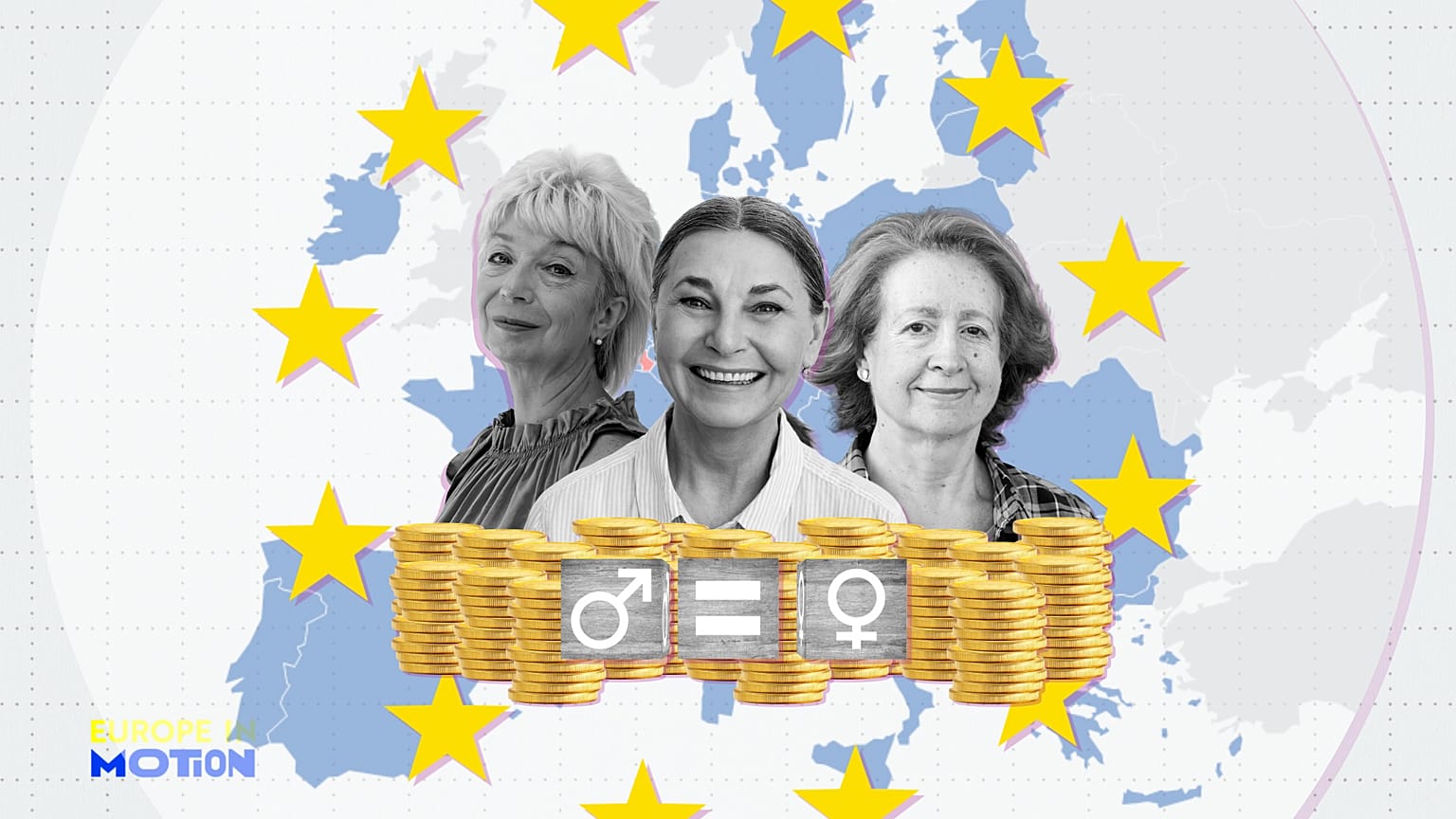














There's a gap between men's and women's pensions across the EU, both in the average and median amounts received.
Despite significant progress in women’s representation in leadership roles and a narrowing gender pay gap, full gender equality in the EU is said to still be at least 50 years away, according to the European Institute for Gender Inequality Index.
 ADVERTISEMENT
ADVERTISEMENT
ADVERTISEMENT
One area that still needs improvement is pensions: new figures from Eurostat show that the average pension for women aged 65 or above in the EU was 24.5% lower than that for men in 2024.
When broken down by country, Malta had the largest pension gender gap, with women receiving around 40% less than men on average. It was followed by the Netherlands (36.3%) and Austria (35.6%).
On the flip side, the smallest gaps were seen in Estonia (5.6%), Slovakia (8.4%), the Czech Republic and Hungary (both 9.6%).
These rates are significantly better than the other end of the table, but the overall trend across the EU shows that there's still much progress to be made.
A similar trend emerges even when looking at median pensions: here, women in the EU received 24.9% less than men.
Luxembourg had the highest gap (43.3%), then Spain (41.1%) and the Netherlands (39.6%).
Down at the other end, Estonia actually registered a -0.3% gap, showing that women's median pension was actually a little bit higher than men’s. It’s followed by Hungary (0.4%) and Denmark (2.7%) with near parity.
Women at a higher risk of poverty than men
Nevertheless, women aged 65 or older faced a higher risk of poverty than men in 22 EU countries, according to Eurostat.
The agency found that at the EU level in 2024, the difference in the at-risk-of-poverty (AROP) rate between men and women aged 65 years or over was -5.6%, showing that women were at a greater disadvantage.
This was especially true in Malta (-18.6%), Lithuania (-13.3%), Austria (-13%) and Portugal (-12.5%).
Only five countries showed the opposite trend, where men faced a greater risk than women: Luxembourg (1.9%), Sweden (1.3%), Denmark (0.7%), Belgium (0.48%) and Slovenia (0.39%).
Gender differences in how at-risk-of-poverty people are were wider among people aged 65 or older than those under 65, Eurostat said. However, this wasn't true of all countries.
At the EU level, the gender difference in the AROP rate was -1.9% for women under 65 years and -5.6% for those aged 65 years or over.
The difference was particularly noticeable in Portugal (8.4% for women younger than 65 years and -12.5% for women aged 65 years or over, resulting in a -20.9% difference), Lithuania (a -20.0% difference), Ireland (-18.7%) and Bulgaria (-17.2%).
While older women generally faced a higher risk of poverty (in relation to men of the same age) than younger women, in some countries, the opposite was true.
Luxembourg registered a 9.2% difference, followed by Slovenia (4.1%), Denmark (2.5%), Germany (1.3%) and France (0.7%) — these positive differences indicate that younger women faced a greater relative disadvantage compared to men than older women did.