
































After nearly 20 years of construction, Thessaloniki’s first metro is finally running. Driverless trains ease traffic and pollution, while stations display ancient artefacts uncovered during works. The €3bn project was completed thanks to strong EU and European Investment Bank support.
Thessaloniki, the "Paris of Northern Greece”, is a city famous for its rich heritage, incredible food and vibrant nightlife. But for far too long, it was also notorious for something else: epic traffic jams. The entire city centre, home to 320,000 people, sits squeezed between a gulf and the hills — creating one massive bottleneck. And all those idling cars produced some of the worst air pollution in the entire European Union.
 ADVERTISEMENT
ADVERTISEMENT
ADVERTISEMENT
Something had to change. And recently, it finally did.
At the end of 2024, after two decades of incredibly complex construction, Thessaloniki unveiled its first-ever metro line. It's a fast, ultra-modern underground system that's transforming the lives of residents like Marina Argyrou — a metro company worker who lives in a suburb but has to frequently travel to her family’s business in the city centre. Before the metro, Marina had to drive, which was painfully slow, often taking half an hour or more — and finding a parking spot was a true challenge. Now, she can reach her destination in just 15 minutes.
The main line stretches over 10 kilometres, with currently 13 state-of-the-art stations connected by fast Italian-made trains. These trains are completely driverless. Doors open and close automatically, perfectly synced with platform screen doors for maximum safety. The trains run their routes entirely on their own, carrying nearly 20,000 passengers per hour in each direction.
The brain of it all is the Operation Control Center, where every movement in the metro is monitored and controlled in real time.
Cities like Copenhagen have similar systems, but for Greece, this is unprecedented. The advantages are clear: much higher flexibility, better safety, perfect timetable compliance, superior efficiency overall. And if at first some passengers were nervous about trains without drivers, they got used to them quickly.
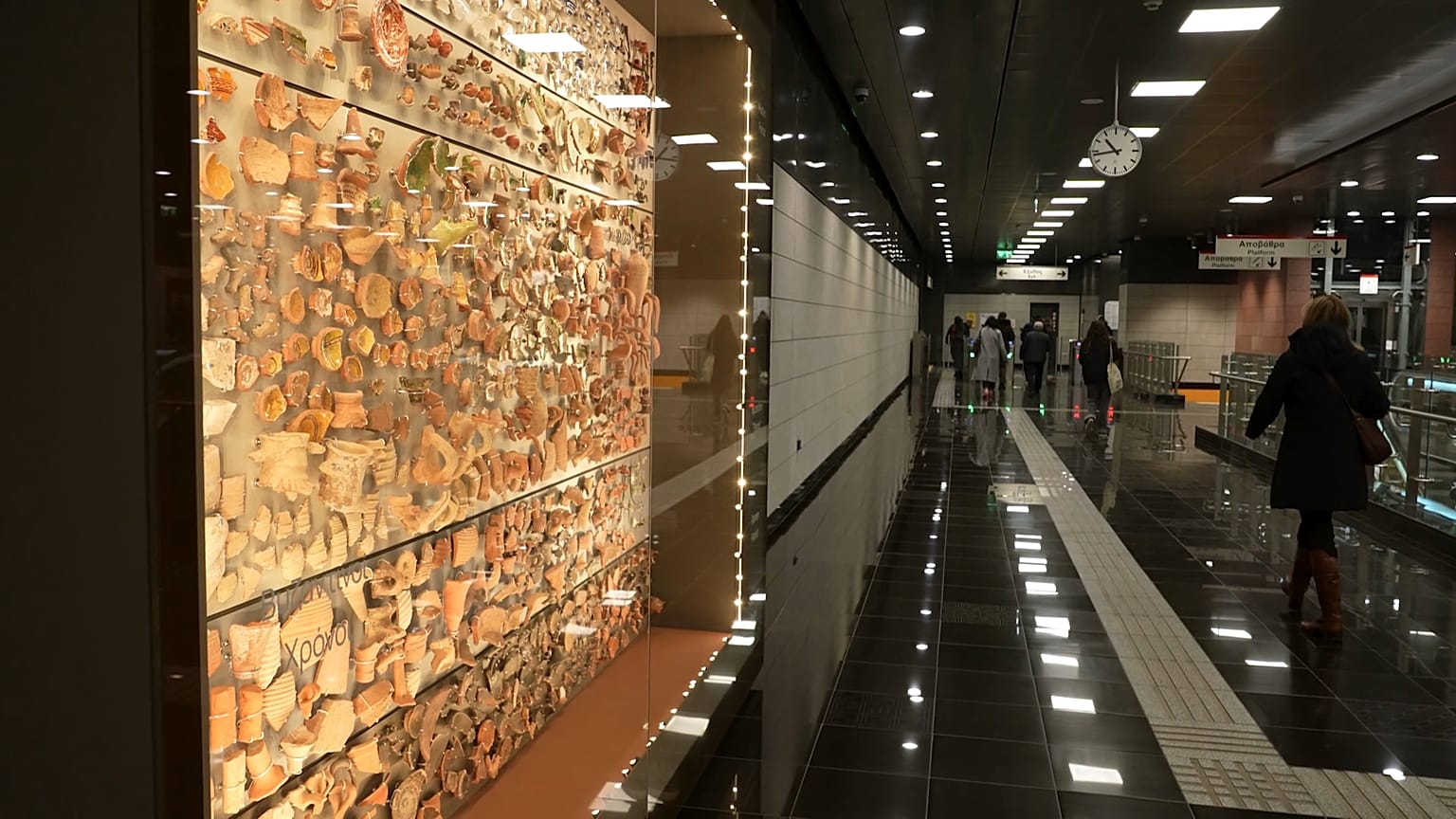
But building the metro of the future meant digging through the past — literally. Thessaloniki's soil is packed with priceless archaeological treasures. To preserve them, tunnels had to be bored much deeper than originally planned, and several stations’ designs were modified in the process. The construction became the largest archaeological excavation in Northern Greece, uncovering over 300,000 artefacts. Today, some stations double as unique underground museums.
But this careful work came at a cost — delays and budget overruns, made worse by Greece's financial troubles and administrative challenges. In the end, it took more than €3 billion in investment and two decades of work to complete.
With overall costs reaching €3 billion and the project risking losing support due to increasing costs and complexity, the EU stepped in, providing over €1 billion from its Cohesion Policy funds, while the European Investment Bank added hundreds of millions in loans.
And this is just the beginning. These first 13stations are only phase one. The main line is about to get extended, with further plans to reach more suburbs — driving economic growth, creating jobs and drawing tourists to explore the underground museums and galleries, all accessible with a simple metro ticket.