

















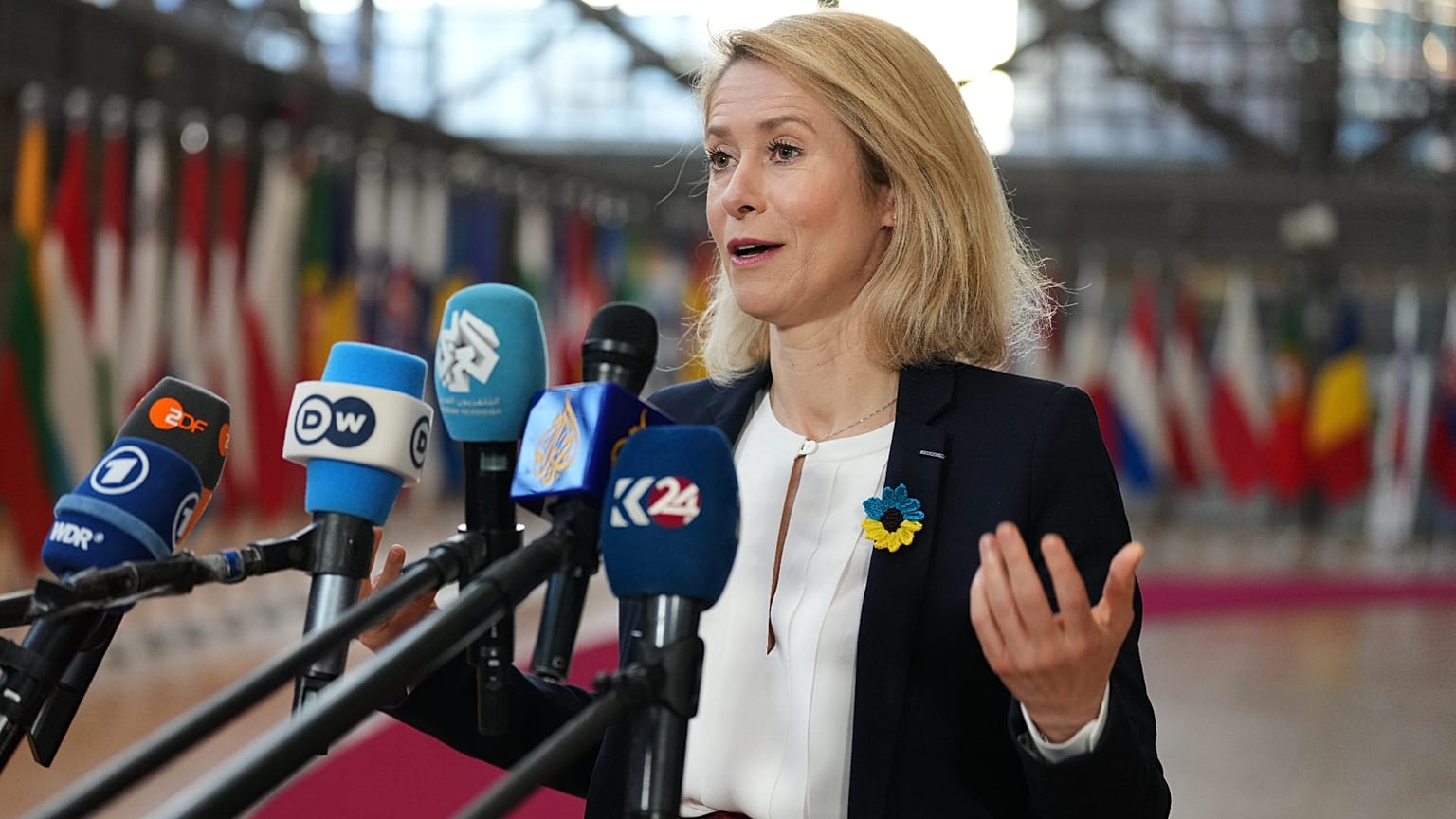














EU foreign ministers warned of unpredictable economic consequences and called for the Strait of Hormuz to be kept open, however, fell short of supporting US aspirations for regime change in Iran.
The Foreign Ministers of the European Union said they are taking all necessary steps to ensure the safety of EU citizens in the Middle East and warned that further escalation could threaten the region.
 ADVERTISEMENT
ADVERTISEMENT
ADVERTISEMENT
The ministers participated in a video call with High Representative Kaja Kallas and released a joint statement after the three-hour-long conversation.
An unknown number of European nationals are stranded in Iran and in the wider region, as Israel and the US started bombing Iran on Saturday.
In retaliation for the attack and the death of Ali Khamenei, the supreme leader, Tehran launched counterstrikes, hitting various targets in the Middle East, which created aviation chaos. Thousands of flights have been cancelled at major hubs, such as Dubai and Abu Dhabi.
"The EU and its member states are taking all necessary steps to ensure the safety of EU citizens in the region, including by activating the EU Civil Protection Mechanism if necessary," the EU's joint statement said.
The Civil Protection Mechanism is a tool to boost cooperation between European nations to improve disaster prevention and crisis response.
The ministers also warned that the events in Iran should not lead to escalation, which could have unpredictable economic consequences. The EU called for avoiding disruption to the Strait of Hormuz, a major sea corridor for seaborne oil.
No endorsement of regime change
The joint statement did not endorse US-Israeli aspirations for regime change in Iran.
"The EU reiterates its solidarity with the Iranian people and strongly supports their fundamental aspirations for a future where their universal human rights and fundamental freedoms are fully respected," the statement said.
On Sunday, EU Commission President Ursula von der Leyen called for regime change in Iran in a social media post. "A credible transition in Iran is urgently needed," Ursula von der Leyen said in her social media post.
Little point in lecturing allies, Merz said
Earlier, German Chancellor Friedrich Merz said his Federal Government shares the "relief" of many Iranians that the "mullah regime" may be coming to an end.
Merz acknowledged the legal ambiguity of the US and Israeli strikes, but argued there is "little point in lecturing allies" when facing a "terrorist regime" that endangers global security.
After the Foreign Affairs Council, Spain and Slovenia argued for de-escalation and for diplomacy.
"War and violence cannot be normalised as ways of resolving conflicts. Spain calls for respect for international law," Spanish Foreign Minister José Manuel Albares said in a post on X.
Slovenian Foreign Minister Tanja Fajon also called for calm and restraint.
"The use of force endangers the lives of innocent people and has serious consequences for peace and security," Tajon said.
Both Spain and Slovenia criticised Israel's military offensive in Gaza against Hamas and recognised Palestine.
The European Commission President, Ursula von der Leyen, called for a Security College meeting for Monday.