




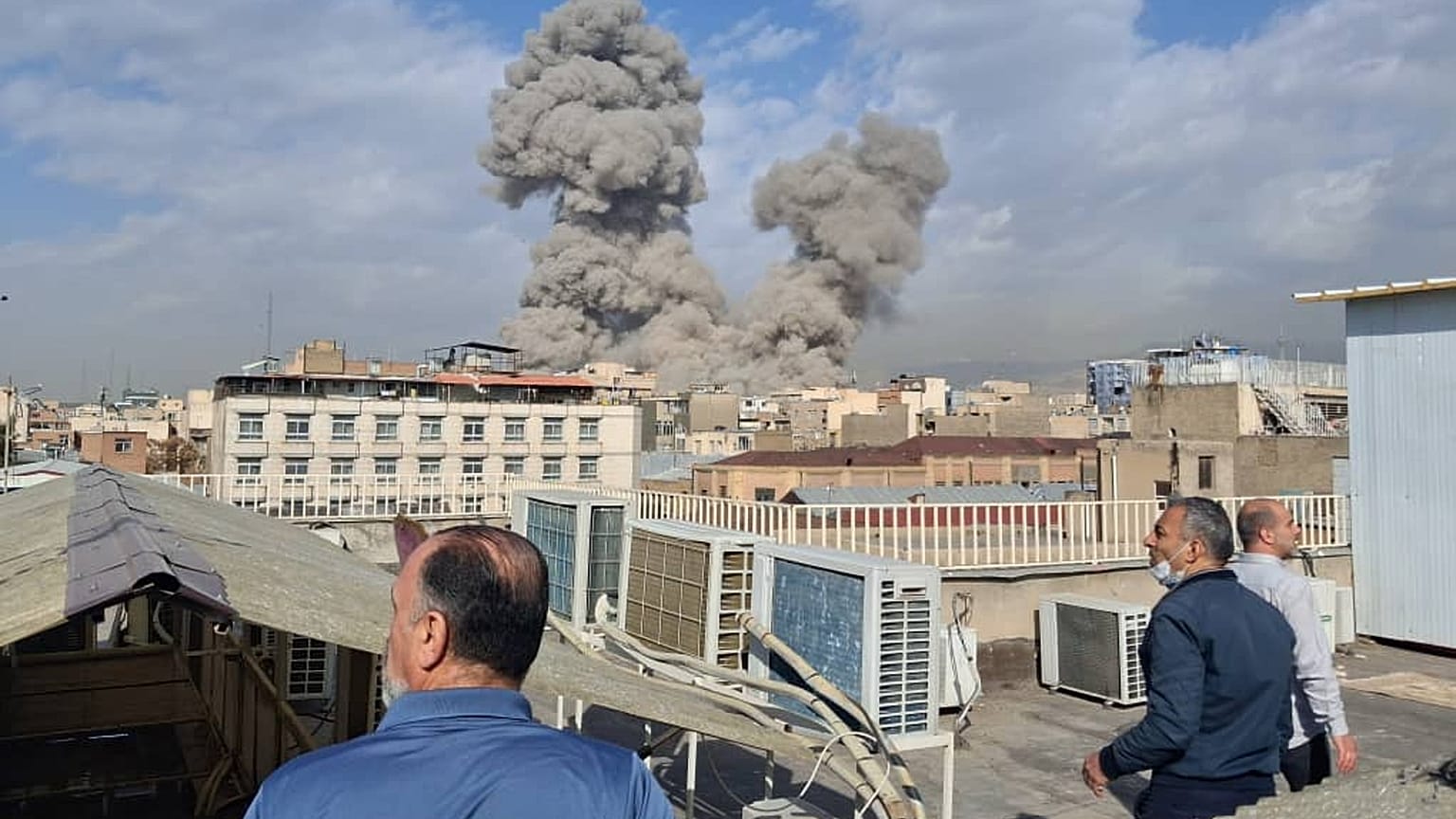














A joint statement by the European Commission and the EU Council noted the developments in Iran were "greatly concerning" and reaffirmed what it called the EU's "steadfast commitment to safeguarding regional security and stability."
European leaders reacted with a mix of alarm and caution to news of joint U.S.–Israeli military strikes on Iran — operations the Pentagon has referred to as “Operation Epic Fury” — warning that the offensive risked widening the conflict across the Middle East.
 ADVERTISEMENT
ADVERTISEMENT
ADVERTISEMENT
French president Emmanuel Macron called the strikes an "outbreak of war" that "carries serious consequences for international peace and security." France, he said, will call for an "urgent meeting" of the United Nations Security Council.
In a joint statement, European Commission president Ursula von der Leyen and European Council president Antonio Costa called the developments “greatly concerning,” urging all sides to avoid steps that could further inflame tensions or weaken the global non-proliferation framework.
“We call on all parties to exercise maximum restraint, to protect civilians, and to fully respect international law,” von der Leyen and Costa wrote in statement posted on X.
Von der Leyen announced she was convening a special security college on Monday.
The EU’s chief diplomat, Kaja Kallas, struck a somewhat more measured tone, characterizing the situation as “perilous.” Iran’s regime, she wrote, “has killed thousands,” and “its ballistic missile and nuclear programmes, along with support for terror groups, pose a serious threat to global security.”
But “protection of civilians and international humanitarian law is a priority,” she said, adding that the EU’s "Aspides" naval force remained “on high alert” in the Red Sea and “stands ready to help keep the maritime corridor open.”
The remarks came just hours after the United States and Israel launched large-scale strikes across Iran, reportedly targeting a compound in central Tehran believed to house the residence of Iran’s 86-year-old Supreme Leader, Ali Khamenei.
During the operation, US President Donald Trump advised Iranians to seek shelter and asserted in a video shared on social media that Iran has persisted in expanding its nuclear program and is aiming to build missiles capable of striking the United States.
Several EU leaders express concern
Strains between Washington and Tehran have intensified sharply following the latest round of nuclear negotiations in Geneva on Thursday aimed at finalising a new agreement.
On Saturday, Macron urged Iran's regime to "enter into good-faith negotiations" to bring an end to its nuclear and ballistic programs. "This is absolutely essential for the security of everyone in the Middle East."
The European Union has adopted extensive sanctions in response to Iran’s human rights violations, the country’s military support for Russia's war of aggression against Ukraine and its nuclear proliferation activities.
Last month, the bloc took fresh sanctions against members of the Iranian regime after thousands were killed in the regime’s recent crackdown on protestors. It also decided to add the Islamic Revolutionary Guard Corps (IRGC) of Iran to the EU terrorist list.
On Saturday, European Parliament president Roberta Metsola warned against "a spiral of escalation that could threaten the Middle East, Europe and beyond."
Several European foreign ministers also voiced concern over the strikes.
Spain’s Foreign Minister José Manuel Albares said that Spain was monitoring the situation and demanded respect for international law. “Violence only brings chaos. De-escalation and dialogue are the path to peace and stability,” he wrote.
He said all of Spain’s embassies in the region were still operational for its citizens.