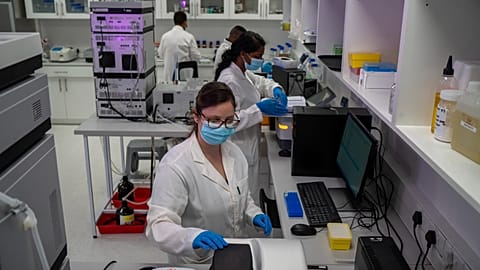






























This approach aims to reduce the side effects of radiotherapy on healthy tissues. The project relies on the use of lithium-6.
Researchers at the University of Aveiro, in Portugal, are pioneering a new approach to cancer treatment using carbon nanocapsules that could significantly improve how radiotherapy is delivered.
 ADVERTISEMENT
ADVERTISEMENT
ADVERTISEMENT
The CarboNCT project is betting, for the first time, on the use of lithium-6 as an alternative to traditional boron-10— the element conventionally used in a technique called Neutron Capture Therapy (NCT). The goal is to make radiotherapy more effective while minimising damage to healthy tissue surrounding a tumour.
With this method it will be possible to introduce a specific element into cancer cells which, when hit by neutrons, trigger a nuclear reaction capable of releasing enough energy to destroy them. This reaction has the particularity of having an extremely short range, acting practically at the level of a single cell.
Traditionally, this approach uses boron-10. However, the team from the University of Aveiro is exploring the potential of lithium-6 in order to increase therapeutic efficiency and treatment precision.
Gil Gonçalves, a researcher in the university's Department of Mechanical Engineering and the project's lead coordinator, describes the capsules as "multifunctional," designed to transport high concentrations of active isotopes while enhancing the overall safety and efficiency of the therapy.
One of the biggest challenges of this therapy is ensuring that the active element reaches the tumour cells in sufficient quantity. These microscopic structures increase the stability of the compound and allow for a more controlled delivery, reducing potential toxic effects.
"The results we have obtained are very promising. The nanocapsules have demonstrated high biocompatibility in non-cancerous cells and have shown effective accumulation capacity in tumour cells," said Gonçalves.
In addition, the natural fluorescence of the nanoparticles makes it possible to monitor their presence inside the cells, which could become a useful tool for monitoring treatment.
The project is being developed by the Faculty of Medicine of the University of Coimbra and the University of Pavia, at the Laboratory of Applied Nuclear Energy (LENA).
If future results confirm the potential already demonstrated, this approach could evolve into clinical applications, driving the development of a new generation of drugs for neutron therapy, the University said.
Cancer continues to be one of the leading causes of death worldwide, as well as one of the greatest challenges facing modern medicine.
The number of new cancer cases in Portugal is expected to increase by around 20 per cent by 2040, a figure higher than the European Union, which estimates the number of new cases at 18 percent. At the Portuguese Oncology Institute (IPO) in Porto (source in Portuguese) alone, 10,000 new cases of cancer are diagnosed every year.