
















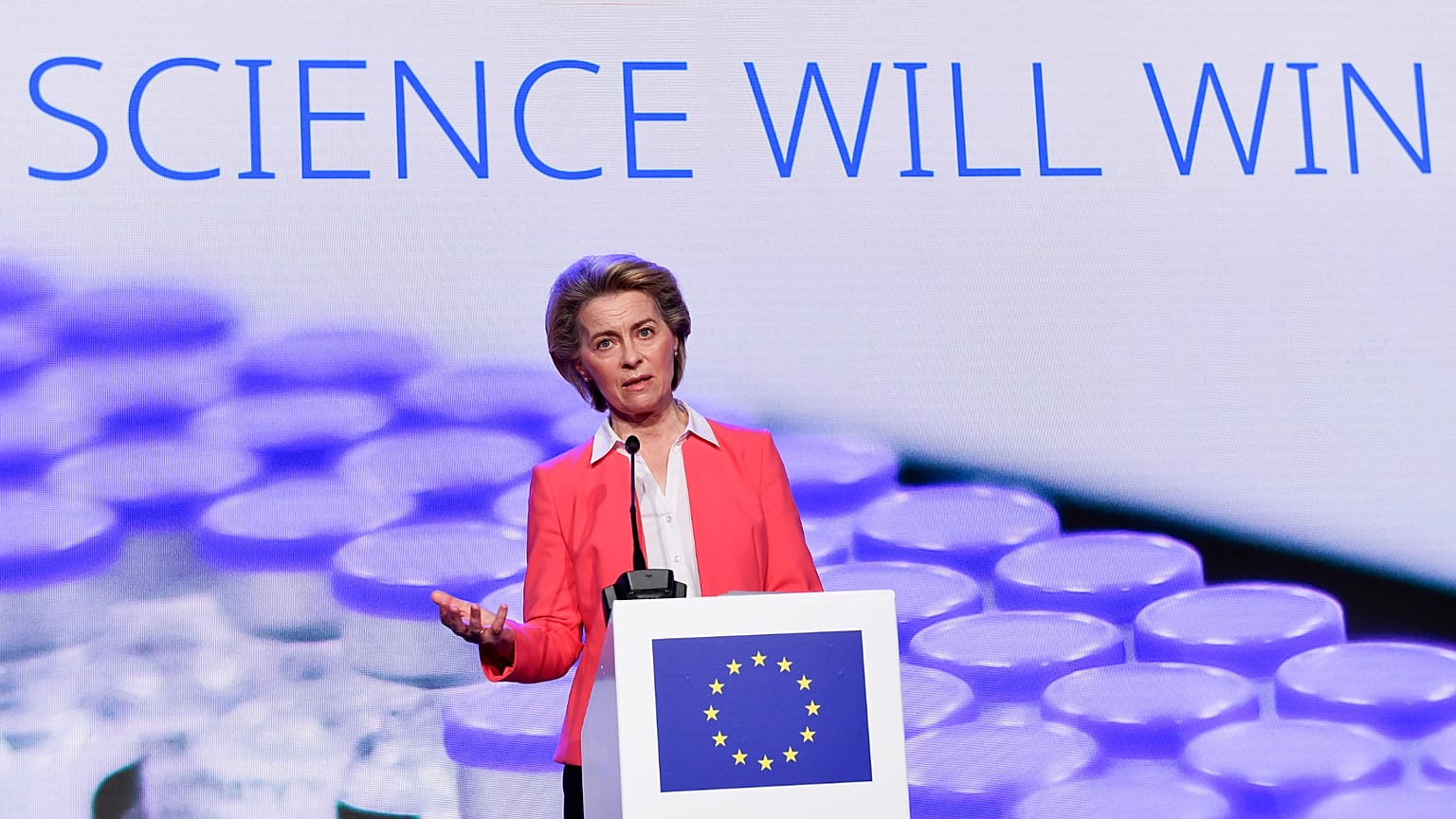













Europe's health sovereignty is under pressure. Experts from industry, institutions, and civil society will debate whether the EU can tackle these challenges at the Euronews Health Summit on March 17.
Ursula von der Leyen, President of the European Commission, told ambassadors in Brussels earlier this year of the importance of health security.
 ADVERTISEMENT
ADVERTISEMENT
ADVERTISEMENT
Recent geopolitical tensions have significantly strained Europe's health systems and pharmaceutical supply chains.
The COVID-19 pandemic, the war in Ukraine, and recent political shifts from international partners such as the United States have shaken the European Union’s health landscape.
Over the past years, the bloc has faced supply chain disruptions, shortages of medicines and workers, tariff threats, and brain drain amid an ageing population and overstretched health systems.
The global health landscape has also taken a hit. The United States’ decision to withdraw from the World Health Organization and halt all humanitarian and development foreign aid has left a significant vacuum, opening the door for new actors and dynamics.
So is the European Union ready to maintain its position as a leader in global health, and to guarantee both competitiveness and stability within its own borders?
What are the main challenges?
Europe’s pharmaceutical and biotechnology sector is a global pillar for trade and research. Without pharmaceuticals, the EU trade balance would flip from a €147 billion surplus to a €47 billion deficit, according to the European Federation of Pharmaceutical Industries (EFPIA).
The sector invests about €55 billion per year in research and development (R&D) and generates around €320 billion in exports, making it the single largest contributor to the EU’s trade surplus, according to EFPIA.
Yet recent analyses show that Europe is losing ground.
Over the past two decades, the region has lost about 25 percent of its global share of R&D investment. Between 2010 and 2022, EU pharma R&D grew at 4.4 percent per year, compared with 5.5 percent in the US and 20.7 percent in China.
The Draghi report identified pharmaceuticals and biotech as one of the ten strategic sectors where Europe must invest and regain competitiveness.
What is the EU doing?
The European Union has responded with multiple legislative and regulatory initiatives, including:
The EU Biotech Act, which aims to create a framework that helps biotechnology reach the market faster, improving the bloc’s competitiveness.
In parallel, a revamp of the EU’s pharmaceutical legislation overhauls two decades of medicine rules. The new framework expands the regulatory protection periods to incentivise companies to produce and commercialise in Europe.
Finally, the Critical Medicines Act aims to secure the supply of essential medicines and reduce dependencies.
Whether the EU’s instruments are enough will be at the heart of the conversation at Euronews Health Summit on 17 March, where health experts from the industry, public institutions, research centres, and civil society will discuss Europe’s path to medical sovereignty.