




























The European Union intercepted a record number of dangerous products in 2025, with cosmetics, toys, and electric appliances leading the list.
Creams, toys, and phone chargers coming to Europe have never been more dangerous, according to a new EU report that logged a record number of safety alerts in 2025 for the third year running.
 ADVERTISEMENT
ADVERTISEMENT
ADVERTISEMENT
Last year, 4,671 alerts were notified in the Safety Gate system, the European Union’s tool to monitor dangerous products entering the market, according to a new report.
The 2025 numbers are the highest recorded since the system was launched in 2003, a 14 percent increase compared to 2024 and more than double those in 2022.
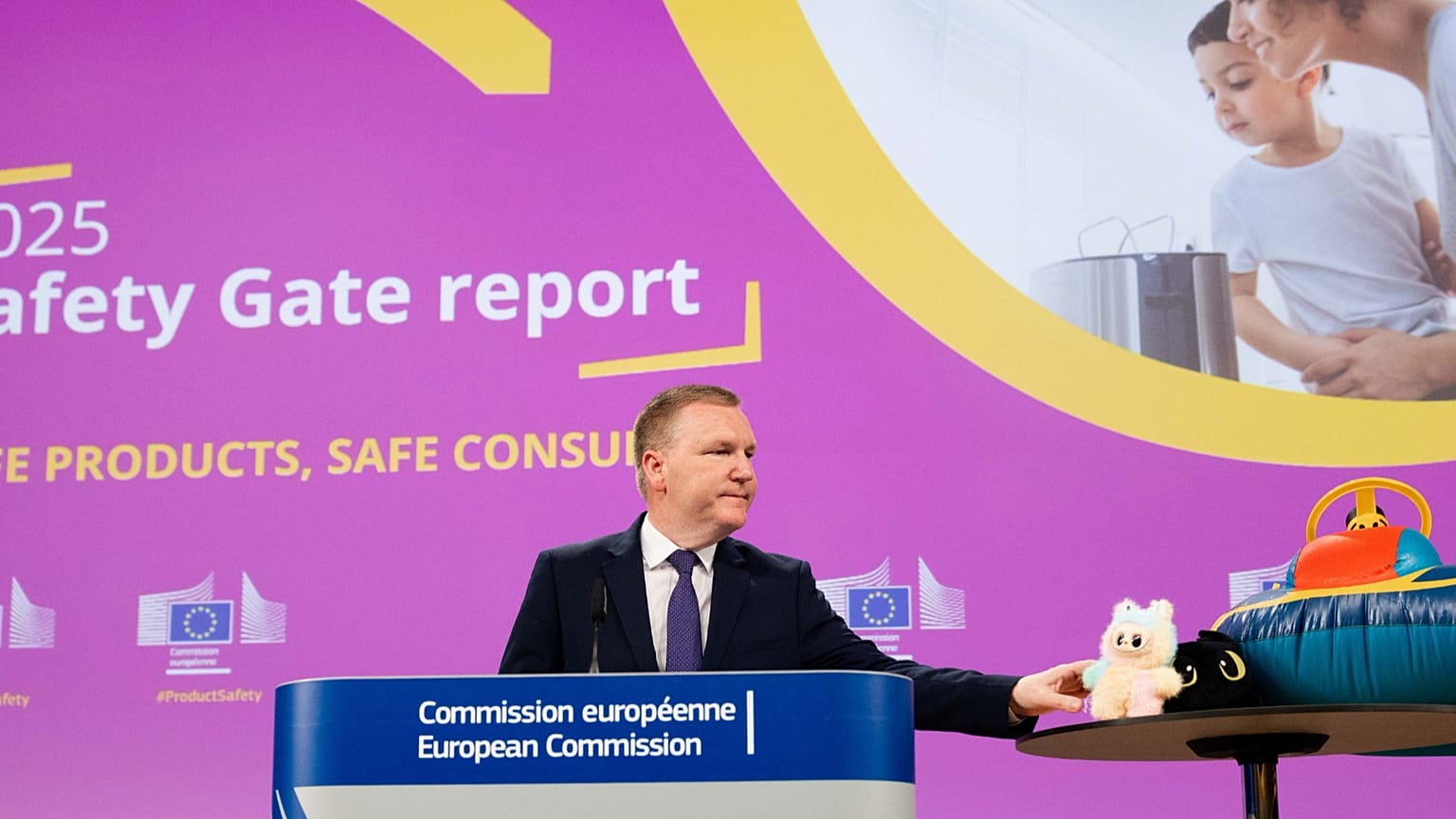
“Consumer goods are an important part of our daily lives. Wherever they come from and whatever their purpose, they must be safe for our health and for the wider environment,” said Michael McGrath, European Commissioner of Consumer Protection, during the presentation of the 2025 Safety Gate Report.
He explained that with the rapid growth of e-commerce and the volume of parcels entering the European Union from third countries, the safety framework has become increasingly essential.
The EU introduced the Rapid Alert System in 2003 to identify dangerous non-food products. It covers risks to human health, such as choking, strangulation, and damage to hearing or sight, as well as risks to the environment, energy resources, and property.
What are the most intercepted products?
Cosmetics, toys, and electrical appliances and equipment lead the list of most frequently identified dangerous products.
The most commonly reported risk was from dangerous chemicals, accounting for 53 percent of all notifications, followed by risk of injuries with 14 percent and choking with 9 percent.
Almost eight in ten alerts are concerning cosmetics related to the presence of butylphenyl methylpropional (BMCHA), a synthetic fragrance that has been banned in the EU since 2022. It was commonly used in perfumes, lotions, and household products before it was found that it can have harmful effects on the reproductive system and cause skin irritation.
The report also noted that for the first time, national authorities notified cases of nail polish containing trimethylbenzoyl diphenylphosphine Oxide (TPO), a chemical used in UV/LED-cured gel nail products. Its use was banned in the EU in 2025 over concerns about risks to prenatal health and allergic reactions.
What countries detected the most dangerous products and where are they coming from?
Italy reported the largest number of dangerous products, with 1193 notifications in 2025, followed by Germany with 465 and France with 455. Greece had zero notifications, Romania two, and Iceland five.
The Safety Gate also registers the origin of the products. Commissioner McGrath noted that nearly three-quarters originated from outside the European Union.
The largest source was China, accounting for 2,006 of the 4,671 notifications. Inside Europe, the country of origin of most notifications was Italy, with 614, followed by Germany at 288.
“Toys that children can choke on, cosmetics causing rashes, or chargers catching fire keep entering Europe, often through Chinese online marketplaces, leaving no responsible person in the supply chain in practice,” said Agustín Reyna, director general of the European consumer organisation BEUC.
He added that, to genuinely protect consumers, online marketplaces must be held accountable and ultimately become liable when no one else ensures consumer safety.
How does the system work?
The Safety Gate Rapid Alert System receives reports from national authorities that identify dangerous products in their market. Information can come from businesses or from citizens through the Consumer Safety Gateway.
The European Commission verifies the information and shares it with other member states, who then search for the product in their own national markets.
Once the information is validated, it is published on the Safety Gate Portal and available to all citizens.
However, BEUC cautioned that the registered notifications represent the tip of the iceberg since authorities are unable to control all products entering the EU market.
“The statistics do not allow conclusions about whether the level of safety declines or, on the contrary, the higher number of notifications means Member States have stepped up their control intensity or that control systems become more efficient,” the consumer organisation noted.