




























Heatwaves, drought, wildfire risk and El Niño are compounding to create a dangerous cocktail of climate change.
Heatwaves that lead to sudden and damaging drought are spreading across the globe at an accelerating rate, highlighting how climate change-fuelled extremes can build dangerously off each other, a new study found.
 ADVERTISEMENT
ADVERTISEMENT
ADVERTISEMENT
Researchers from South Korea and Australia looked at compound extreme weather – a one-two punch of heat and drought – and found it increasing as the world warms. But what's rising especially fast is the more damaging type when the heat comes first and that triggers the drought.
In the 1980s, that kind of extreme covered only about 2.5 per cent of Earth's land each year. By 2023, the last year the researchers studied, it was up to 16.7 per cent, with a 10-year average of 7.9 per cent.
The average has likely gone even higher with 2024's record global heat and a 2025 that was nearly as warm, the study's authors said.
Extreme heat followed by drought is rising at an alarming pace
In their study published in Science Advances on 6 March, the scientists said the quickening rate of change is even more concerning than the raw numbers. For about the first two decades since 1980 they examined, the spread of heat-first extremes increased, but the rate in the last 22 years is eight times higher than the earlier rate, the study found.
Events where drought happens first, followed by high heat, remain more common and are also rising. But the researchers focused on those increasing cases where heat struck first. That's because when heat strikes first, the droughts are stronger than when the droughts come first or don't come with high heat, says co-author Sang-Wook Yeh, a climate scientist at Hanyang University in South Korea.
They also lead to 'flash droughts', which are more damaging than ordinary droughts because they come on suddenly, not allowing people and farmers to prepare, says lead author Yong-Jun Kim, a Hanyang climate scientist.
Flash droughts – when warmer air gets thirstier it sucks more water out of soil – have been increasing in a warming world, past studies show.
Climate change is driving 'compound extremes'
“The study illustrates a key point about climate change: the most damaging impacts often come from compound extremes. When heatwaves, drought and wildfire risk occur together – as we saw in events like the Russian heatwave of 2010 or the Australian bushfires in 2019-20 – the impacts can escalate quickly,” says Andrew Weaver, a climate scientist at the University of Victoria in British Columbia, Canada.
“What this study shows is that warming doesn’t just make heatwaves more likely – it changes how heat and drought interact, amplifying the risks we face."
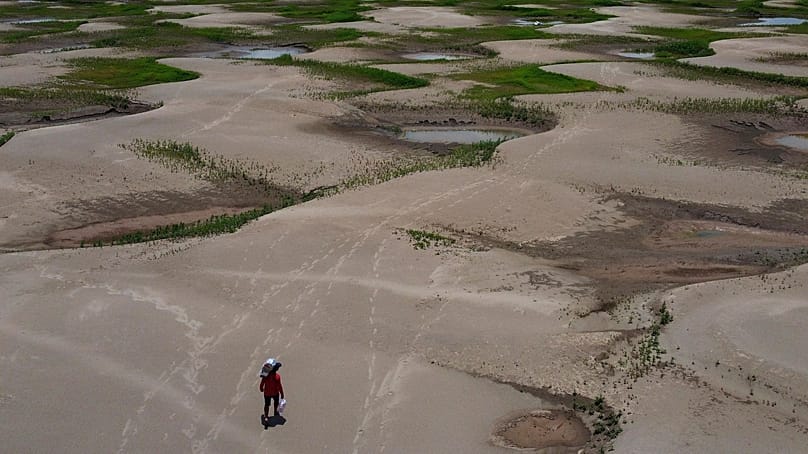
Weaver was not part of the study, but he lives in the Pacific Northwest, where the 2021 heat dome and drought was what Kim calls a top example of what they see rapidly increasing. Others include the 2022 heat and drought around China's Yangtze River and the 2023-24 record heat and drought in the Amazon, Kim says.
“The 2021 Pacific Northwest heat dome illustrates how quickly these compound extremes can escalate – temperatures near 50°C in Lytton (British Columbia) were followed by rapid drying and extreme wildfire conditions that destroyed the community,” Weaver, a former Canadian legislator, says.
Where is most at risk of heat-first droughts?
The study found the biggest increases in heat-first droughts in South America, western Canada, Alaska and the western United States, and parts of central and eastern Africa.
Kim and Yeh say they noticed a “change point” around the year 2000, when everything sped up for heat-then-drought situations.
Jennifer Francis, a Woodwell Climate Research Center climate scientist who wasn’t part of the study, says that change point was “eerily coincident with the onset of rapid Arctic warming, sea-ice loss, and decline in spring snow cover on Northern Hemisphere continents.”
In addition to long-term warming causing more compound extremes, Kim says they saw a speeding-up in the way heat went from land to air and back again just before that 2000 change point. He and Yeh speculate that Earth may have crossed a “tipping point" where the change is irreversible.
Several aspects of Earth's climate and ecological systems changed in the late 1990s, with a possible trigger by a major El Niño event in 1997-98, says Gerald Meehl, a climate scientist at the National Center for Atmospheric Research who wasn't part of the study. But he adds that it's hard to tell whether they are permanent changes.
Some computer models forecast another major El Nino – a natural warming of parts of the Pacific that warp weather worldwide – brewing later this year.