




























According to experts, the two whale skeletons found are "among the most complete in Europe".
Two fossilised whale skeletons, thought to be around 10 million years old, have been discovered on a Portuguese beach.
 ADVERTISEMENT
ADVERTISEMENT
ADVERTISEMENT
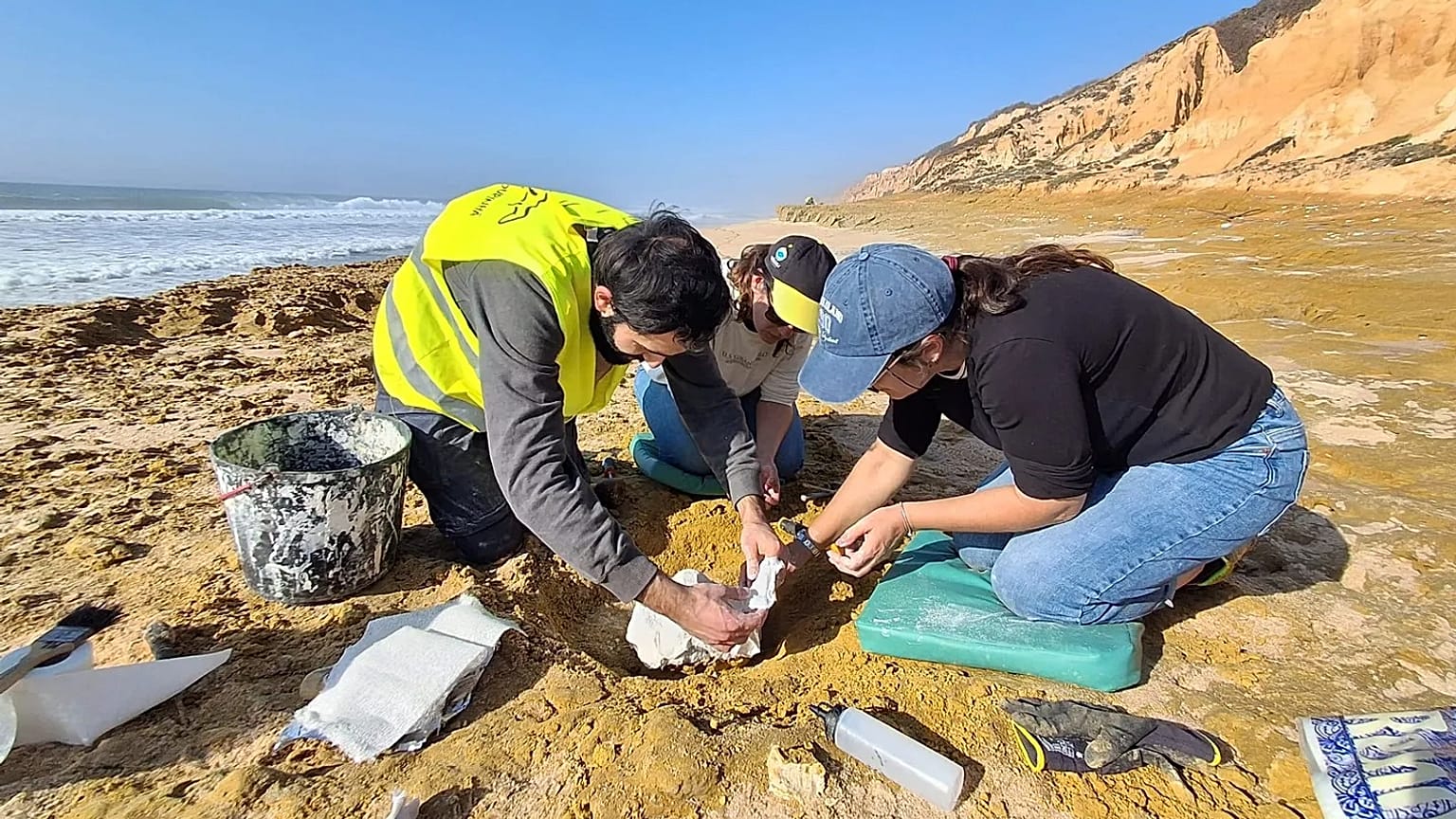
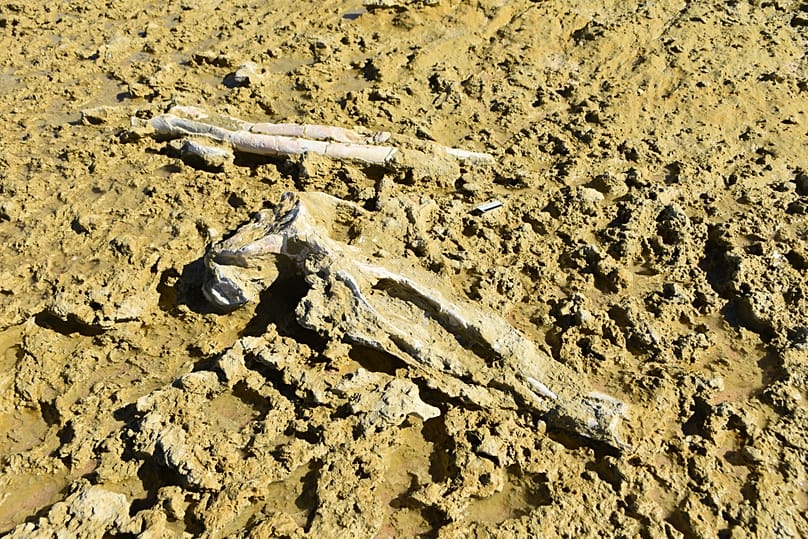
The partial skeletons were identified at the end of last week following excavation work to the north of Galé-Fontainhas beach, in the municipality of Grândola. Several national and international palaeontologists participated in the dig.
The efforts began after heavy storms shifted the sand and exposed what appeared to be fossils.
'A complex operation'
This led the municipality to request support from the Lourinhã Museum, "an institution with vast experience in the extraction of large fossils", a press release states.
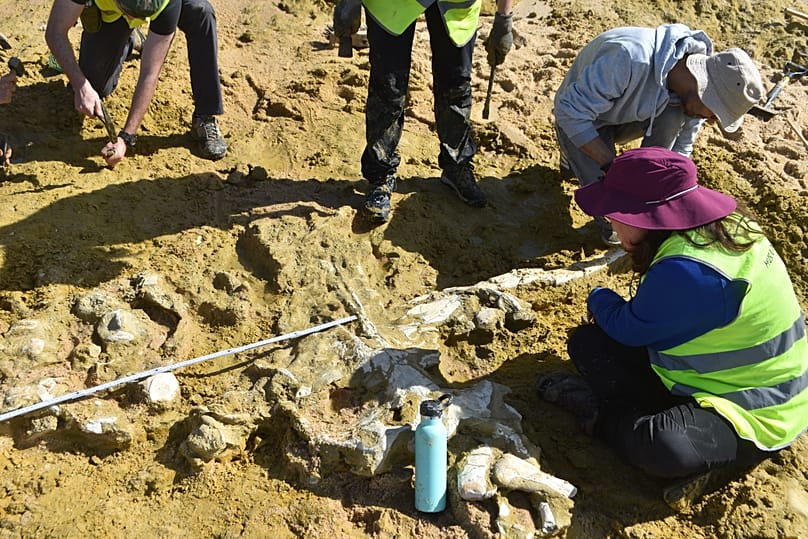
Once permission had been granted, following a meeting with the relevant authorities, a team made up of palaeontologists from the Lourinhã Museum, the Dom Luiz Institute (Faculty of Sciences of the University of Lisbon) and the National Museum of Natural History and Science, and technicians from the municipality, was mobilised to begin the palaeontological work.
Because access to the site was "limited by the tides", it was necessary to carry out a "complex operation of excavation, conservation, packaging and transport of the fossils".
According to the local authority's explanation, the recent storms left a slab of sedimentary rock more than 100 metres long exposed.
"These rocks belong to the Alcácer do Sal Formation, deposited during the Miocene, in a shallow marine environment, more precisely between the upper Serravalian and the lower Tortonian, around 10 million years ago," the municipality explained.
'An impressive diversity of marine fossils'
In the meantime, "an impressive diversity of marine fossils" has been identified on the slab, corresponding to "various groups of prehistoric animals", including "the remains of whales, dolphins, turtles, sharks, bony fish and possibly birds". But also "a diverse fauna of invertebrates", such as bivalves and balanids, "popularly known as barnacles".
But of particular importance are the "two partial skeletons of fossil whales attributable to the Mysticeti group, which includes today's baleen whales". This group includes species such as the grey whale and the blue whale, "the largest animal on the planet".
From the experts' point of view, "these two skeletons are among the most complete of Miocene fossil whales in Portugal" and also "among the most complete in Europe".
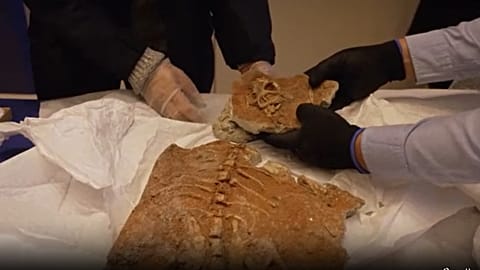
One of them consists of "a skull and two almost complete mandibles and some vertebrae and ribs", and the second "includes an almost complete skull, part of the mandibles, several vertebrae and ribs and possible bones from the forelimbs and shoulder girdle".
For these reasons, "their study could reveal essential information to better understand the evolution of these primitive whales, as well as their ecology and way of life".
Through the "detailed characterisation of the invertebrate fauna" identified, it will in turn be possible to "more accurately reconstruct the marine environment in which these skeletons were deposited millions of years ago".
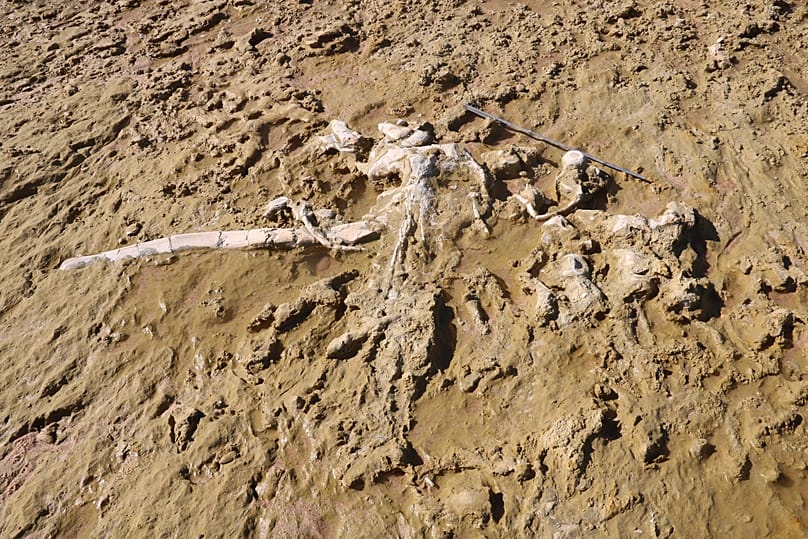
On a preliminary basis, the researchers also calculated that "these whales could belong to the Cetotheriidae family, a group of small to medium-sized whales that were relatively abundant on the Portuguese coast around 10 million years ago".
'An important paleontological find'
All this data leads experts to believe that this fossiliferous association, one of the "most relevant identified in the Alvalade Basin" – "a Cenozoic basin that outcrops in the region of the municipality of Grândola" – could provide "fundamental data on the marine vertebrate faunas that inhabited this region during the Miocene".
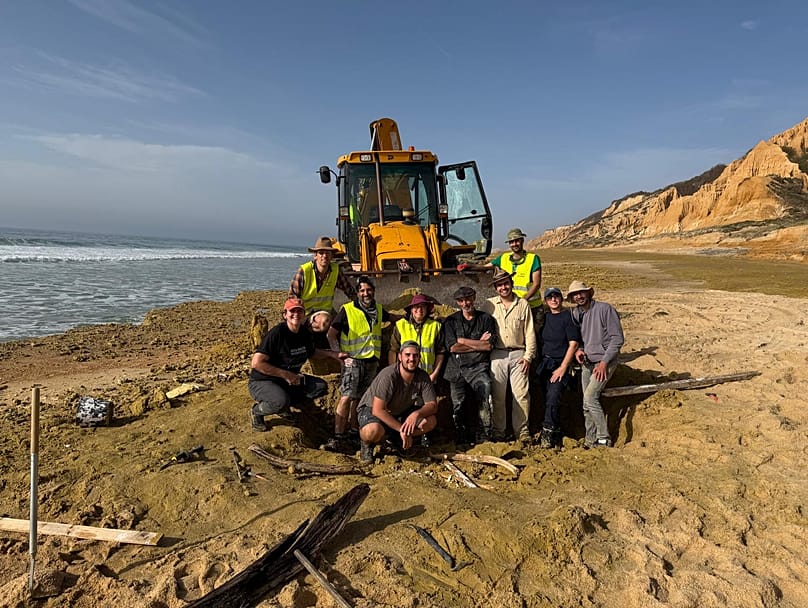
The fossils, which are currently in the custody of the local authority, will be transported to the Lourinhã Museum laboratory in the coming weeks. There, "the preparation, conservation and study work will be carried out by the technical team, guaranteeing the specialised treatment that this type of heritage requires".
At the moment, "a cooperation protocol is being prepared between the three entities" – the municipality of Grândola, the Lourinhã Museum and the Dom Luiz Institute of the Faculty of Sciences of the University of Lisbon – "with a view to research, dissemination and future sharing of this important paleontological find with the local community and society".