




























More than 1,400 people have been killed following record-breaking rainfall and storm surges across parts of Asia.
Devastation swept across parts of Asia this week following record-breaking rainfall and storm surges.
 ADVERTISEMENT
ADVERTISEMENT
ADVERTISEMENT
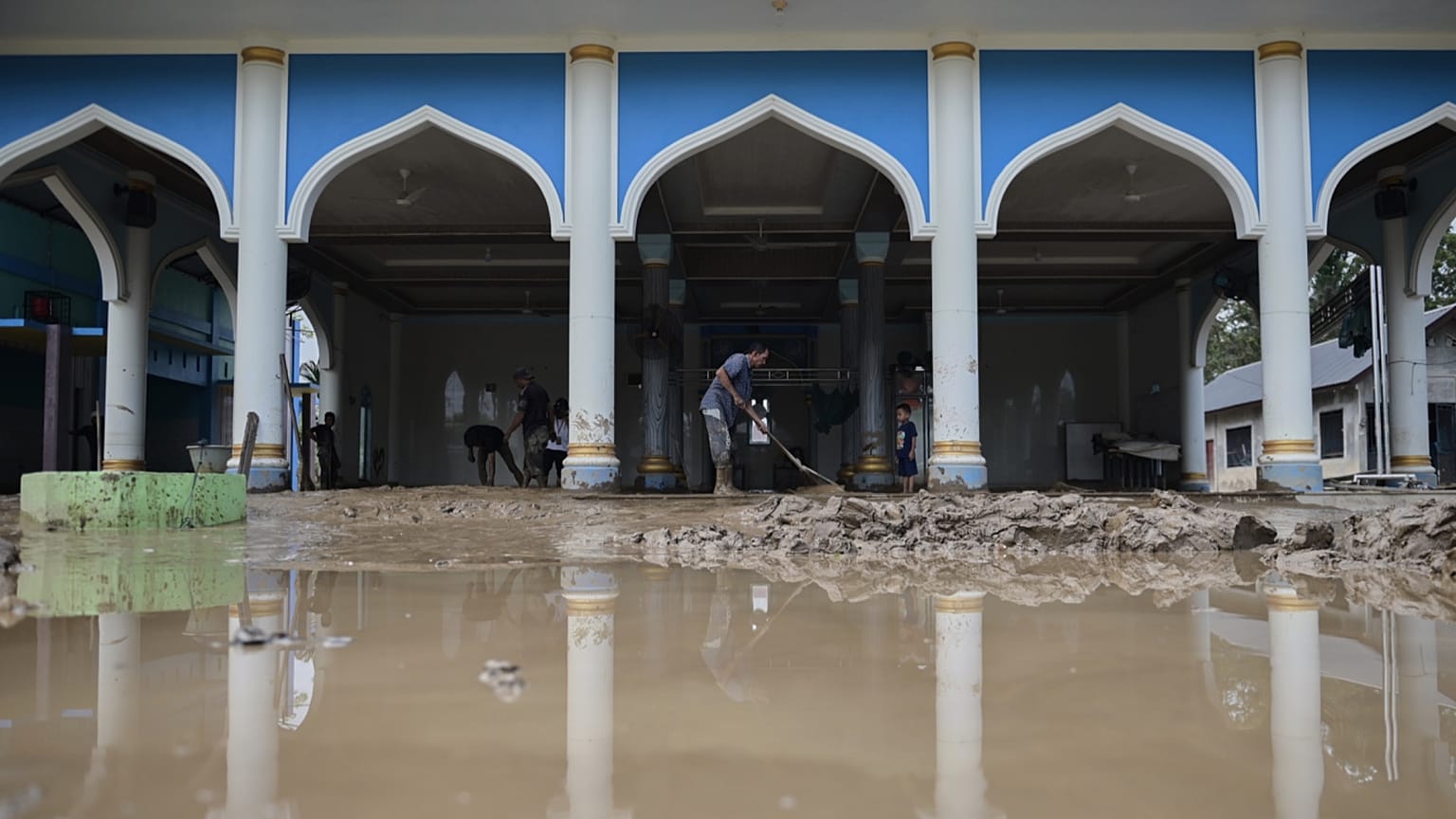
Emergency crews are still racing to reach survivors after days of flash floods and landslides, which left thousands of citizens stranded and more than 1,400 dead.
People have been found clinging to rooftops or trees to stay alive, with roads rapidly transforming into fast-flowing rivers of mud and thousands of homes being destroyed.
Indonesia, the hardest-hit nation, has recorded 753 deaths as of Tuesday 2 December. This is followed by Sri Lanka and Thailand, which suffered 410 and 181 fatalities, respectively. Three people have also been killed in Malaysia, with thousands displaced.
What caused Asia’s deadly floods?
According to World Meteorological Organisation (WMO) spokesperson Clare Nullis, countries such as Indonesia, Sri Lanka, Thailand, Vietnam and the Philippines are among those most affected by a “combination of monsoon-related rainfall and tropical cyclone activity”.
Monsoons aren’t just about rain, and are actually defined as seasonal wind patterns that lead to a stark contrast between dry and rainy seasons.
This shift has long been most pronounced in South and Southeast Asia, where the summer monsoon delivers torrential rains that are vital for agriculture, ecosystems, and water supply.
Tropical cyclones (which are commonly referred to as hurricanes or typhoons) are circular storms characterised by high winds and heavy rain. They draw their energy from tropical oceans and can maintain their strength as long as they remain over warm water.
“Asia is very, very vulnerable to floods,” Nullis warns, explaining that flooding is consistently at the top of the list when it comes to climate hazardsin the region.
However, tropical cyclones such as Senyar, which last week brought torrential rainfall and widespread flooding across Indonesia, Malaysia and southern Thailand, are normally quite rare so close to the Equator.
“It’s not something that we see very often and it means the impacts are magnified because local communities have no experience in this,” Null adds.
Is climate change to blame?
The Intergovernmental Panel on Climate Change (IPCC) warns that significant warming which has been observed all over Asia since the 20th century, increases the likelihood of floods in monsoon regions in the South, Southeast and East Asia.
This is because for every 1℃ rise in air temperature, the atmosphere can hold around seven per cent more moisture, which can lead to more intense and heavy rainfall.
Last year, heat-trapping carbon dioxide levels in the atmosphere jumped by the highest amount on record, with the United Nations warning this would “turbo-charge” the Earth’s climate and cause more extreme weather.
Asia is bearing the brunt of those changes, warming at nearly twice the global average rate.
A report from the IPCC confirms that extreme rainfall has been increasing in South and East Asia in recent years, adding that the frequency of these weather events will only worsen.
Benjamin Horton, a professor of earth science at the City University of Hong Kong, warns that while the total number of deadly storms may not “dramatically increase”, their severity and unpredictability will.
A ‘human-made crisis’
Along with global warming, experts have also pointed towards human action for worsening the impact of floods.
In North Sumatra, Indonesia, officials say floods and landslides swept away felled timber, sparking concerns that illegal logging may have contributed to the disaster.
Since 2000, the flood-inundated Indonesian provinces of Aceh, North Sumatra and West Sumatra have lost 19,600 square kilometres of forest, an area larger than the state of New Jersey, according to Global Forest Watch.
Batang Toru, which was once a lush forested area, has been turned into a wasteland of broken logs and shattered homes.
“This is not just a natural disaster, it’s a human-made crisis,” Rianda Purba from the activist group Indonesian Environmental Forum told AP News.
“Deforestation and unchecked development have stripped Batang Toru of its resilience. Without urgent restoration and stricter protections, these floods will become the new normal.”
Officials rejected claims of illegal logging, saying the timber looked old and probably came from landholders.