












"It just shows that we are connected across borders and across continents," says Copernicus scientist Mark Parrington.
If you live in Spain, Portugal, or France, you might want to wait to wash your car.
 ADVERTISEMENT
ADVERTISEMENT
ADVERTISEMENT
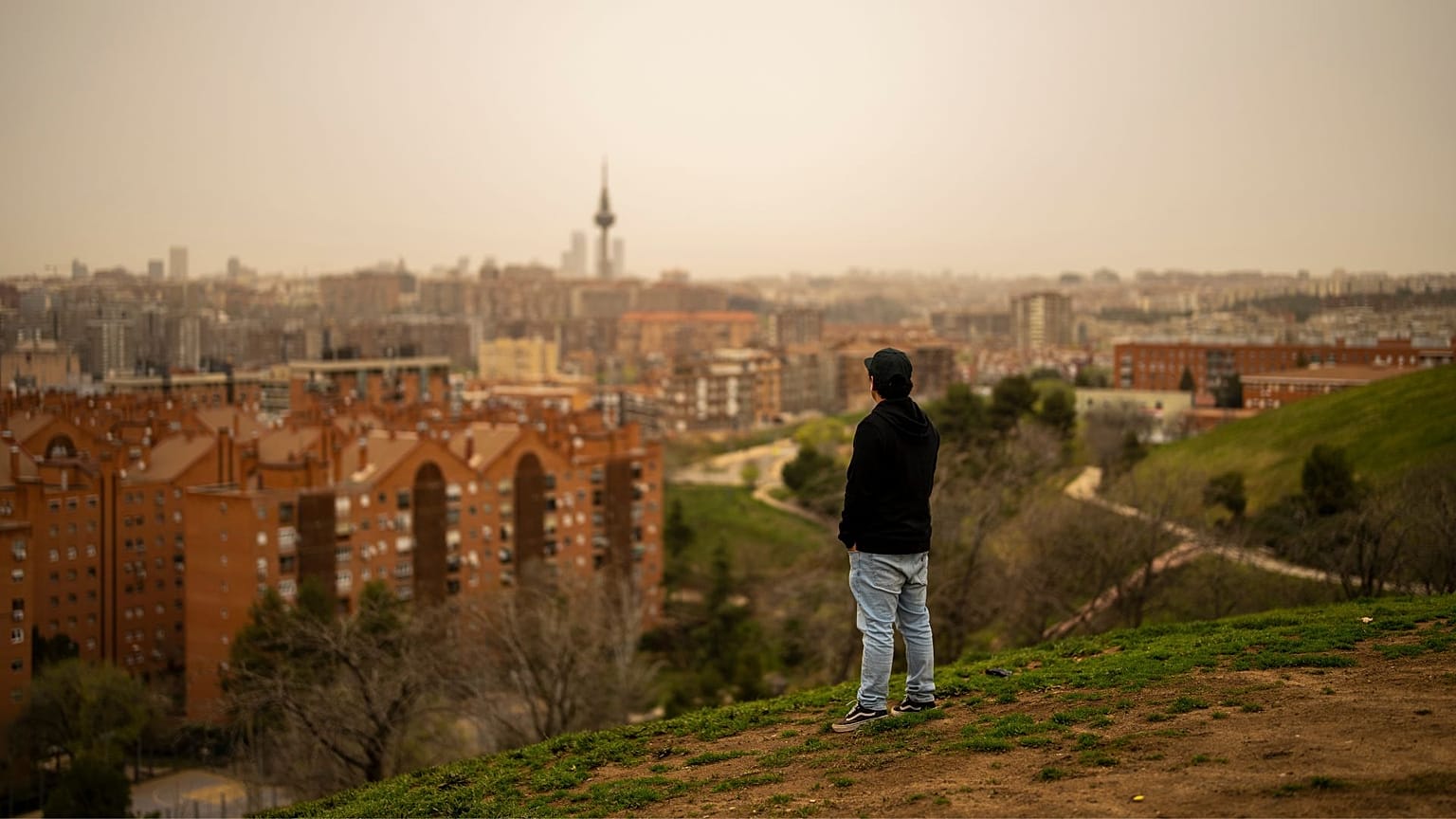
A massive plume of Saharan dust is currently sweeping across the Mediterranean and into Western Europe, bringing with it orange sunsets, hazy horizons, and a fine layer of desert sand that will coat everything from windscreens to solar panels.
According to the latest forecasts from the Copernicus Atmosphere Monitoring Service (CAMS), the plume is expected to move northward over the coming days, significantly impacting air quality across the Iberian Peninsula before reaching as far as the UK and Scandinavia.
Those particles have been lofted into the air from the Sahara, and travelled thousands of kilometres to Europe. "It just shows that we are connected across borders and across continents by the composition of the atmosphere," says Mark Parrington, Senior Scientist at CAMS.
What are the health risks of PM10 dust?
While the dust makes for spectacular sepia-toned photos, it also brings a silent health risk. National weather services, including AEMET in Spain, IPMA in Portugal, and Météo-France, have issued warnings regarding degraded air quality.
The primary concern during a Saharan dust event is PM10, meaning particulate matter that is less than 10 micrometres in diameter. These are relatively coarse particles, but are small enough to pass into the lungs, where they can irritate the airways, exacerbate asthma, and impact vulnerable groups like the elderly and young children.
If you live in a European city, you are probably more familiar with PM2.5 pollution, which is much finer, and comes from exhaust fumes, industrial processes and combustion of wood. As PM2.5 particles are smaller, they can penetrate deeper into the lungs and even enter the bloodstream.
While Saharan dust is primarily composed of the larger PM10 mineral particles, the sheer concentration during these events can cause total particulate levels to spike far beyond World Health Organization safety limits in some areas.
Is climate change to blame for dust pollution?
Saharan dust events often make headlines, and while they remind us of hot and dusty environments, we should be careful about linking them to a warming planet.
According to Parrington, the science isn't settled yet. "There's no clear picture on exactly how desertification affects the dust source," he explains, referring to the expansion of the Sahara Desert southwards, spurred by climate change and human activity.
Parrington points out that much of this dust originates from specific hotspots like the Bodélé Depression in Chad, where the dust is light enough to rise into the atmosphere under specific pressure conditions. Higher temperatures, drought and higher evaporation lead to lower soil moisture, and if you combine those effects with poor land management, it is conducive to more sand and dust storms.
Furthermore, there is some speculation that changes in atmospheric circulation linked to the effects of climate change may increase the frequency of Saharan dust storms reaching Europe.
Nevertheless, scientists are cautious to link the two directly, as there isn't enough historic data to allow them to trace a clear signal. "To the best of my knowledge there are no conclusive studies linking how desertification and deforestation and other things are affecting mineral dust in the atmosphere, so I think it's still quite an open question," Parrington tells Euronews Green.
What should you expect later this week?
As the dust moves through, residents in affected areas may see the particles mixed with rain, leaving a trademark murky residue on surfaces once the water evaporates.
Health officials recommend that people in high-impact zones avoid strenuous outdoor exercise while the haze persists.
For others, it might be time to whip out your best camera to capture a few Martian-style sunset shots as the dust scatters the evening light into vibrant oranges and reds.
The global aerosol forecast from CAMS, showing the Saharan dust event, can be seen by following this link.