
















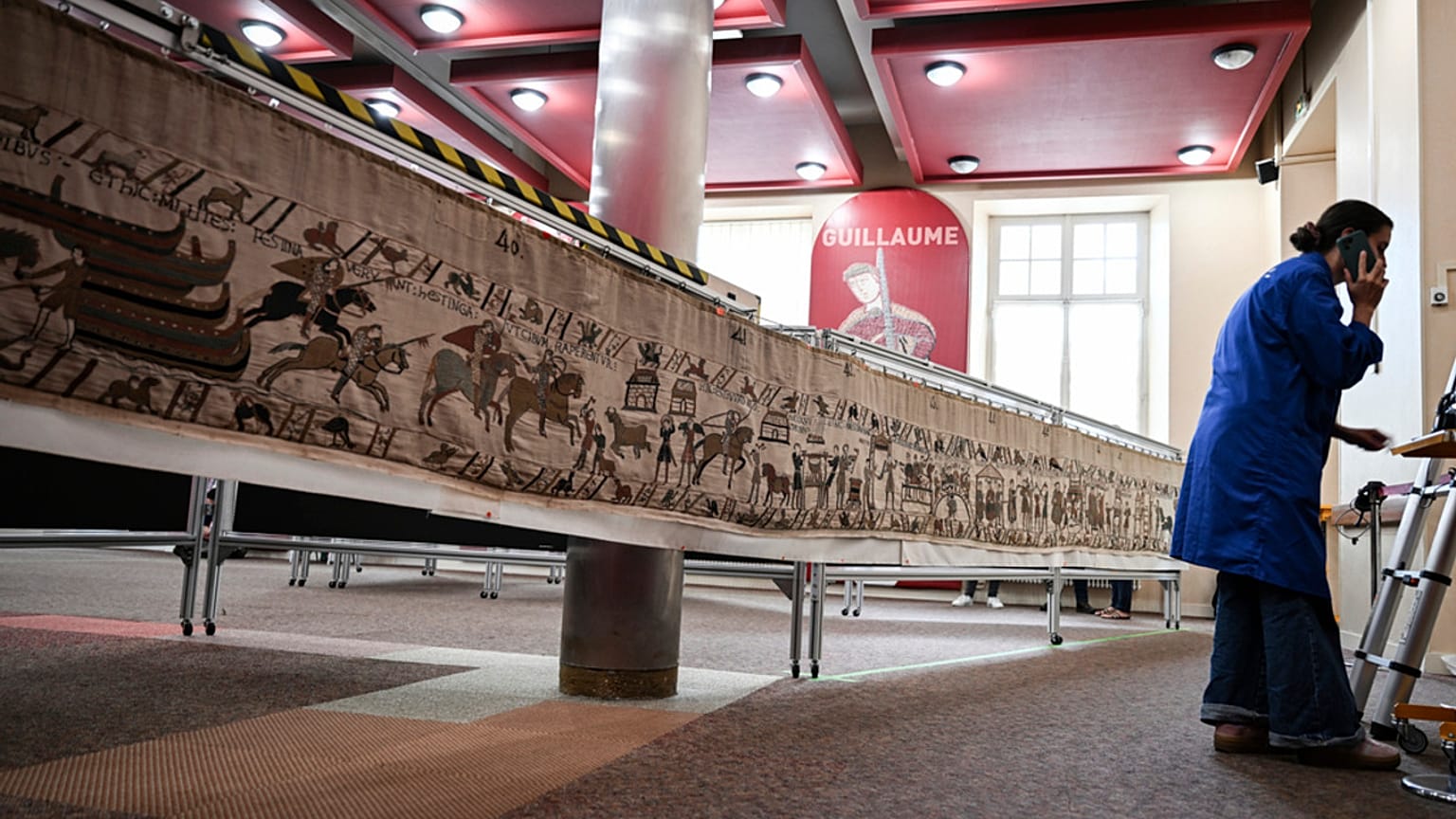













The loan of the work, listed in UNESCO’s Memory of the World Register, had sparked numerous protests in France, mainly due to its fragility.
The famous Bayeux Tapestry will be shown in London for the first time "laid out flat and in its full length in a specially designed display case," according to the British Museum.
 ADVERTISEMENT
ADVERTISEMENT
ADVERTISEMENT
"Displaying the tapestry flat allows the public to fully appreciate the scale of this spectacular and unique piece of medieval embroidery," the museum said in a statement issued on Monday. "It also allows the museum to bring it to life in a new and imaginative way, with digital features helping to deepen understanding."
"The Bayeux Tapestry is one of the most important and distinctive cultural artefacts in the world. It illustrates the deep ties between Britain and France and captivates people of all backgrounds and all ages", said museum director Nicholas Cullinan.
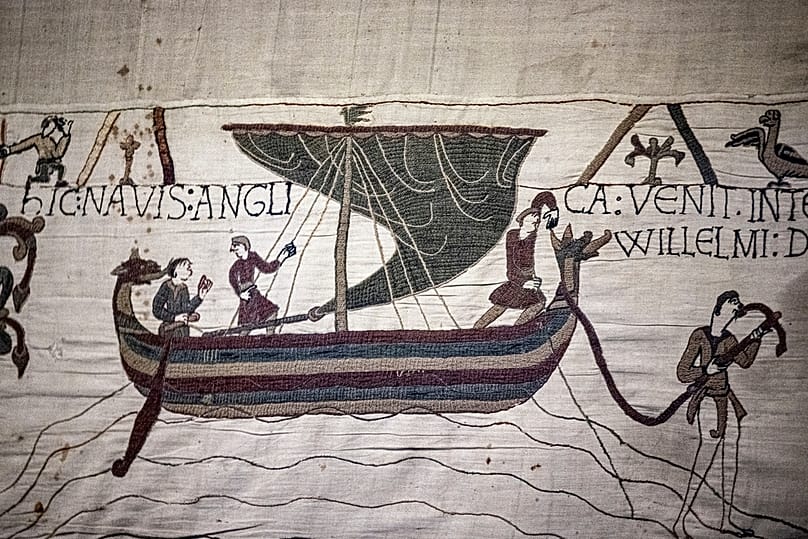
"Displaying the Bayeux Tapestry at the British Museum gives visitors a unique opportunity to immerse themselves in history", added Michael Lewis,the exhibition's curator. "It will be an original and exciting presentation of the tapestry’s story: the events that led up to the Norman Conquest, a decisive moment that changed England forever."
The historic work will be shown alongside other loans from British and European institutions that will set it in its medieval context, museum officials said.
These will include rare documents, illuminated manuscripts and even a hoard of silver coins.
A transfer sparking controversy
Dating from the 11th century and depicting the Norman Conquest of England in 1066, the 68-metre-long tapestry has been moved from its museum in Bayeux for the first time in more than 40 years to go on show as part of a major exhibition.
The loan follows a pledge made in July 2025 by the French President Emmanuel Macron to allow the tapestry to be transferred to the British Museum for 18 months to celebrate relations between France and Britain.
The decision, however, sparked an outcry among heritage experts, worried about the already fragile condition of the ancient embroidery. Last July, a petition gathered some 45,000 signatures against the loan in barely a week.
Didier Rykner, editor-in-chief of the website La Tribune de l'Art, argued at the time that the tapestry was "far too fragile to be transported without significant risk. The tapestry specialists, the restorers who work on it and the curators say there is a risk of tears and loss of material caused by handling and vibrations during transport", he said. "It is unacceptable to run the risk of this absolutely unique work being damaged."
Since 2020, experts have painstakingly recorded 24,204 stains, 9,646 holes and 30 tears on the work, which was inscribed on UNESCO’s "Memory of the World" register in 2007.
The exhibition "The Bayeux Tapestry Experience" is due to open to the public on 10 September and will run until 11 July next year.