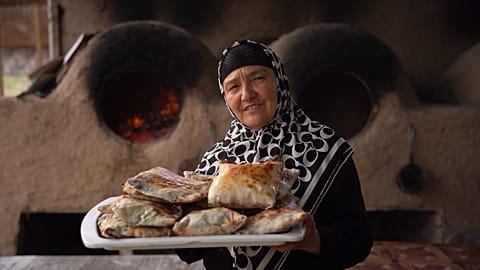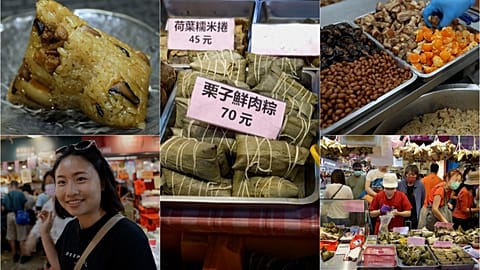































Jiaozi, Shuijiao, Bao, Wonton, Mantou, Manty, Manta, Chuchvara, Pelmeni, Düşbərə, Gurza, Khinkali. So many names, so many dumplings.
The story of the metamorphosis of these delicious pastry parcels begins its journey in China – Central Asia – South Caucasus - Europe.
 ADVERTISEMENT
ADVERTISEMENT
ADVERTISEMENT
Parallel to the Silk Road story runs what might be called the “Dumpling Belt”, where these humble dishes travelled the trade routes, changing names, shapes and cooking methods as they moved westwards.
As we explore the tasty treats, we see the subtle changes as you travel through borders, regions and countries.
Once Upon a Time in China
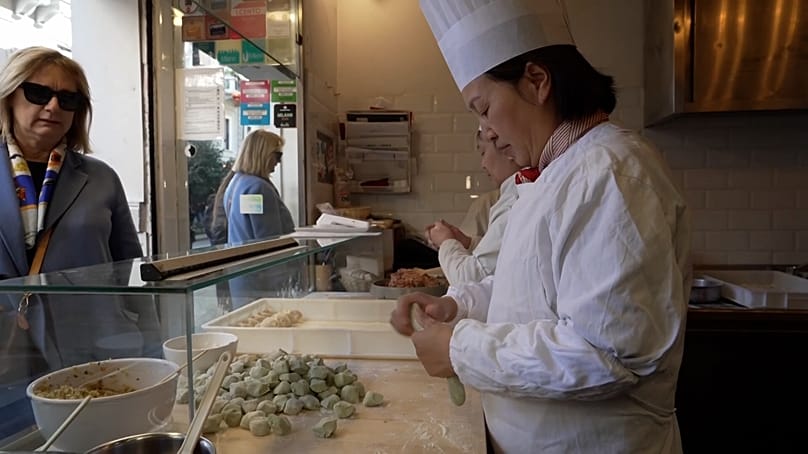
According to Chinese tradition, their story begins with the legendary physician Zhang Zhongjing, who, during a bitter winter nearly two millennia ago, folded dough around mutton, herbs and warming spices to treat villagers suffering from frostbitten ears, shaping the parcels to resemble the ears themselves.
Archaeological discoveries in Xinjiang’s Turfan region – dumplings preserved for over a thousand years – and early writings such as the 3rd-century poem of scholar Shu Xi describing Mantou suggest that these simple bundles of dough and filling have long been part medicine, part sustenance, and wholly enduring companions of travellers across the ancient routes of Eurasia.
The shapeshifter
From the steaming baskets of China, dumplings then travelled westwards with merchants, nomads and caravans.
They adapted to new landscapes and tastes as they went and as they evolved across Central Asia, they became larger, heartier creations such as manty and Manti, filled more generously with lamb and onion and cooked over rising clouds of steam.
Further along the ancient routes, the dumpling continued to transform and in Uzbekistan the delicate chuchvara and Manti emerged; in Kazakhstan the robust Manti settled, and in the South Caucasus the finely crafted Azerbaijani Düşbərə and Gürzə were created.
Each reflected the ingredients, techniques, and traditions of its home, and these variations revealed how a simple idea—dough wrapped around a savoury filling—became a culinary traveller, reshaped by every culture it encountered along the Dumpling Belt.
In the kitchens of Azerbaijan
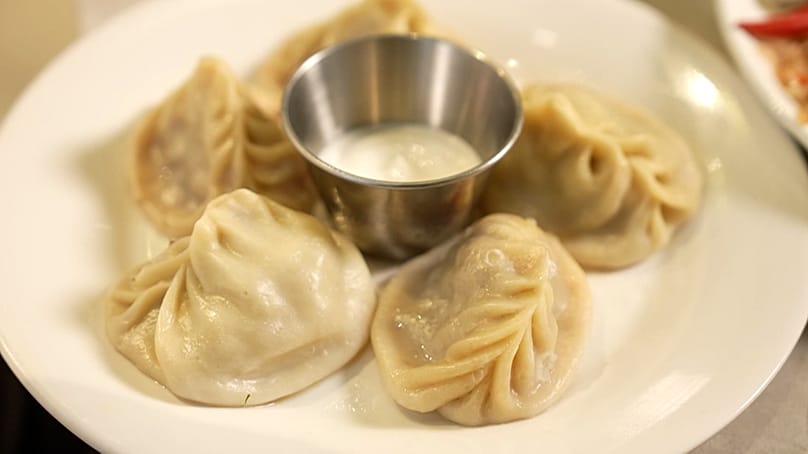
In Azerbaijan, the dumpling takes on two particularly distinctive forms: Düşbərə and Gürzə.
At first glance they may seem modest, but both are celebrated for the precision and care they demand. Düşbərə are famously tiny—delicate parcels of dough filled with minced lamb and served in a fragrant broth/soup—so small that tradition says dozens should fit onto a single spoon.
Gürzə, by contrast, is slightly larger and hand-pinched along the top in a braided fold said to resemble a snake, their name echoing the local word for a viper.
Both dishes rely on simple ingredients—fine dough, seasoned meat, herbs and broth—but their true character lies in the technique and patience required to shape them, where the skills are often passed from generation to generation in Azerbaijani kitchens.
Today, chefs continue to honour these traditions while adding their own interpretations, keeping these beloved dumplings at the heart of the country’s culinary identity.

Chef Ilkin Akbarzadeh is President of the Baku Culinary Association and has a substantial following of over 60 000 on instagram. He explained why dumplings are an intrinsic part of Azerbaijani heritage.
“Dumpling, this is part of our traditional cuisine, the heritage cuisine in Azerbaijan.”
“I think probably, many of these dumplings are coming from Asia, from China, and after some kind of transformers for every culture, every people, and all regions,” he says.
All the types are made with flour, Akbarzade notes:
“I mean the dushbarar, kingels and the gurza, and different types of this type of food was cooked from the dough and stuffed with meat.”
He says the consumption of dumplings happens in the colder months: “Usually in our culture, people eat it in winter time. For energy, for the health, for cold weather, you're heating the whole body, and that usually representing this food in the winter, in our culture.”
There are many versions of meat or vegetables wrapped in dough in Azerbaijan, including dushbara, kutabs and gurza. The renowned chef says that the way to eat dusbara, which is used in a broth is “in the one spoon, 13 on the 15 pieces of the small dushbaras.”
The gurzas dumpling, he says are traditionally served with a sprinkling of sumac and/or yogurt/mint/garlic sauce.
Uzbekistan: The home of Manti
Across Central Asia, dumplings take on heartier forms shaped by nomadic traditions and the region’s love of communal cooking.
In Uzbekistan, one of the most iconic is Manti, which are large, steamed dumplings whose recipes are carefully passed down through generations. They are often filled with a mixture of lamb, beef and finely chopped onion. The balance of ingredients is absolutely key.
Local resident Yulduz Rakhmonova explains: “I learned how to make Manti from my grandmother, who patiently taught us, her grandchildren, the craft of Uzbek cuisine. For the filling, we would mix lamb with beef and use an equal amount of onion to the meat, which would form a broth that gives Manti its distinctive flavour.”
She adds that the choice of meat is crucial, insisting that only fresh, high-quality ingredients should be used.
For many families, the techniques of preparing Manti are inherited alongside the recipe itself.
Ezoza Irmatova recalls learning from her mother-in-law:
“The dough for Manti must be very thin, yet strong. For this, you should use premium-quality wheat and room-temperature water. If you do everything correctly, even elderly people will enjoy the dish.”
The careful folding of each dumpling is considered an art, with cooks striving for uniform shapes that are as aesthetically pleasing to the eye as they are to the palate.
Manti is commonly prepared in large quantities at home using stacked steamers known as a Mantyshnitsa, allowing families to cook dozens at once.
The process often becomes a shared activity, with several generations gathering around the table to roll dough, fill and fold the dumplings before they are steamed.

While small regional variations exist in seasoning and shape, the essence of the dish remains the same.
In Uzbekistan, Manti is more than a meal - it is a symbol of hospitality, family tradition and the enduring culture of the dumpling along the ancient trade routes
Crossing the steppe from Uzbekistan to neighbouring Kazakhstan, the dumpling continues its journey, still widely known as Manti, though other variations of the name—such as mantas—also appear across the region. Despite the subtle shifts in language and preparation, the essence remains unchanged: seasoned meat wrapped carefully inside thin dough.
Kazakhstan: Dumplings of the Steppe
In Kazakhstan, Manti occupy an important place in both everyday cooking and festive gatherings.
Traditionally, the dish was prepared for holidays or to welcome honoured guests, though today it is also enjoyed as a comforting meal at home. Compared with another beloved national dish, Beshbarmak, which can take several hours to prepare, Manti is considered relatively convenient, typically taking around one-and-a-half to two hours.
For many families, the recipe is passed down through generations.
Dinara Amangeldina, a resident of Astana, recalls learning the craft from her mother.
“As a child, my mother cooked Manti only for holidays, and every time she invited my brother and me to help her in sculpting,” she says.
“Now, years later, Manti has become an integral part of our cuisine, and we can cook them at will. We will never forget the thrill of anticipating a delicious meal that brings the whole family together.”
The dough itself plays an essential role. Usually made from flour, water and salt—sometimes with the addition of an egg for extra firmness—it is kneaded by hand and rolled thin, around two to three millimetres thick, before being cut into squares and filled.
What gives Kazakh Manti their distinctive juiciness is the filling. While minced meat with onion is the classic combination, cooks often add Kurdyuk, which is rich sheep fat, or vegetables to enhance flavour and texture. The choice of meat—horse, beef or mutton—can subtly change the character of the dish.
Kamilya Anasheva, also from Astana, explains that preparing Manti is as much about family as it is about food.
“We cook Manti when they bring sogym [fresh meat from the butcher] on weekends. The whole family is engaged in its processing—cutting and preparing the minced meat—and then all together we sculpt Manti.”
Kazakh Manti are typically larger than many other dumplings along the Silk Road, with thin dough wrapped around generous fillings. Most are shaped like envelopes, with the edges joined crosswise, though some cooks form them into elegant “roses” or braided shapes.
Ultimately, the significance of the dish lies not only in its ingredients but in the ritual of making it. The shared process of rolling, filling and folding brings families together, giving Kazakh Manti their enduring place in the country’s culinary and cultural life.

The Dumpling Belt reaches Europe
As the Dumpling Belt stretches further west, the familiar idea of dough wrapped around a savoury filling continues its quiet transformation across Europe.
In Italy, the concept evolves into elegant forms such as ravioli, tortellini and agnolotti, where delicate pasta envelopes rich fillings of meat, cheese or vegetables.
Across Eastern Europe, dumplings appear as pierogi in Poland and pelmeni in Russia, while in the United Kingdom, pastry parcels take shape in hearty regional traditions such as pasties and suet dumplings.
Even in France and Spain, echoes of the same culinary idea appear in dishes that combine dough, filling and careful folding, adapted to local tastes and ingredients.
Though the names, shapes, and techniques differ, the principle remains remarkably consistent. From the medicinal dumplings of ancient China to the family kitchens of Central Asia and the refined pasta traditions of Europe, the dumpling’s journey tells a story not just of food, but of movement, exchange and shared human creativity.
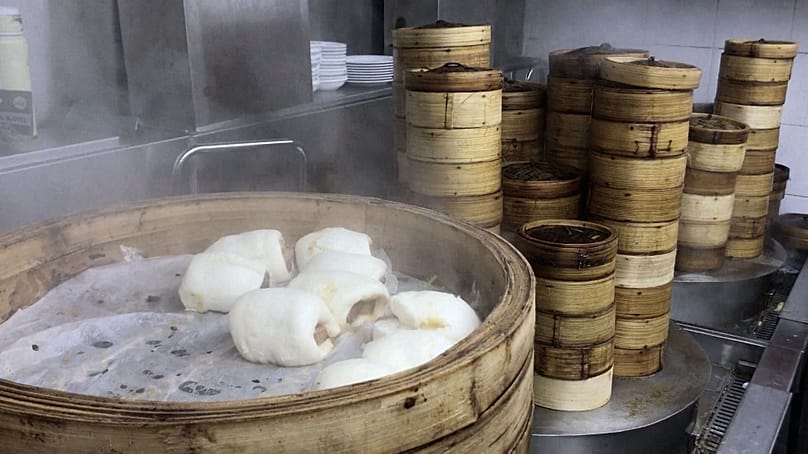
Along the old trade routes of the Silk Road, this enduring Dumpling Belt was born out of a simple idea and has travelled thousands of miles.
It proves that sometimes the most universal dishes begin with nothing more than flour, filling, and a pair of patient hands.
Read more