













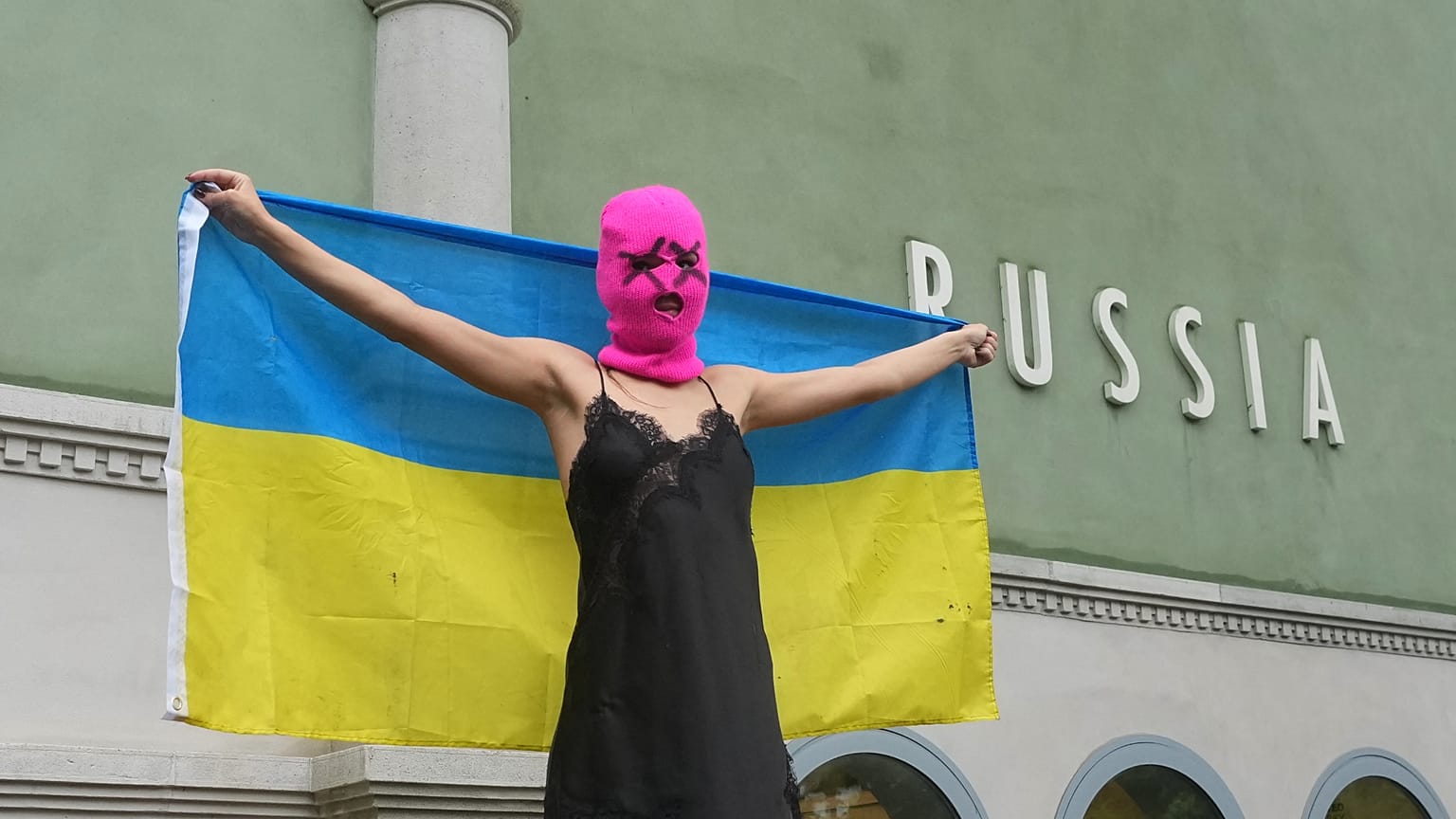













New clash between the European Union and the Venice Biennale: EU funds halted, the Foundation appeals and Italy’s government voices criticism.
The European Commission has confirmed the withdrawal of the €2 million grant earmarked for the La Biennale di Venezia Foundation, opening up a new front of tension between Brussels and one of Italy's most important cultural institutions.
 ADVERTISEMENT
ADVERTISEMENT
ADVERTISEMENT
The decision, formalised on Tuesday by the European Education and Culture Executive Agency (Eacea) after a legal assessment and on the Commission's recommendation, is linked to Russia's controversial participation in the 2026 Art Biennale.
According to the EU executive, cultural events supported with Union funds must promote and uphold democratic values, dialogue, diversity and freedom of expression, principles that 'are not respected in today's Russia'. This is the reasoning with which Brussels has justified cutting off the European contribution.
Why Brussels decided to cut the funding
The affair stems from Russia's return to the Venice Biennale for the first time since the start of the invasion of Ukraine in 2022.
The Russian pavilion, owned by the Russian state, hosts the performance and music project 'The Tree Is Rooted in the Sky', created by around fifty artists selected by the Moscow authorities. Although the pavilion has remained closed to the public, the installation has been made visible from outside via a large screen.
The choice prompted strong protests from Ukraine and from numerous artists, curators and cultural professionals from around the world, who accused Moscow of using its presence at the Biennale as an instrument of cultural propaganda and 'hybrid war'. Kyiv also challenged the alleged ties of the pavilion's curator with the Russian arms industry.
In recent months the European Commission had already warned the Foundation that the choice could lead to the suspension of EU funding. After deeming the explanations provided by the Biennale insufficient, Brussels has decided to proceed with the definitive withdrawal of the contribution.
The Biennale: 'We will defend our position'
The La Biennale di Venezia Foundation has announced that it will lodge an appeal against the decision.
In a statement, the institution stresses that the move had 'long been signalled' and reiterates that it is ready to defend its position before the competent authorities.
The Biennale also points out that the European grant did not concern the artistic event at the centre of the controversy, but activities in the Cinema Sector, in particular Biennale College and the Venice Production Bridge.
'The grant co-funded activities that have nothing to do with Russia's participation in the Art Biennale,' the Foundation says, specifying that the decision 'has no significant impact on the budget, the accounts or the planned activities, which remain fully confirmed'.
Government reaction: Borgonzoni hits out at Brussels
The Italian government responded immediately. Undersecretary for Culture Lucia Borgonzoni expressed full support for the Biennale's decision to challenge the European measure.
'In Eacea's reasoning, no grounds are set out that would justify a decision of this magnitude. This is yet another shameful political and ideological attack on an institution that creates culture and refuses to bend to become a tool for those who like to throw their weight around in the European Union,' she said.
In recent days other centre-right figures have also criticised Brussels' choice. The president of the Veneto region, Luca Zaia, described the withdrawal of the funding as 'unacceptable', arguing that artists cannot be treated as 'soldiers' of their respective governments and that culture must continue to provide a space for discussion and dialogue even in times of international crisis.
A dispute set to continue
The Biennale case is one of the most delicate entanglements between foreign policy, culture and EU funding since the start of the war in Ukraine.
Brussels reiterates that Union funds must be consistent with the EU's founding values, while the Foundation insists on its cultural autonomy and contests the link between the European contribution earmarked for film activities and the participation of the Russian pavilion in the Art Biennale.
The clash is now set to shift onto the legal terrain, with the appeal announced by the Biennale which could open a new chapter in the dispute between the Venetian institution and the European Commission.