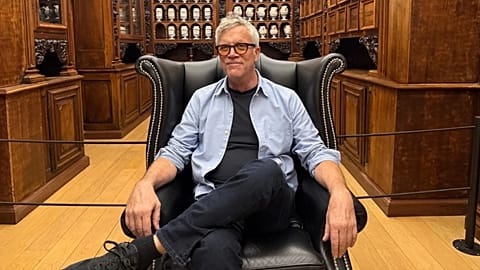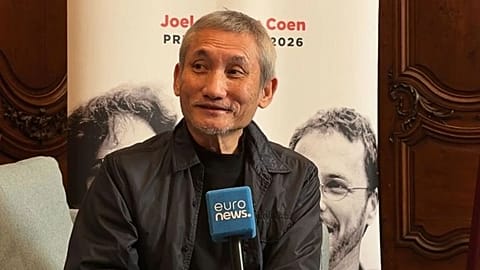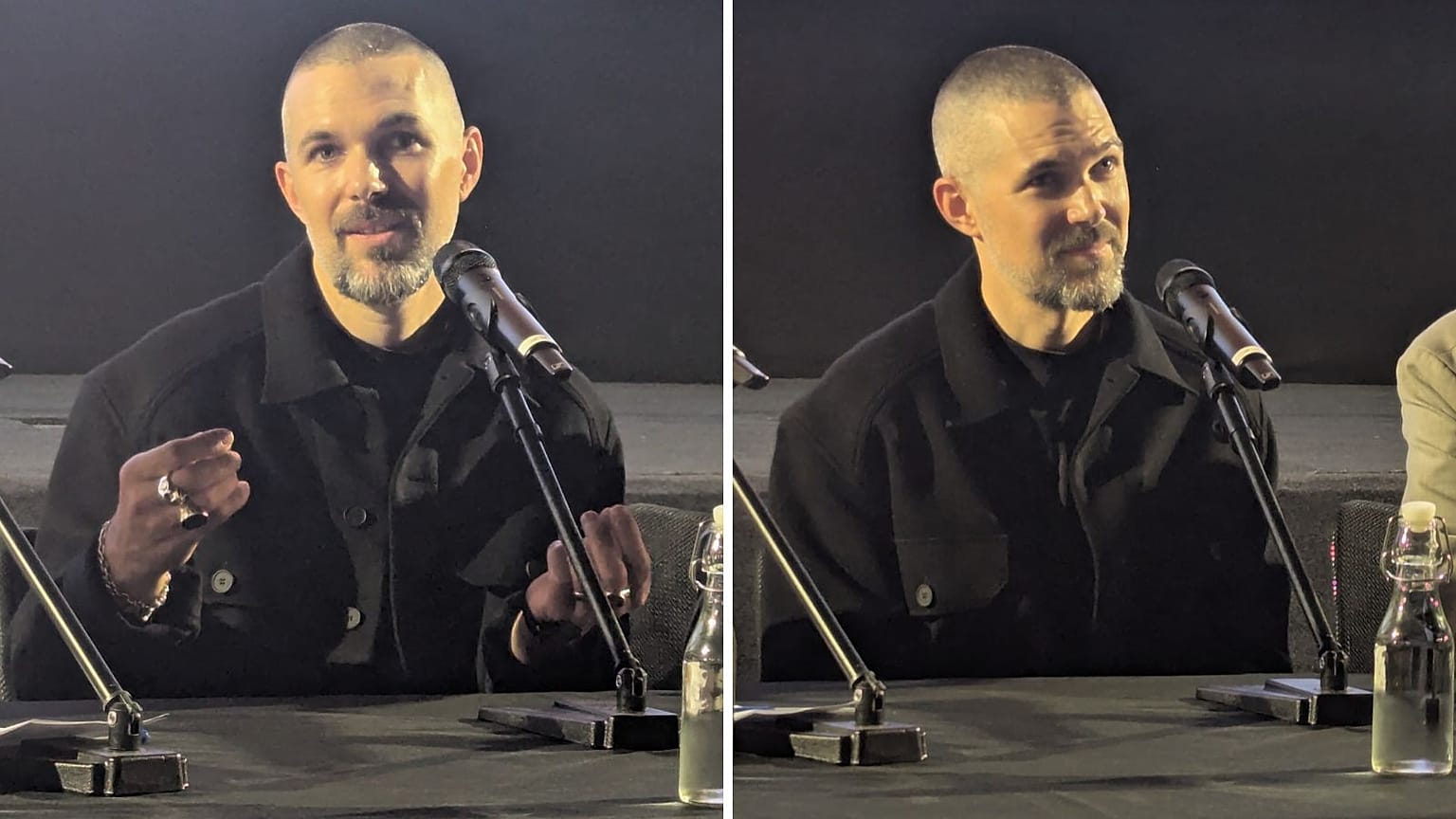


A world exclusive for 'Werwulf', talk of Lily-Rose Depp's eyes, and the enduring horror of Ridley Scott's 'Alien'... Director Robert Eggers treats audiences at Lyon's Lumière Film Festival.
A guest of honour at this year’s Lumière Film Festival was American director Robert Eggers, the mastermind behind gothic folklore horror gems like The VVitch, The Lighthouse and Nosferatu.
 ADVERTISEMENT
Prior to the upcoming release of his new film, Werwulf, a werewolf horror film set in 14th-century England starring Nosferatu alum Aaron Taylor-Johnson, Lily-Rose Depp and Willem Dafoe, the director sat down with the Lyon audience to discuss the dark and instantly recognisable worlds he has created on screen.
Sadly, there was no time for any questions on the director’s upcoming project - an adaptation of Shakespeare's "Romeo And Juliet" – and very little space given to the audience so they could ask questions. This is a recurring issue at the Lumière Festival and a shame, since the only two questions afforded to the attendees of Eggers’ masterclass were excellent.
Still, the Lumière audience was treated to nothing short of a world exclusive: the first screening of the beginning of Werwulf, which was prefaced by Eggers saying that the grading process is complex and that he was still working out some of the kinks in the lab.
Warning: Mild spoilers for the opening scenes of Werwulf.
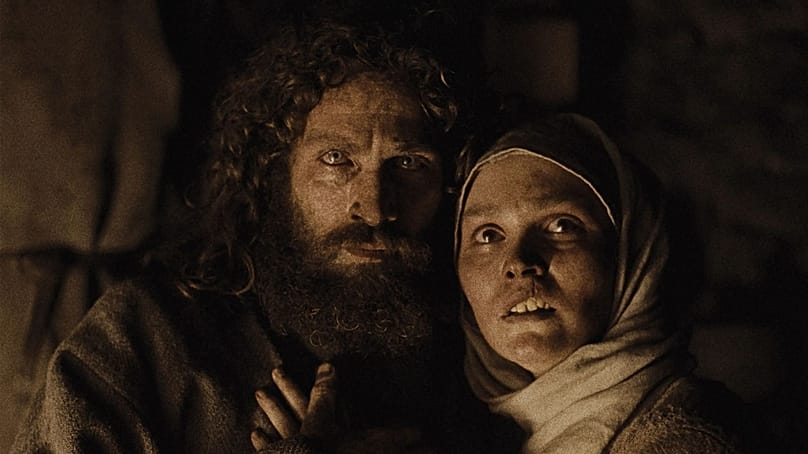
The film starts with a howl in the dark, followed by the first (and not last, as Eggers confirmed) transformation. There’s vomit, there’s screaming, there’s writhing, there’s bone crunching. Safe to say that this is Eggers – as is his custom - taking mythical authenticity seriously and delivering something that goes beyond the sudden eruption of face fur... It’s significantly more visceral than any other body horror transformation we’ve seen in previous werewolf movies.
The audience barely got to glimpse the creature’s final form, but did witness the consequences. In this case, a lot of dead livestock. This was followed by a bloodied figure (Taylor-Johnson), back in human form, who knocks on a door and is greeted by a disfigured woman (Depp) in a... shall we say unique way, which suggests that Eggers will be tackling the knotty interspace where violence, animality and sexuality co-exist.
Take it from us: we’re in for a treat once Eggers' latest horror film is released and if you liked Nosferatu, chances are you'll get a kick out of this. Werwulf comes out next year, on 1 January in the UK and the following week in mainland Europe.
Before we get more nightmares under a full moon, here are the key takeaways from Robert Eggers’ masterclass.
On what he’s watching...
“All my favourite directors are dead and I rewatch films often – I watch Jack Clayton’s The Innocents once a year, and there are a lot of films I often revisit. In fact, I have a hard time keeping up with what’s in cinemas sometimes, because I’m always chipping away at a list of old films which generally have to do with research for what I’m currently working on.”
On the importance of silent cinema...
“I love silent cinema. Everybody knows the story that when sound cinema began, there was a dip in people using images to tell stories and it became all about dialogue. Of course, there are exceptions to the rule. Fritz Lang immediately knew how to do it. I think that I’ve succeeded in Werwulf in making a film where you can turn off the sound and still understand the story. The images are telling the story. Werwulf is also in Middle English, archaic English, but for English speaking audiences who don’t have the benefit of subtitles, you don’t really need to understand anything anyone says to understand the story. I was watching 12 Angry Men last night and it’s great – it's a dialogue-driven film and it’s cinema. But I’m more interested in telling stories with images.”
On the recurring image of women’s eyes in his films...
“Eyes are the window to the soul... And Anya (Taylor-Joy – The VVitch) and Lily-Rose (Depp – Nosferatu) have big eyes, so that helps! It can be a frustrating discipline for the actors at times... In The Odyssey, Christopher Nolan shoots with IMAX cameras, which are so big that actors can’t see each other, and they devised a mirror system so that actors can see each other. But I always put a little piece of tape near the lense, so actors often have to look at the camera... I always like tight eyelines... Watch Elem Klimov’s Come And See, and you realise why it’s a good idea to do that!
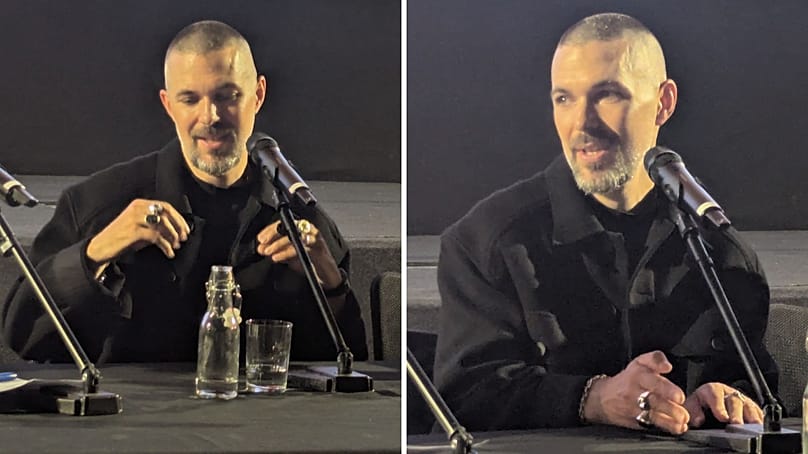
On why the past is such an inspiration compared to the modern world...
“I get enough of the kitchen sink in my own kitchen! It’s always a mirror to society but if the mirror is too close, I feel like the film can be working too hard to say something. By trying to make a film that is timeless and of the time... It’s impossible. Of course, I don’t live in a vacuum, and if I was making a period movie for purely a period audience, or a Viking movie for a Viking audience, that would be a problem! But in endeavouring to go into not only the verisimilitude of the physical world of the period but also the interior world of the period, I think we may be able to more easily see who are today and where we’re going.”
On the use of specific languages...
“Language is always very specific in all of my films and I like the way language informs how you think. Language isn’t perfect and it can’t really express everything. When you learn other languages, you learn different ways to think. ‘Oh, in Germany, they have a word for that concept I struggle to describe...’.”
On the common setting of night in his films...
“I hate night shoots! The older I get, the more it’s difficult! But if you’re making a vampire movie or a werewolf movie, you don’t have a choice. You know, I don’t like the end of Nosferatu, because it doesn’t really work. The monster, the actual vampire, has power in the darkness. But also, when you don’t see the monster, the monster has power. Like in Ridley Scott’s Alien. When you shine a bright light on the monster, it’s killing the illusion – because then you’re seeing Bill Skarsgård in makeup.”
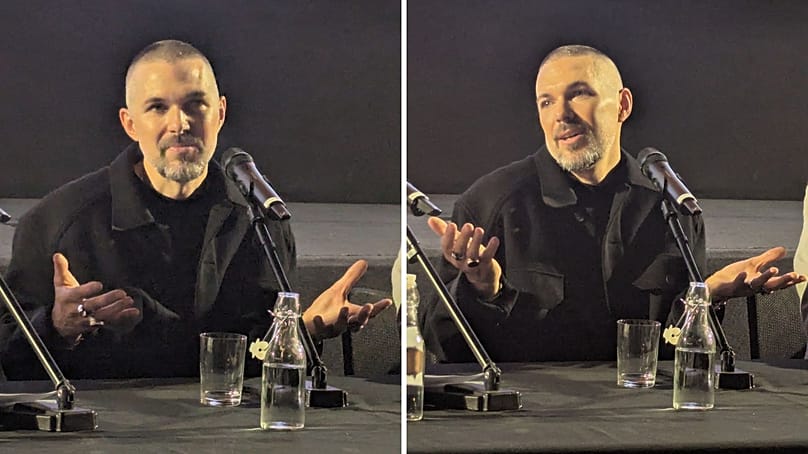
On what a Batman film directed by Robert Eggers would look like...
“There’s an internet rumour that I was doing a black-and-white, 1930s Batman as a detective movie... There are only so many movies you can make in a lifetime, so I wouldn’t make a comic book movie. But if I could make an infinite amount, that sounds like it could be fun! A 1930s Rolls Royce Batmobile, anyone?”
On creating a new monster from scratch, one which isn’t inspired by past myth or folklore...
“I’m not very creative! I read something that I haven’t seen and I do that! There is a part of me that feels this connection with the past and the urge to preserve it. For example, witches becoming hares is something common in British and Celtic folklore, but in America that idea was totally lost.”
On defining what a monster is...
“It’s always a reflection of us. (...) What is the trauma that doesn’t die? (...) There are many modern horror directors that I admire, but the touchstone for a creature is still for me Alien, 1979. The (H.R.) Giger design – it’s a phallus with a vagina... It’s us. And also, it has no eyes, and this gives it power. This is often the problem with werewolf movies – it's that the eyes of the werewolf aren’t right and you understand that it’s someone in a suit. With Alien, the creature is cold, which gives it more threat.”
Werwulf is out on 25 December in the US and Canada, and early January 2027 in European cinemas.