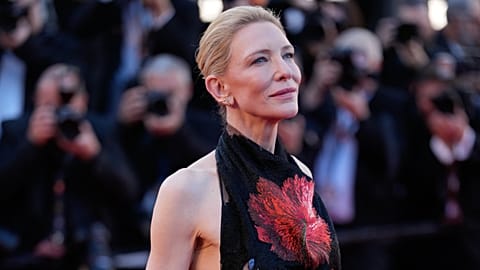





























A new free tool allows artists to decide whether or not to give the green light for their image to be used by artificial intelligence.
Every major technological revolution brings unpredictable consequences that are hard to absorb, often when it is already too late to act. In the case of unstoppable artificial intelligence, the debate among artists no longer revolves around whether it should exist or be used, but around how to protect themselves from it.
 ADVERTISEMENT
ADVERTISEMENT
ADVERTISEMENT
Javier Bardem has publicly voiced his rejection of this technology on several occasions because of what the actor describes as its vast ability to manipulate reality. He has therefore joined forces with Cate Blanchett and other Hollywood stars, including Meryl Streep, Emma Thompson, Helen Mirren, Kristen Stewart, George Clooney, Viola Davis and Tom Hanks, in a new online tool where any artist can register their level of consent for their face, voice, movements or even ideas to be transformed through AI.
The platform, of which Blanchett is a co-founder alongside Nikki Hexum, Doug Leeds and Eckart Walther, is called rslmedia.org and acts as a human consent identifier.
The artist or content creator simply has to register to verify their identity and state their level of consent, organised into three colour-coded levels: green, permitted; yellow, use allowed under certain conditions, such as payment; or red, prohibited. The result is a database of practical information that can be used by machines at large scale.
Identity as intellectual property
Ultimately, this non-profit website is based on the principle that human identity is also a form of intellectual property and therefore there must be an infrastructure where it can be recorded in a concrete and transparent way. In this way, AI companies can rely on a tool that complements emerging regulatory frameworks.
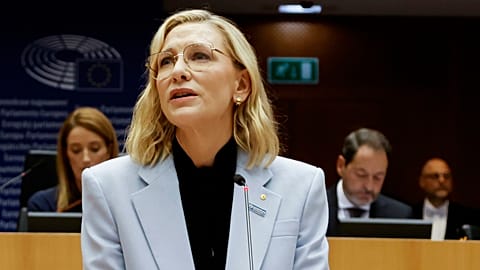
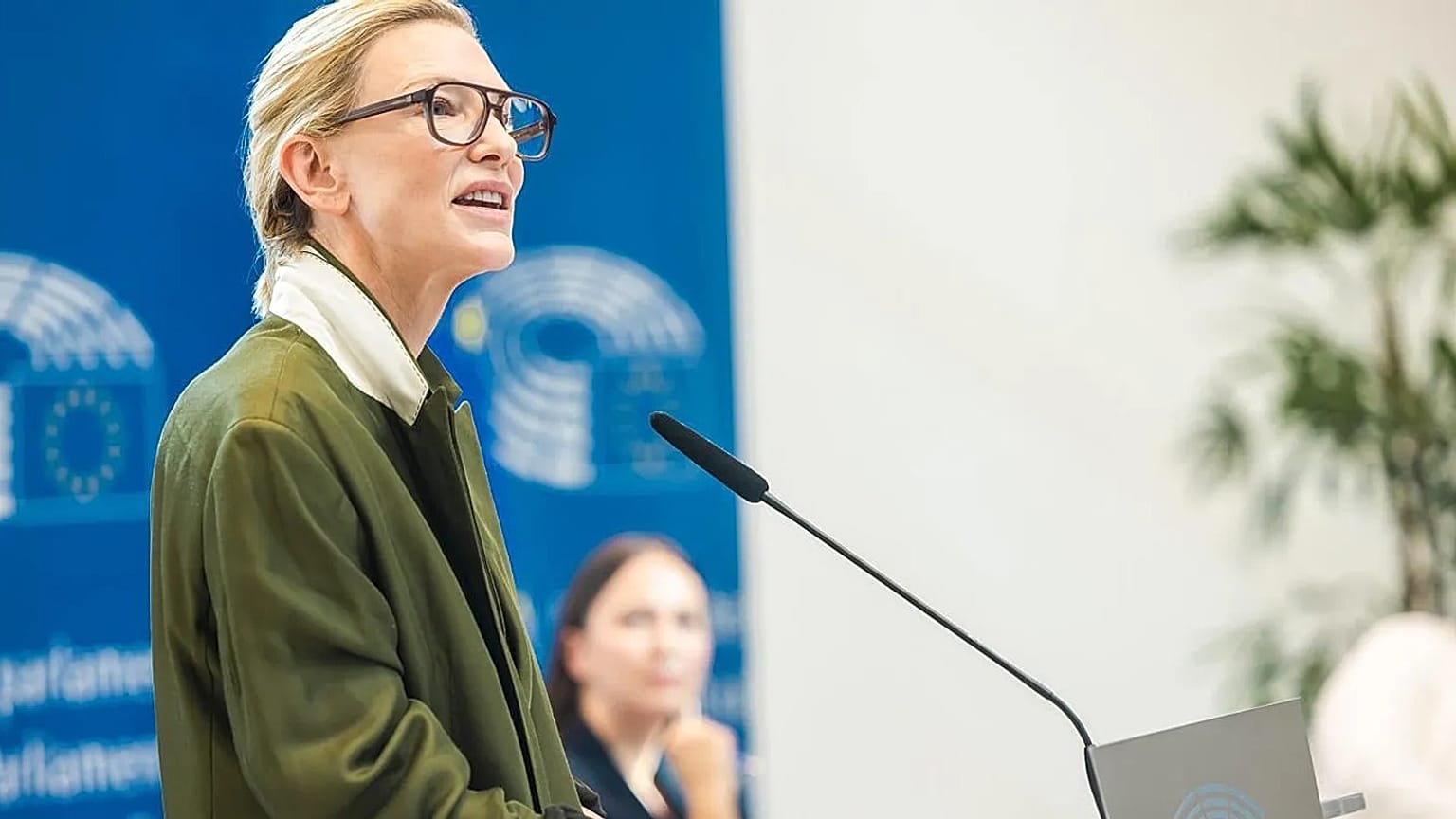
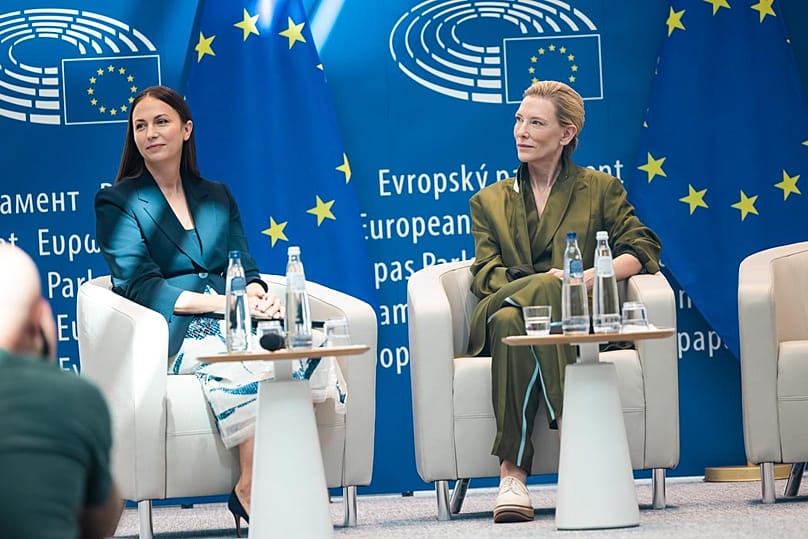
This is how Australian actor Cate Blanchett presented the initiative on Tuesday at the European Parliament, where the European Union’s Artificial Intelligence Act was adopted in 2024 as the world’s first comprehensive regulatory framework for AI.
“To find a path between unbridled enthusiasm and the dangers of AI, we need safeguards based on consent. Not to hold back technological progress – heaven forbid – but safeguards that can evolve at scale and at the same pace as the technology itself. Safeguards that protect our human rights,” Blanchett said. She attended the event together with film director Steven Soderbergh, known as the creator of films such as the ‘Ocean’s Eleven’ saga (2001), ‘Erin Brockovich’ (2000) and ‘Presence’ (2004).
A persuasive mechanism
Both the actor and the filmmaker joined MEP Eva Maydell for a discussion with legal advisers, film-makers, musicians, lawmakers and business leaders from the corporate sector, where some representatives of the technology industry voiced misgivings, fearing that projects of this kind could undermine Europe’s technology sector in relation to industries in competing countries.
Director Steven Soderbergh was clear on this point. “This is not a law, it’s not a restriction; it’s a persuasive mechanism to do the right thing in a simple, elegant way,” he said. On the dangers of AI, Soderbergh added: “There are a lot of things that AI can’t do and never will, and that’s why I’m not scared, but people need some sort of direction.”
A path opened up by these major stars that now looks clearer for millions of creators.