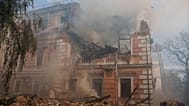



























Andrey Zvyagintsev's "Minotaur" claimed the Grand Prix, with the director using his speech to address Vladimir Putin, calling on him to 'stop the carnage' in Ukraine.
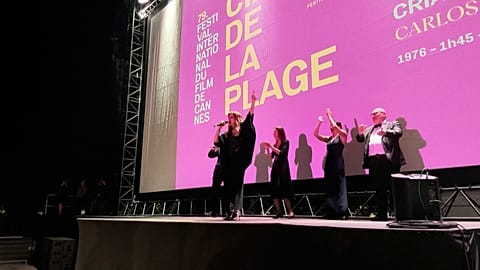
The winners of the 79th Cannes Film Festival have been announced at the closing ceremony on Saturday, as the world’s most closely watched film festival again gathered major auteurs, debut filmmakers and awards-season contenders on the French Riviera.
 ADVERTISEMENT
ADVERTISEMENT
ADVERTISEMENT
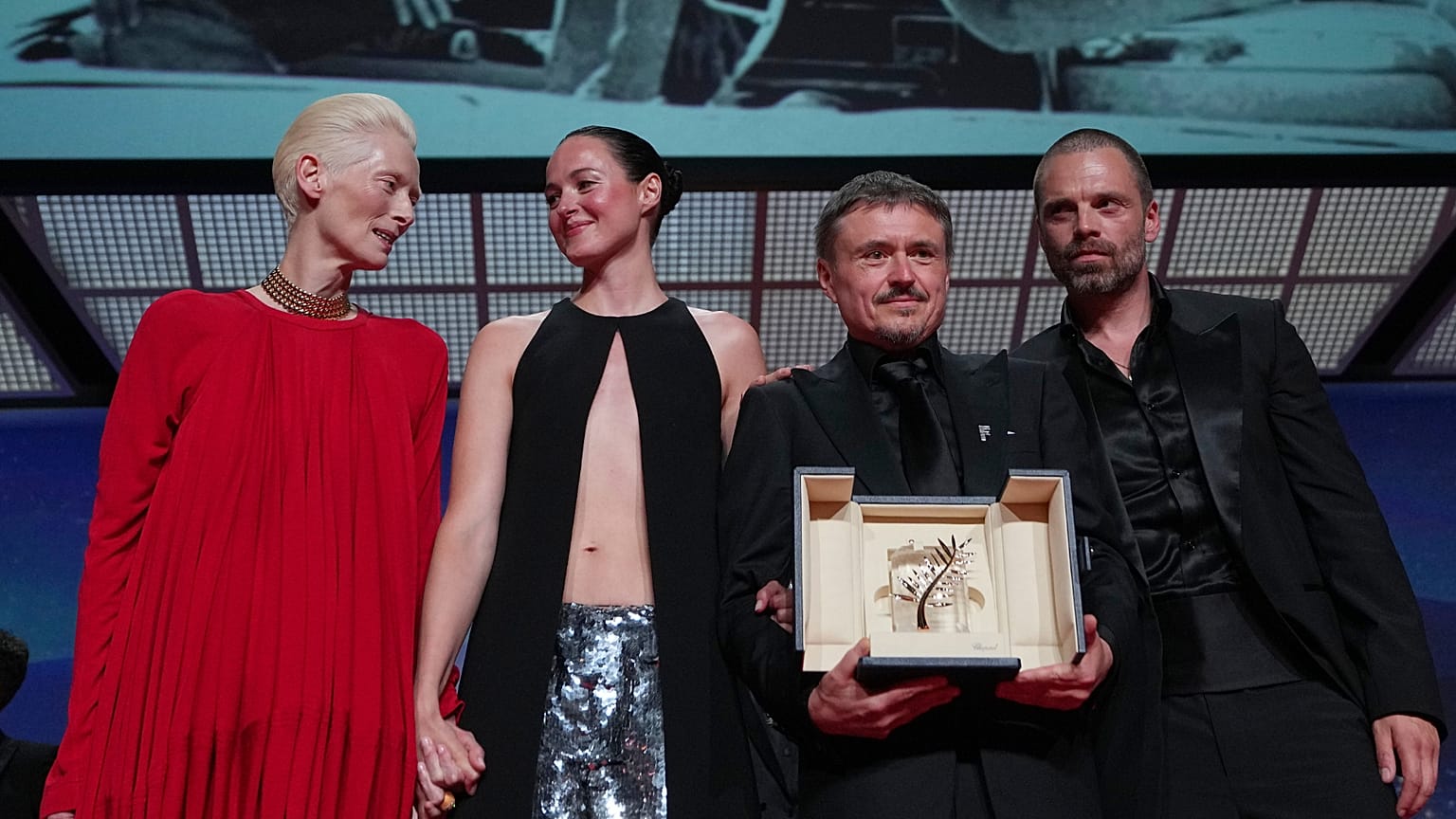
The 2026 Palme d'Or is awarded to Fjord by Cristian Mungiu, and thus succeeded A Simple Accident by Jafar Panahi of 2025.
The film, which draws on several recent real-life incidents, presents itself as a case study in the deepening divide between progressive and traditional values. It follows the Gheorghiu family, fervent Romanian evangelicals who relocate to a small Norwegian town on the edge of a fjord.
Mihai, portrayed by Sebastian Stan, fresh from his acclaimed turn as Donald Trump in Ali Abbasi’s The Apprentice (2024), is a Romanian aeronautical engineer married to a Norwegian woman, Lisbet. When the couple moves back to her native country, he reconnects with parts of her extended family and secures work as a computer programmer within the local evangelical community. Deeply religious, they raise their children with strict discipline and intense devotion as an expression of their faith. At first, institutions and neighbours greet them warmly. That changes when, one day at school, a teacher notices unexplained bruises on one of the daughters’ bodies.
The film "Minotaur" by Russian director and screenwriter Andrey Zvyagintsev won the 2026 Grand Prize, succeeding Joachim Trier's "Sentimental Value" in 2025.
Zvyagintsev delivered a political message in his acceptance speech, addressing Russian President Vladimir Putin and calling on him to "stop the carnage", referring to the Russian invasion of Ukraine, which has lasted for more than four years.
"There is someone else I would like to address personally today, in my own name. He is not using a VPN to follow this ceremony live, but I am certain that he has other, much more important decisions to make at the moment," said Andrei Zvyagintsev in Russian.
"Millions of people on both sides of the contact line dream of only one thing: that the massacres finally stop. And the only person who can put an end to this slaughter is the President of the Russian Federation putting an end to this carnage. The whole world is waiting for that," Zvyagintsev added.
The Best Director Award went to Javier Ambrossi and Javier Calvo for La Bola Negra, and to Pawel Pawlikowski for Fatherland, succeeding Kleber Mendonça Filho for L'Agent secret in 2025.
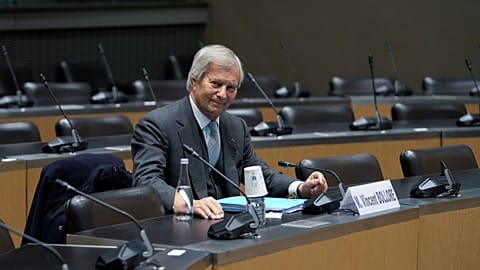
“Cinema must reflect the political situation, but not according to dictated conditions. It takes courage in this world to talk about what people really see. There must be a space of freedom for art. There are more and more people convinced that they are on the right side,” said Pawel Pawlikowski on stage, as the anti-Bolloré platform affair has shaken the Cannes Film Festival. "Cinema must resist, which is why we made this film," he concluded.
Tribute to Palestinian writer Mahmoud Darwish
Before announcing the best director award, Quebecois filmmaker and screenwriter Xavier Dolan paid tribute to Palestinian writer Mahmoud Darwish, quoting him thus: "On this earth, there is what deserves life, the hesitation of April, the smell of bread at dawn, a woman's opinions on men, the writings of Aeschylus. The beginning of love. Grass on a stone. Mothers, standing on a flute's thread. And the fear that memory inspires in conquerors."
The main competition jury was chaired by South Korean filmmaker Park Chan-wook and the festival’s official selection included 19 feature films in competition.
Main trends of 2026
Cannes 2026 is being shaped by a few clear themes: a stronger emphasis on auteur-driven and independent cinema, a noticeable tilt toward films about war, exile, displacement, and political conflict, and a lighter Hollywood/blockbuster presence than usual.
The festival also spotlighted more international and historically rooted stories, with several films using the past to speak to today’s authoritarian and social tensions.
Art-house and director-led films dominated the conversation, with critics describing this year’s lineup as more intimate and risk-taking than franchise-driven.
Conflict-related themes were prominent, especially war, migration, identity, grief, and the psychological effects of violence.
The festival’s broader cultural role is also expanding, with fashion, luxury, wellness, and tech drawing more attention alongside the films themselves.
Last year, Iranian director Jafar Panahi won the Palme d’Or for It Was Just an Accident, while Norwegian filmmaker Joachim Trier took the Grand Prix for Sentimental Value. Juliette Binoche presided over the 2025 jury, succeeding Greta Gerwig, who had chaired the 2024 panel.
The 2026 edition also featured Teenage Sex and Death at Camp Miasma by Jane Schoenbrun as the opening film for Un Certain Regard, underscoring the festival’s ongoing mix of established names and new voices.