




























Fearsome enormous creatures lay beneath the waves while dinosaurs roamed the Earth, now a new exhibition at London's Natural History Museum explores what lessons we can learn about climate change from Jurassic life underwater.
While dinosaurs ruled the land, giant reptiles dominated the world beneath at sea.
 ADVERTISEMENT
ADVERTISEMENT
ADVERTISEMENT
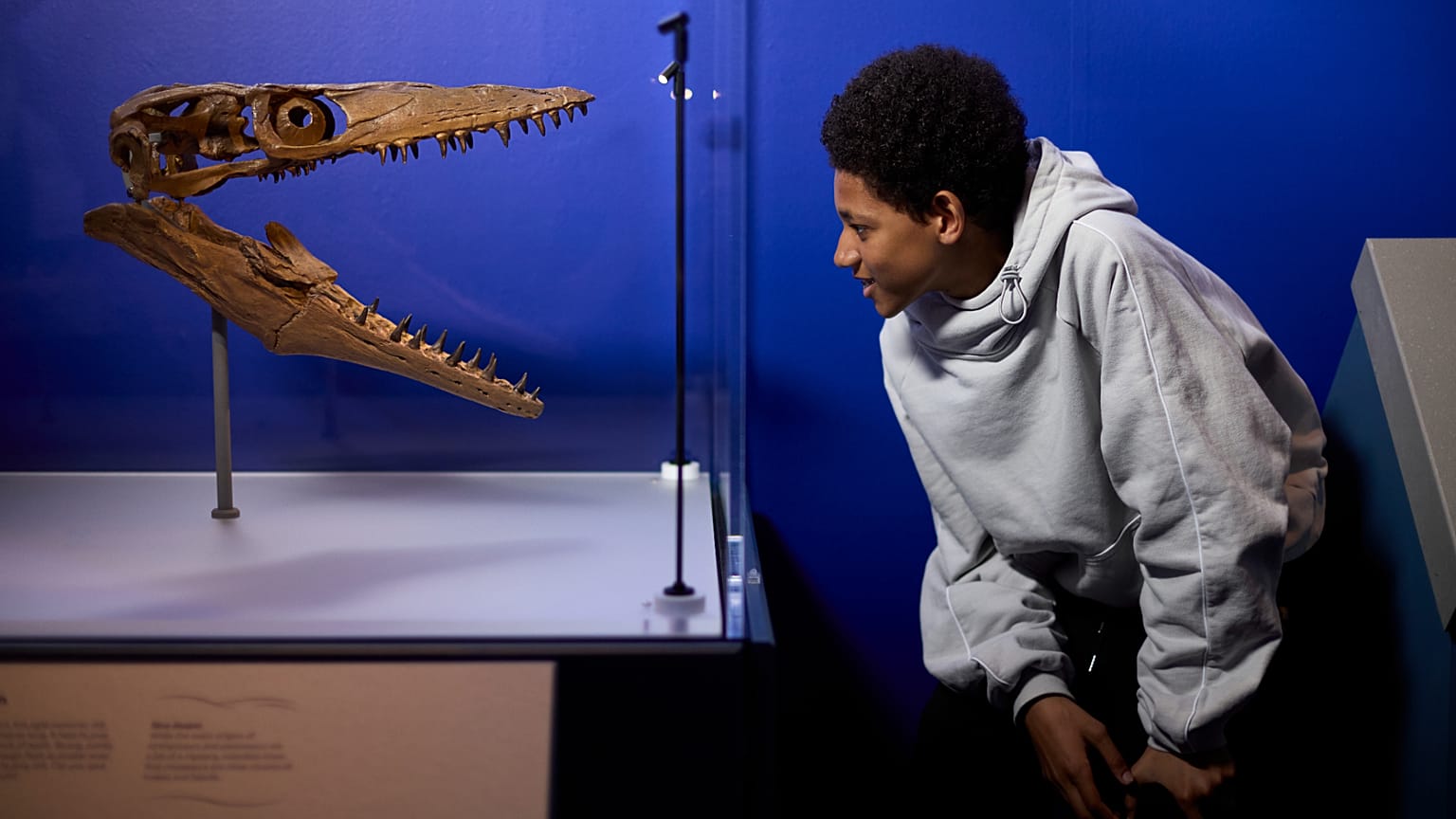
These were the monsters of the deep and the subjects of a new exhibition at London's Natural History Museum.
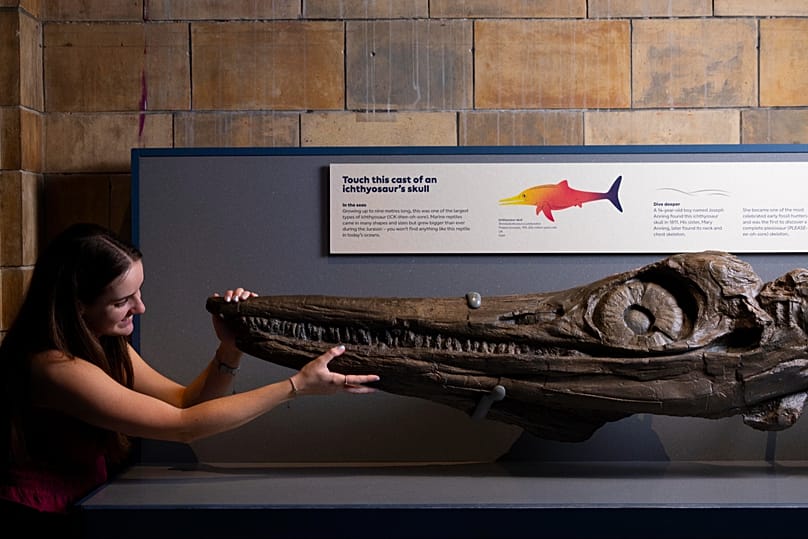
“Jurassic Oceans: Monsters of the Deep” explores a time nearly 200 million years ago when enormous predators would be on the hunt deep underwater.
Among the stars of the show is a plesiosaur, a long-necked marine reptile that could grow up to 12 metres long.
"So the plesiosaur has a long neck and a small head at the front, and it has four wing like flippers that it would have used in coordination to sort of fly through the ocean," explains Dr. Marc E.H. Jones, curator of fossil reptiles and fossil amphibians at the Natural History Museum. "It was an air breather, so it would have to come to the surface a lot."
Climate catastrophe
But the exhibition also carries a warning. The fossil record shows climate change contributed to extinction events millions of years ago.
Researchers say climate change played a major role in prehistoric extinctions and warn the oceans are once again under pressure.
"Some of these climate changes were slow compared to what's happening today. And we can see from the fossil record that even slow climate change, relatively slow climate change, can have a big impact on the ecosystem," said Dr Jones.
"In the last 200 years we've added over 2,000 gigatons of CO2 to the atmosphere and that's going to have an impact on how much energy the Earth retains and that is slowly warming the average temperature of the Earth and the oceans which puts pressure on those ecosystems."
Jurassic Oceans: Monsters of the Deep is on at London's Natural History Museum until 3 January, 2027.