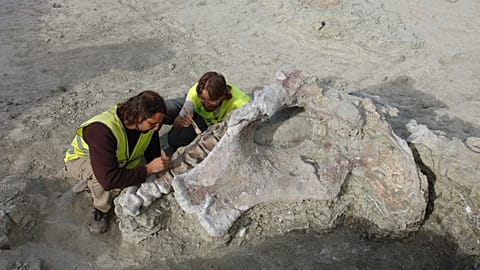
















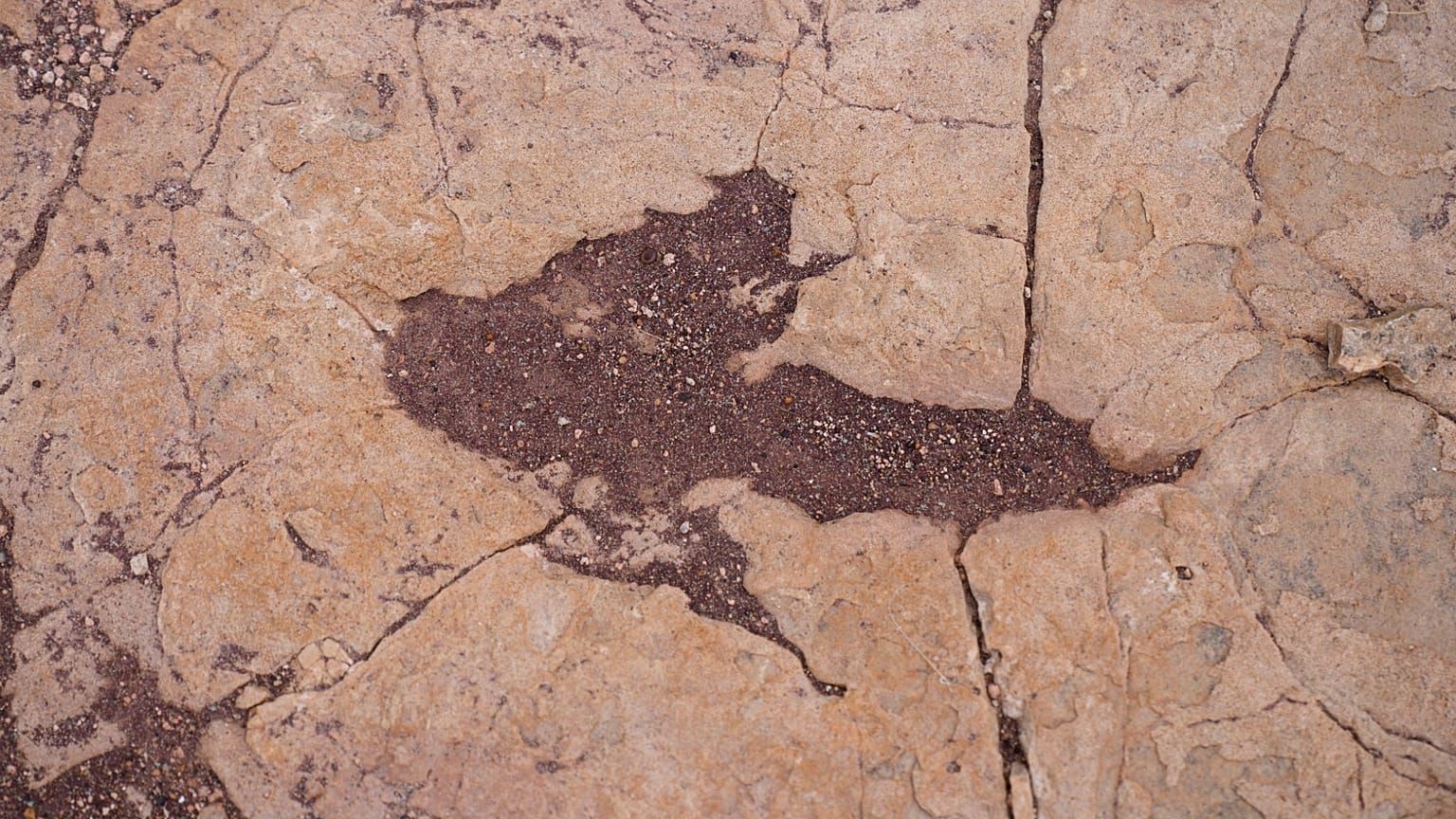














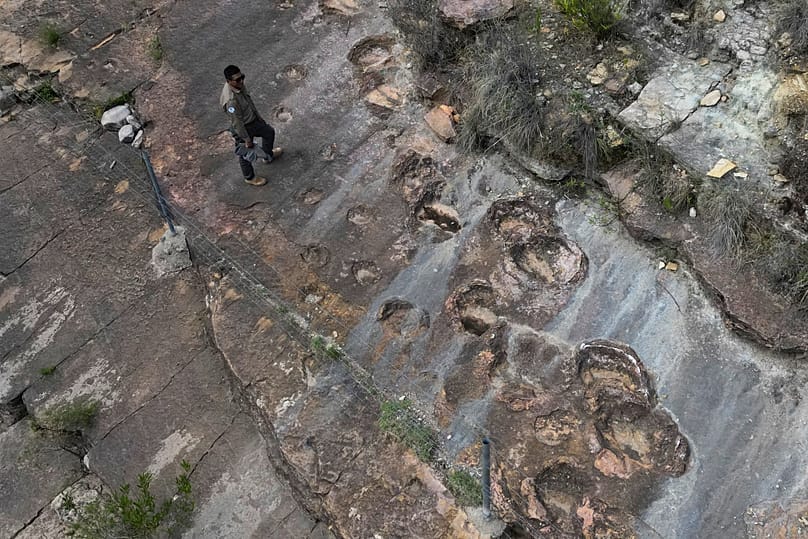
A new study paints an enormous picture of almost 17,000 dinosaur footprints in a mountainous area of Bolivia, making it the world's largest find of its kind that's been protected from centuries of erosion.
We all know dinosaurs left their mark on Earth but a new study has revealed the highest number of three-toed footprints recorded anywhere on the planet.
 ADVERTISEMENT
ADVERTISEMENT
ADVERTISEMENT
A team of paleontologists, mostly from California's Loma Linda University, have discovered and carefully documented 16,600 footprints left by theropods, the dinosaur group which includes the Tyrannosaurus Rex.
For six years, researchers explored nine different sites in central Bolivia until they found that they were all connected, making it the largest prehistoric site in the world. The footprints could be 60 million years old and come from entire herds of dinosaurs.
"It's the biggest discovery in history. 1,700 fossils and more than 17,000 footprints have been found, and it is very likely that thousands more will be found in the national park," enthused Toro Toro park superintendent Celso Aguilar.
By land or by sea
The dinosaurs that ruled the earth and roamed this region also made awkward attempts to swim here, according to the study, scratching at what was squishy lake-bottom sediment to leave another 1,378 traces.
They pressed their claws into the mud just before water levels rose and sealed their tracks, protecting them from centuries of erosion, scientists said.
Despite their enormous indents on the land, local quarry workers didn’t pay too much attention to the formations as they blasted rock layers for limestone. Research also say highway crews tunneling through hillsides two years ago nearly wiped out a major site of dinosaur tracks before the national park intervened.
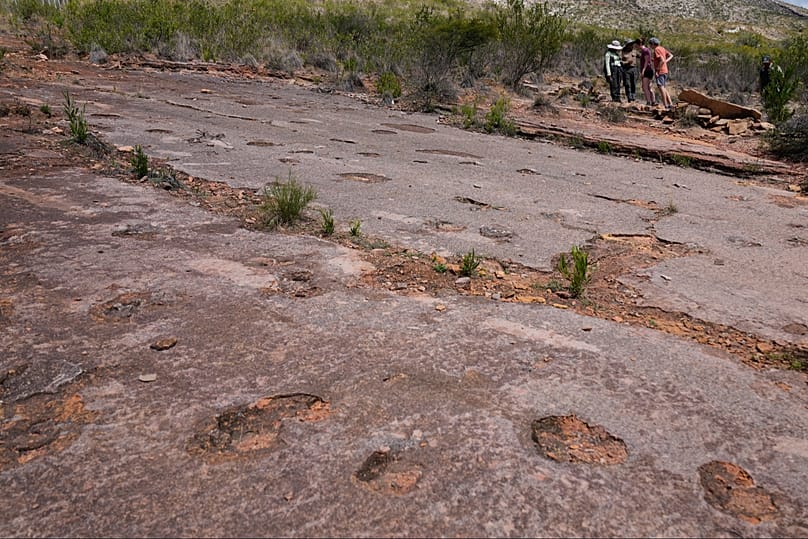
Such disturbances may have something to do with the area's striking absence of dinosaur bones, teeth and eggs, experts say. For all of the footprints and swim traces found across Bolivia’s Toro Toro, there are virtually no skeletal remains of the sort that litter the peaks and valleys of Argentine Patagonia and Campanha in Brazil.
The site was originally discovered in the 1960s, when locals thought there were monsters in the area. Local farmers would often crush the bones they found or sow the area, causing more destruction than millions of years.
But the lack of bones could have natural causes, too. The team said the quantity and pattern of tracks — and the fact they were all found in the same sediment layer — suggest that dinosaurs didn’t settle in what is now Bolivia as much as trudge along an ancient coastal superhighway stretching from southern Peru into northwest Argentina.