





























To mark International Tea Day, Nadira Tudor stopped for a brew in Azerbaijan where the history of sharing a cuppa is shaped by a particular pairing defined by tradition and flavours.
Tea arrives before anything else.
 ADVERTISEMENT
ADVERTISEMENT
ADVERTISEMENT
In Azerbaijan, chay is not offered as refreshment but as structure.
Locals attribute to anchoring most life events – it precedes conversation, anchors negotiation, softens grief and supports conversations late into the evening and to sit at a table without tea is unusual.
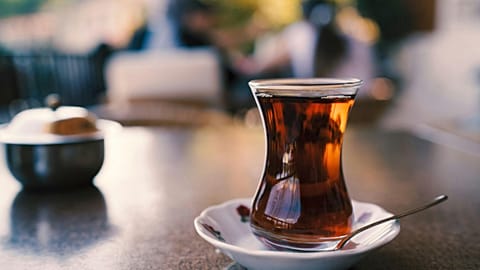
The tea is poured from a slender armudu teapot into its unmistakable pear-shaped glass.
Its narrow waist and rounded base are not decorative but there for practical reasons. The shape keeps the tea hotter for longer, by concentrating the warmth at the bottom while allowing the rim to cool just enough for steady sipping. The glass rests easily between the fingers.
And then there is the jam.
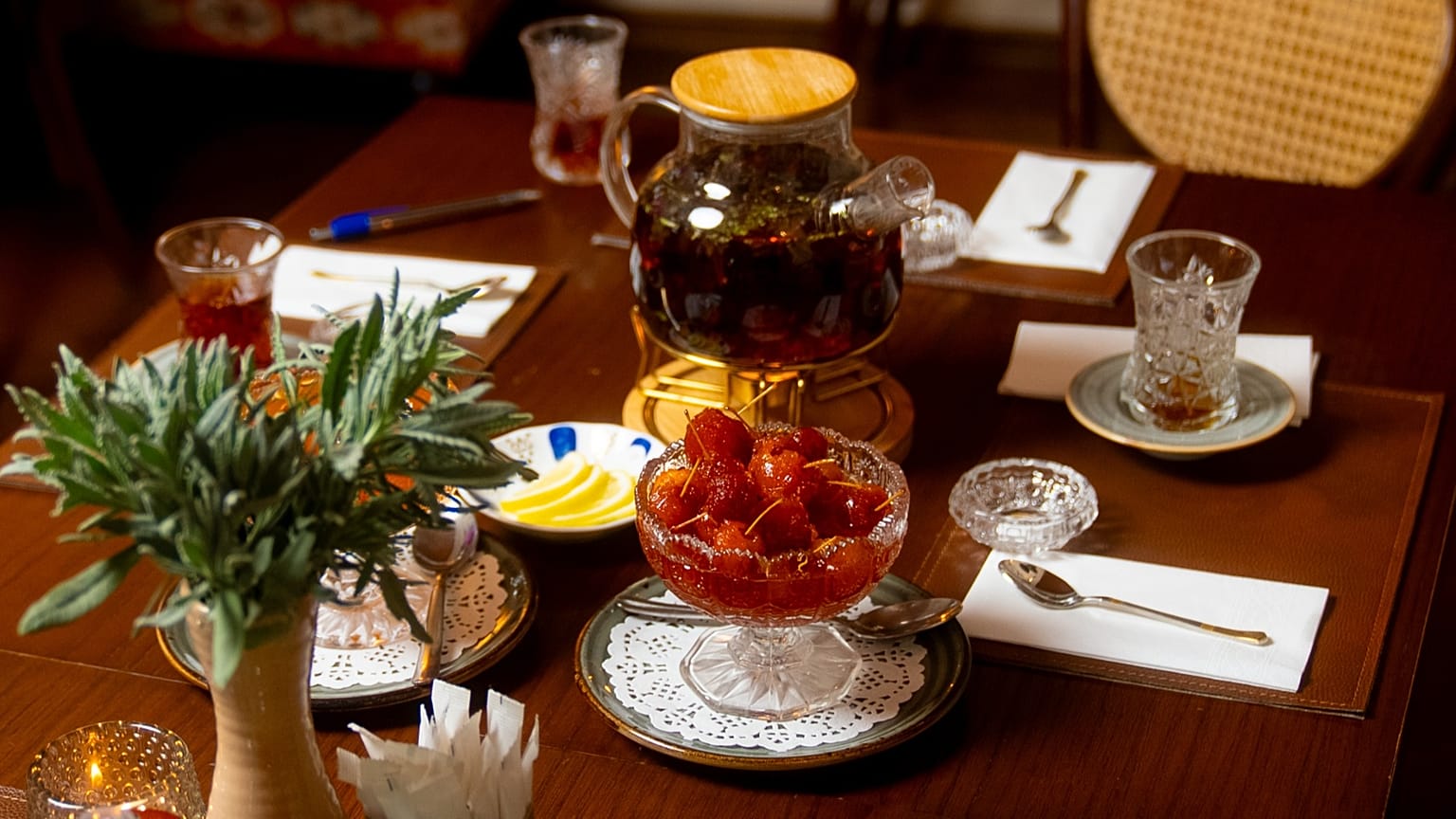
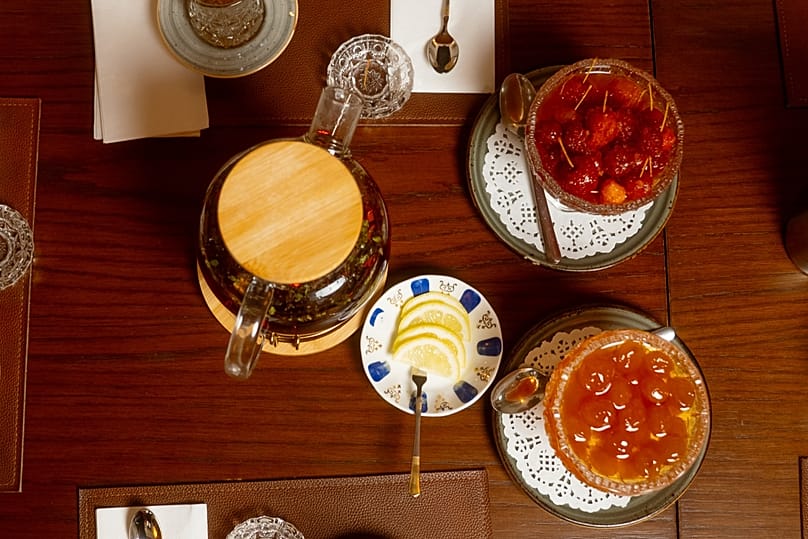
Presented in small bowls, often crystal, the preserves gleam like stained glass and are incredibly intricate in how the fruits are cut and shaped.
Strawberries, pears, apricots, and walnuts hold their structure without dissolving – which is a complete fascination if one is unfamiliar with this type of conserve.
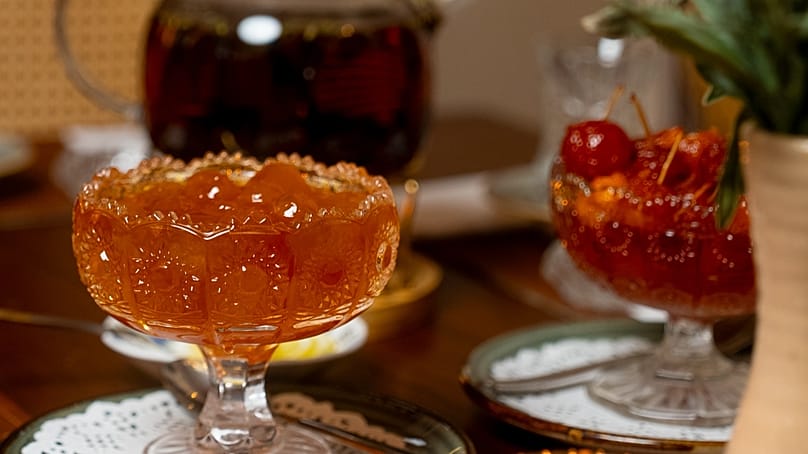
Yet this is not jam for spreading. In Azerbaijan, it is not stirred into tea nor layered onto bread. Instead, a small spoonful is first tasted, then followed by a sip of hot chay. Sweetness meets bitterness, and the balance is deliberate.
Kurban Said, is a family-run restaurant and some of their jams are produced at home
Owner, Sabina Ulukhanova explains that the recipes have remained largely unchanged — fruit prepared carefully, sugar measured with instinct rather than scale, timing judged by experience rather than stopwatch.
“My dad also likes to do it on his free time”, says Ulukhanova.
"For example olive, from olive it takes more time than you do it from strawberry. So, it's a... Process. It's a very interesting process,” she added.
“You have to have... Nowadays we have no time for it and only if you are retired, you can dedicate this time.”
"You do it in two steps or three steps... first phase and then you do it another step next time, next day.... it takes three days before you have this result,” Ulukhanova says when asked how long it would take to make strawberry jam.
In a region where culinary traditions often blur across borders, tea with sweetness is not unique. Sugar cubes dissolve slowly between sips in Iran. In Turkey, tea arrives alongside pastries and breakfast spreads. In parts of Russia, fruit preserves — varenye — accompany long conversations.
But in Azerbaijan, the sequence is codified. Jam is held apart, not mixed in. It is tasted independently before the tea follows. The distinction may appear subtle, but it shapes the experience. Sweetness is controlled rather than dissolved.
Tea here is served before meals, after meals, during business discussions, during casual visits, at weddings and at funerals. The same glass, the same rhythm and crosses through generations, young and old alike.
"It's kind of meditation after a long day, after you come home, or you meet each other with your friends at some cafe or tea house, and you have this time for you with tea and jam”, Ulukhanova explains.
“You don't need any cake or something extra for you, just tea and jams. And your friends or your family and then everything is fine,” she added.
“It's just really calming feeling, you know, if you have tea with, it is just tradition for us. I like that. You always, myself, I can say for me, you have and then. Get this feeling at once. Yes, everything will be good.”
The jam-making itself requires heavy and patient labour. Walnut jam, in particular, demands time and attention as the fruit is treated repeatedly before it yields its distinctive texture and flavour.
The visual beauty of the preserves is part of their appeal. Unlike commercial spreads, the fruit remains intact. The structure of the strawberry is important. The curve of the pear is preserved.
Across cultures, tea has long functioned as a marker of hospitality and social order. But here, at this table, in this glass, sweetness is never rushed or diluted. It is measured, tasted and followed by heat.
This is strawberry jam and tea — not simply as flavour, but intrinsically part of the Azerbaijani DNA.