
















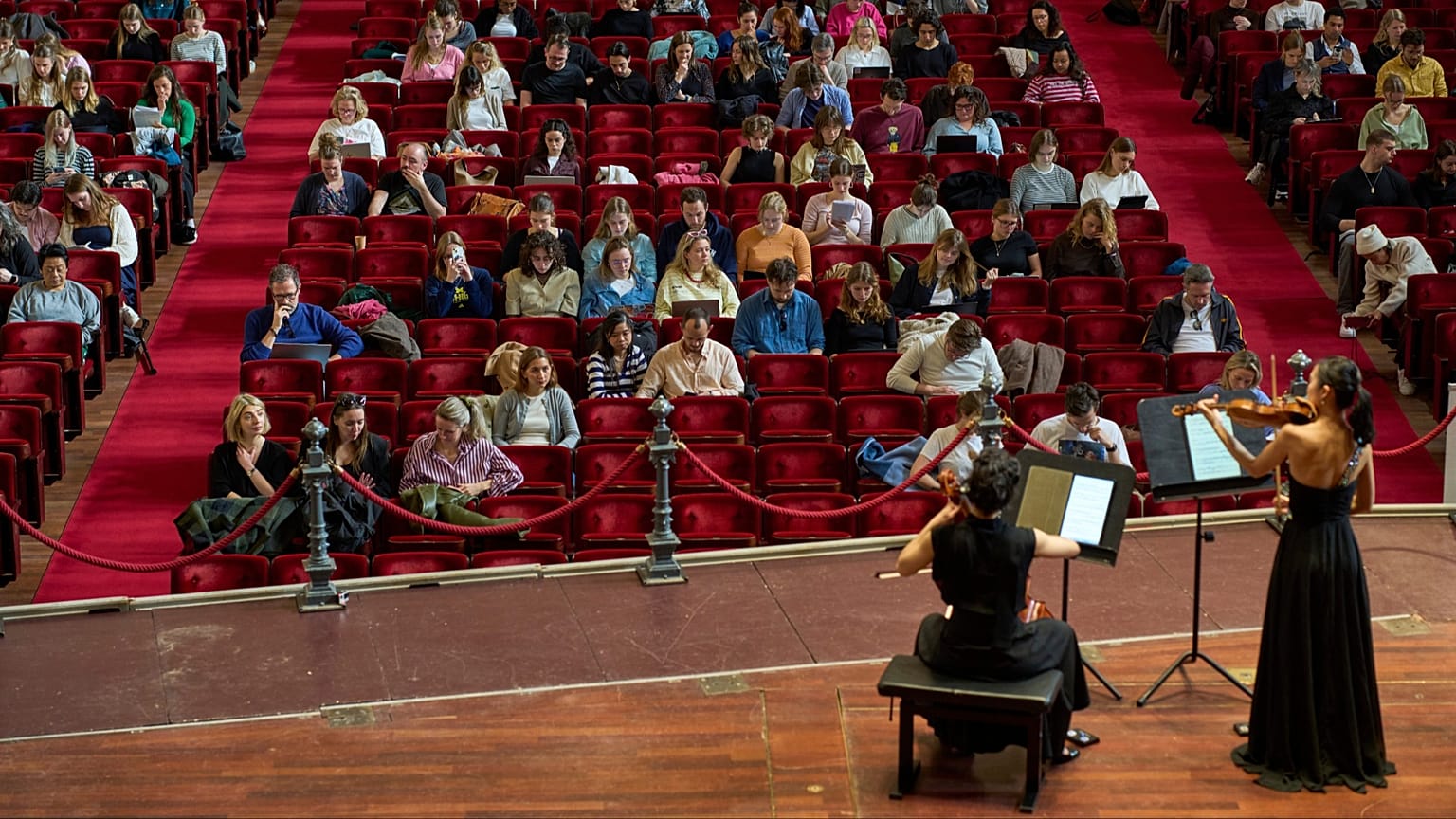














Organised by the Concertgebouw's youth association, the sessions aim to help students concentrate while introducing younger audiences to classical music.
In the main auditorium of the historic Concertgebouw, rows of students are hunched over laptops and notebooks, the glow of their screens illuminating the plush red seats.
 ADVERTISEMENT
ADVERTISEMENT
ADVERTISEMENT
Above them, violinist Hyunjin Cho and cellist Efstratia Chaloulakou perform - but the students aren’t being rude by ignoring the musicians. At this event, they’re meant to be studying - and the music is intended to assist rather than distract them.
It’s part of a growing initiative by Entree, the youth association of the Concertgebouw, designed to combine study with live classical music. The sessions aim to help students concentrate, reduce stress, and attract younger audiences to the centuries-old venue.
“Well, it's one of the many ways to welcome younger audiences to the Concertgebouw, and it's such an inspiring place to study with great music in this wonderful, beautiful environment, and it's one of the ways to more or less seduce younger audiences to discover the Concertgebouw and hopefully they will be enthusiastic that it will come back,” says Simon Reinink, the general director of the Concertgebouw.

The idea was first conceived during the COVID-19 pandemic, when Entree sought ways to support students studying remotely while introducing them to classical music.
The sessions have been a hit ever since, with students returning regularly to cram for exams or finish dissertations.
“It’s actually very calming and helping in concentrating on the work that we have to do, which is something that surprises me because normally I don’t really listen to classical music, so that’s a new experience for me,” says Kyra Mulder, a 21-year-old student of occupational therapy.
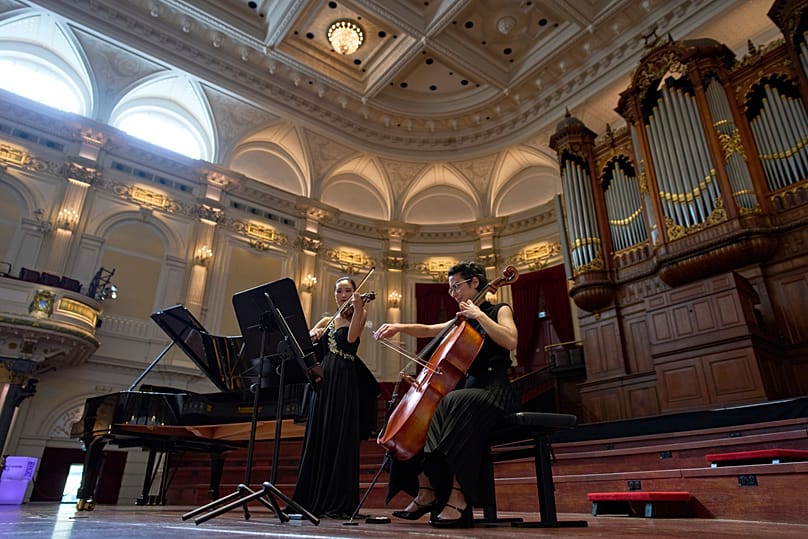
Professor Bas Bloem, a neurologist at the Radboud University Medical Centre in Nijmegen, says that while music can disturb some people’s concentration, it can help others to focus: “I think the reason why music in the background can be so soothing almost is that it creates a state of flow," he says.
He continues: "Flow is this mysterious balance between your level of skills and being challenged, and you want to be in that sweet spot. You don't want to be overchallenged, you don't want to be underchallenged, and I think music in the background can help you to reach a state of flow, and everybody knows when you reach a state of flow, you can go on endlessly and be enormously productive."
Tickets for the sessions cost just €2.50, with free access to the venue's Wi-Fi network.
Students like Thijmen Broekman, a medical student, say the environment and music make it easier to multitask and focus. "I don't think it's difficult to multitask here because it's really quiet environment and nice quiet music so that helps me to concentrate and I'm not having any difficulties multitasking," he says.