




























The well-known Italian restaurant, founded by an Aragonese family, has been controversially ordered by a court to change its name, but can a commercial claim clash with memory or common sense?
In Spain there are restaurants with curious names.
 ADVERTISEMENT
ADVERTISEMENT
ADVERTISEMENT
From those that promise gastronomic paradises like the 'Garden of Eden' (El jardín del Edén), to those that cleverly play on words like 'Stay right here' (Bar aquí mismo aquí), few have achieved something as difficult as sparking a row almost at European level, or at the very least, between two countries.
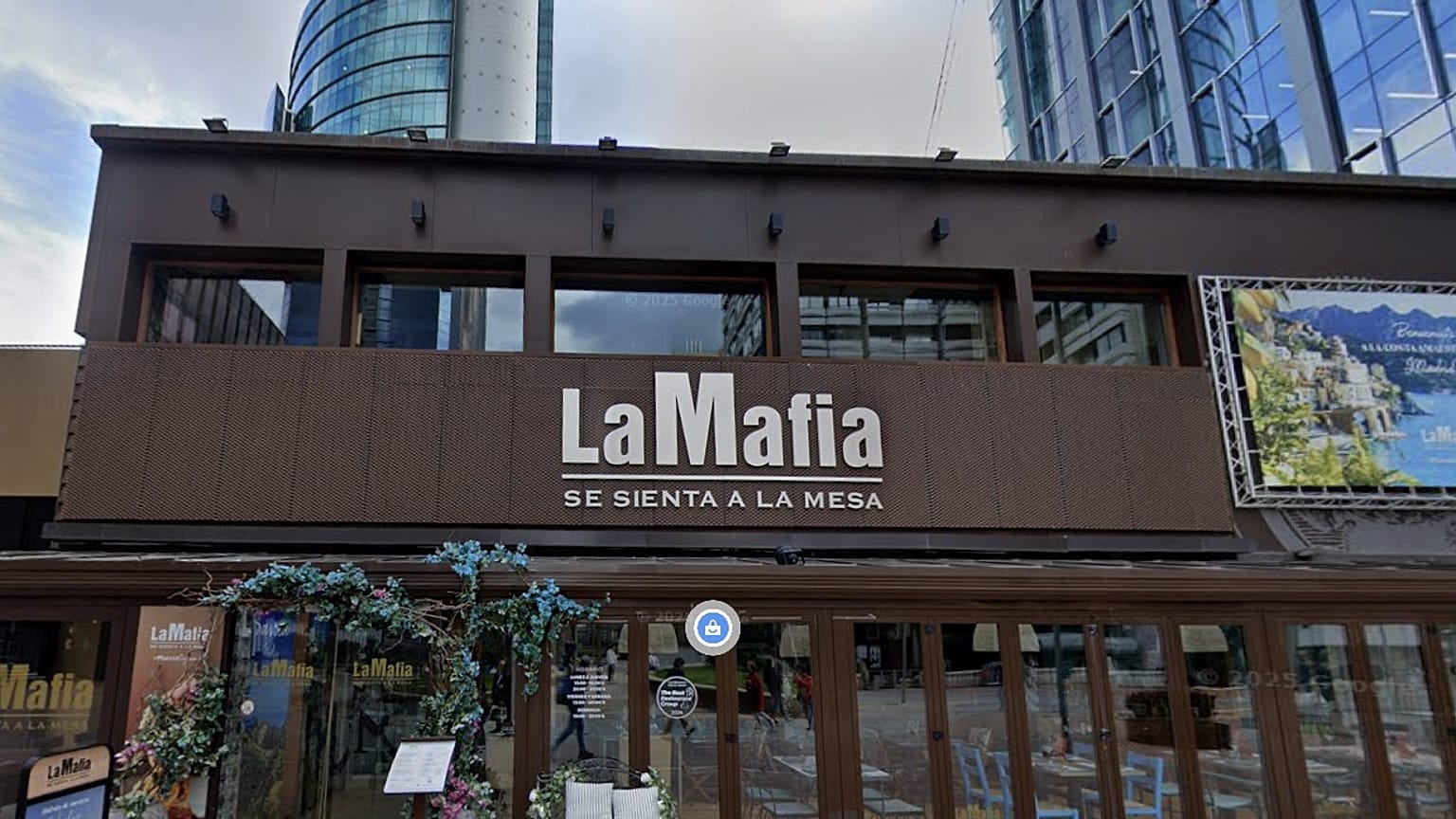
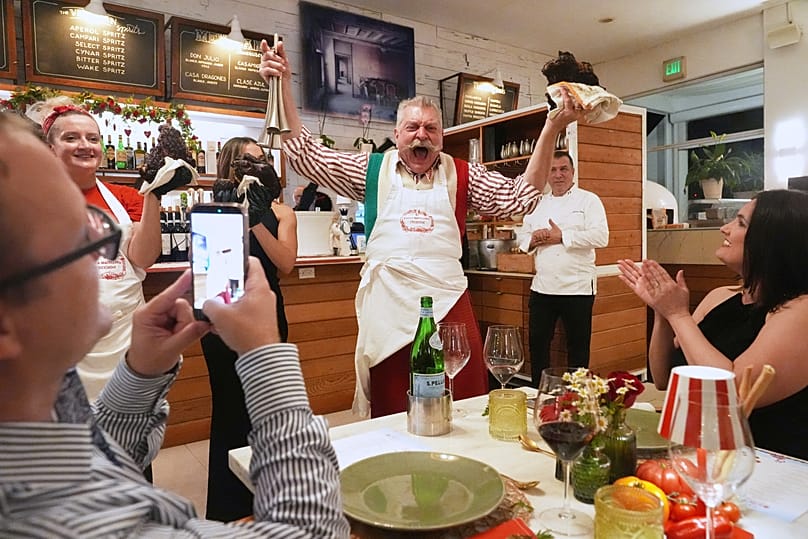
This is the case of the restaurant chain La Mafia sits at the table, which in the last month has been a major talking point, after its trademark was cancelled in Spain for being considered contrary to public order.
Suddenly, what for years was simply the name of a restaurant where you could order pasta and tiramisu has become a legal, diplomatic and even cultural issue. Italy is protesting, the courts are ruling, and half the country is wondering whether the problem is the name, the marketing, or Spain's curious tolerance for turning anything, even organised crime, into a sympathetic after-dinner aesthetic.
Because, deep down, the controversy has something of an unintentional comedy about it. In a country where discussing food is almost a national sport, now we are also discussing what the restaurant is called. Next we'll be debating whether carbonara with cream should be a criminal offence. And the question that remains is not only legal, but social: to what extent is it a joke... and when does it stop being a joke?
From marketing to law
The formal news, the administrative and judicial decision that forces the trademark to be reconsidered, opens an uncomfortable window to think about how we consume symbols and at what point provocation ceases to be innocuous and becomes a public problem.
The Spanish Patent and Trademark Office has nullified the chain's name on the grounds that the direct allusion to a criminal organisation is contrary to public order and decency.
This is not the first time that the case has reached European courts: there has already been a previous ruling that questioned the validity of the trademark at Community level. The current decision, therefore, does not come out of the blue, but out of a lengthy legal debate.
The company concerned has not shied away from the fight. It argues, the term comes from gastronomic work and falls within the spheres of culture and freedom of expression. It has also announced its intention to appeal against the annulment. From a business point of view this is a legitimate reaction, but it clashes with a social interpretation that goes beyond the strictly registry-related aspects.
It is also worth clarifying a relevant nuance: the invalidity of the trademark does not necessarily imply the prohibition of its use in the market.
What disappears is the exclusive right to it. In other words, the name can continue to be used, but it loses the legal protection that would prevent other operators from using it. A scenario that, translated into the language of the bar, would be: "you can continue to call yourself that, but you are no longer the only one".
Beyond the name: symbols, memory and limits
This controversy raises several questions at once. First, what message is conveyed by a brand that uses the name of a criminal group as an advertising hook? The mechanism is well known: transgression sells. But there is a line, blurred, yes, but real, between irony and trivialisation.
When the brand becomes a visible emblem on facades, sports sponsorships or merchandising, it ceases to be a simple wink. It becomes a mass symbol of an aesthetic that renders ordinary the reference to crime as a decoration.
This normalisation has symbolic victims: communities affected by violence, victims and their relatives and, in diplomatic terms, the affected country itself when its institutions demand an end to its use.
Italian cuisine, widely exported and appreciated, gains nothing when its public iconography is associated with organised crime. The diplomatic and legal offensive is not a response to exaggerated sensitivity, but to the defence of a collective memory and image.
This is also the context of Italy's institutional reaction. The Italian ambassador to Spain, Giuseppe Buccino Grimaldi, has dismissed the fact that the Casademont Zaragoza basketball club maintains the chain among its sponsors.
In a letter addressed to the club's president, Reynaldo Benito, the diplomat underlines that the use of this brand is offensive, not only for the victims of the criminal organisation and their families, but also for any citizen with an average level of sensitivity. As he explains, the association between a major sports team and this emblem has been "disturbing" for him.
The letter also contains reflections based on a judgment of the General Court of the European Union which, he says, is shared by many Italians living in Spain. Buccino Grimaldi recalls that the Mafia is a serious criminal phenomenon against which significant resources are being spent both in Italy and in the European Union as a whole, and warns of its impact on security, the legal economy and coexistence.
There is also a business dimension to be analysed. Freedoms of expression and trade exist, but they are not absolute. In the field of trademark law, registrations can be refused or invalidated when they conflict with public order or basic social principles. From a corporate reputation perspective, moreover, going for a controversial aesthetic always involves a risk: what starts as an advertising provocation can end up in litigation, boycotts or diplomatic tensions.
To better understand the controversy, it is worth doing a little thought experiment. Let's imagine that a restaurant called ETA, after the former Basque separatist militant group, opens in any European city, with a decoration that plays on that reference and a menu that turns that name into a commercial attraction. The social reaction would be immediate. No one would interpret this choice as a simple cultural joke or as a creative marketing strategy.
The comparison serves to highlight something important: symbols associated with violence are not neutral. They can be transformed into cultural elements - film, literature or satire have done so many times - but when they become a permanent trademark, the moral boundary shifts. What in a film can be interpreted as fiction or criticism, in a luminous sign at the entrance of a restaurant becomes an everyday message.
There is also an interesting cultural paradox. In recent years we have recovered the idea of the restaurant as a social space: places where time, conversation and community are shared. In this context, using references to criminal organisations as a brand identity seems to go in the opposite direction. Because one can go to dinner looking for company... but not necessarily family in the most literal sense of the term.
Terms and conditions
The administrative decision has practical consequences for the company, rebranding, legal recourse, but it also opens up a wider opportunity. The gastronomy sector has shown that it can build strong brands from territories, culinary traditions, creativity or customer experience. It does not need to rely on the aesthetics of crime to be attractive.
Perhaps the most interesting lesson is a collective one. We live in a culture where provocation has become a common marketing strategy: the more noise a name generates, the more visibility it seems to get. But this logic encounters limits when it comes into contact with historical memories and deep social sensitivities.
Naming is never a neutral act. Names evoke stories, identities and memories. Making a commercial claim out of what for many represents violence or suffering may work for a while as a provocative joke, but sooner or later it ends up opening up a more serious debate on public responsibility.
If the hotel and catering industry aspires to continue to be one of the great spaces of coexistence in our cities, perhaps creativity should seek inspiration in more fertile places than the mythology of crime. Because there is room for many things at the table, tradition, innovation, conversation, but not everything is enough to invite people to sit down. And when provocation becomes business, the inevitable question remains the same: who really pays the bill.
Euronews' contacted the restaurant chain La Mafia sits at the table for comment but did not receive a response.