
















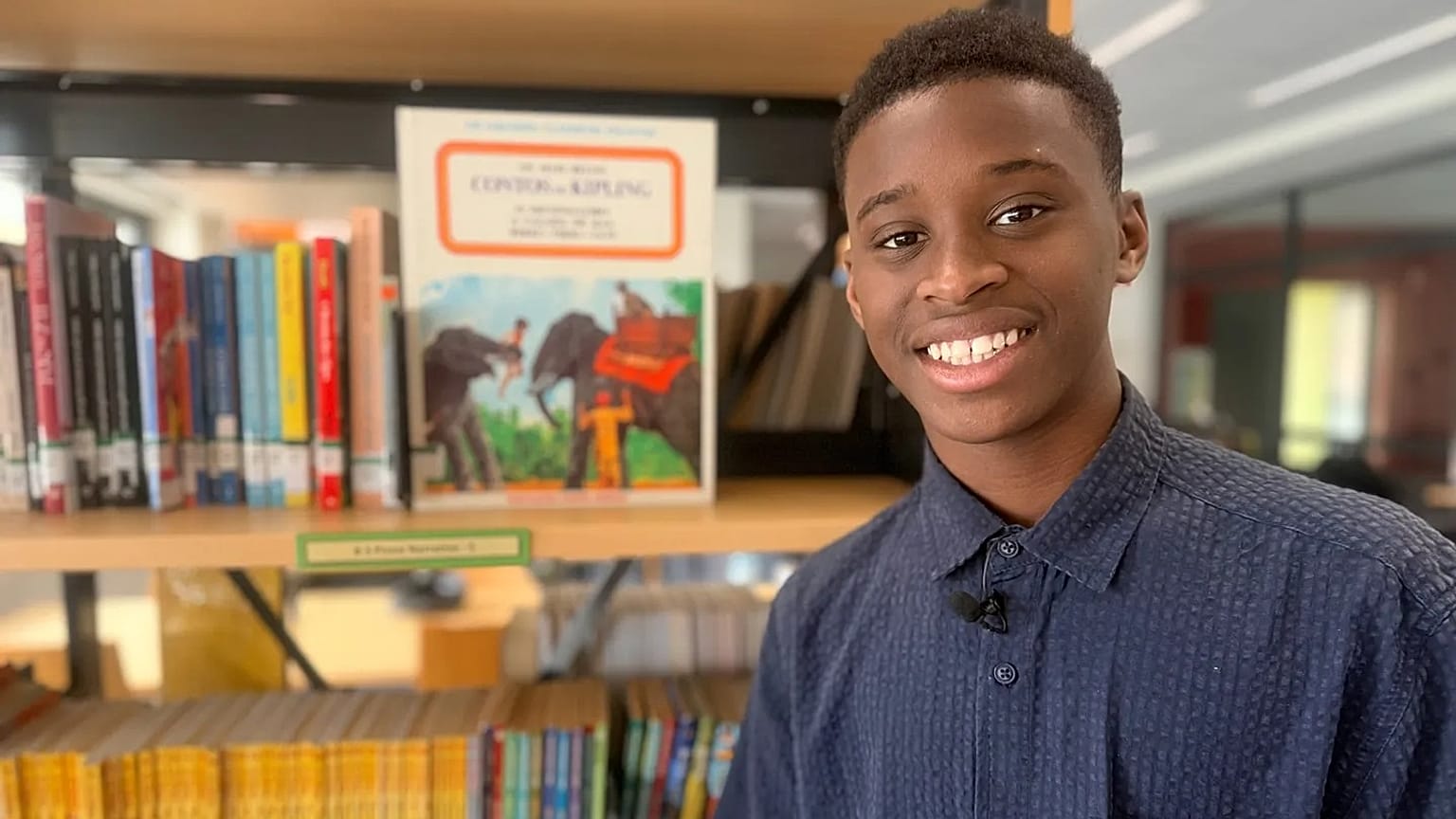














Bed-ridden by a double leg fracture, Francisco Borges read ten books a day. The habit sparked his appetite for more literature which has transformed the 13-year-old into a model student who's now spreading his love of books throughout Portuguese schools.
When he's not at school, playing football, swimming or kickboxing, Francisco Borges, 13, devotes himself to books.
 ADVERTISEMENT
ADVERTISEMENT
ADVERTISEMENT
This teenager's passion for reading has already made the headlines and even gone viral when he lay at home injured and managed to devour ten books a day: "My leg was broken, I had two broken bones, I couldn't sleep, my mum had to take the food to my bed because I couldn't get out of bed. As I don't have a mobile phone, the only thing I could do was read," he told Euronews.
Many mocked him then, saying that it's humanly impossible to read ten books a day. Of course, he didn't choose heavyweight tomes such as "War and Peace" or "The Mayans", but books for his age and easy to read titles, like those by Geronimo Stilton, which he loves.
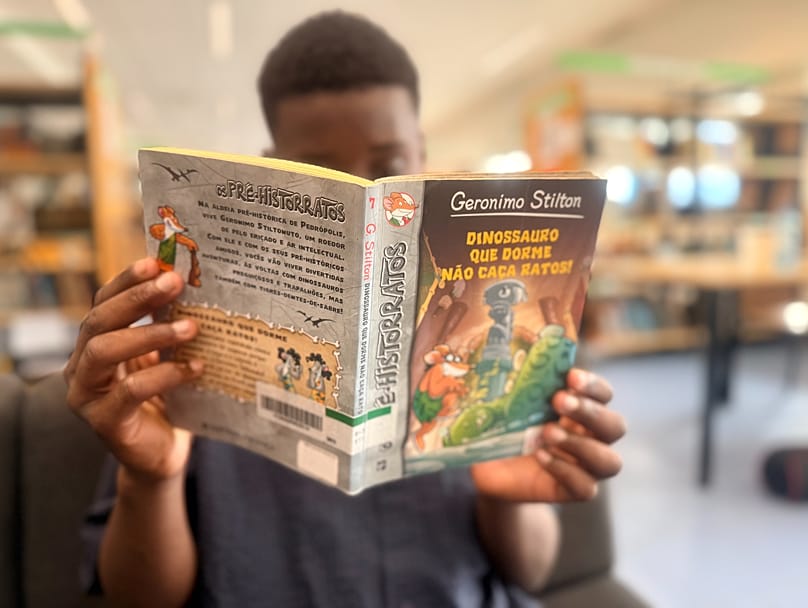
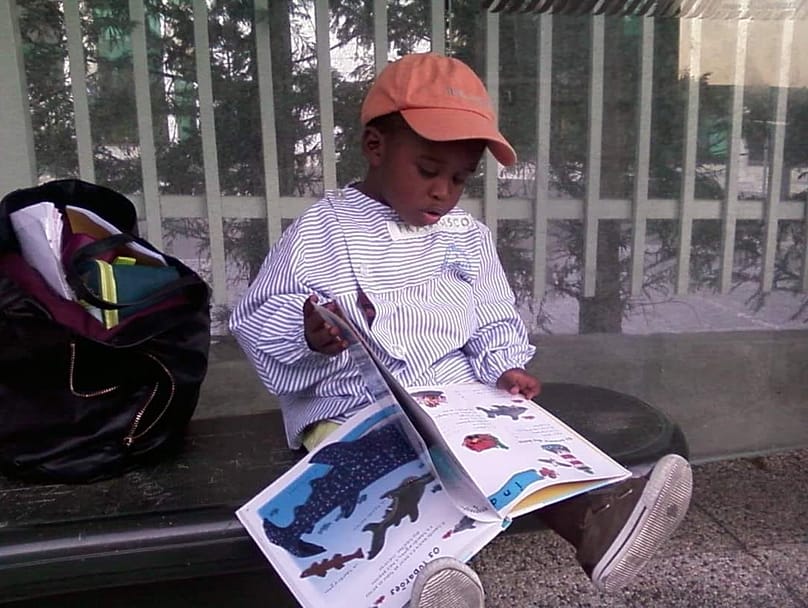
Reading on the bus, on the way to and from school, as well as at night before bed, is part of Francisco's daily routine. The first book he remembers was an illustrated waterproof book about anemones, which he took to the beach. Today, he has read at least one Nobel Prize winner.
In normal times he averages five books a week. Mostly books for his age, but also crime novels (he's discovering Agatha Christie and really enjoyed "The ABC Crimes", one of Hercule Poirot's cases) and even classics like "Oliver Twist" by Charles Dickens or "The God of Flies" by William Golding, which is compulsory school reading. Of this work, first published in 1954, he particularly likes the fact that the main characters are boys his own age.
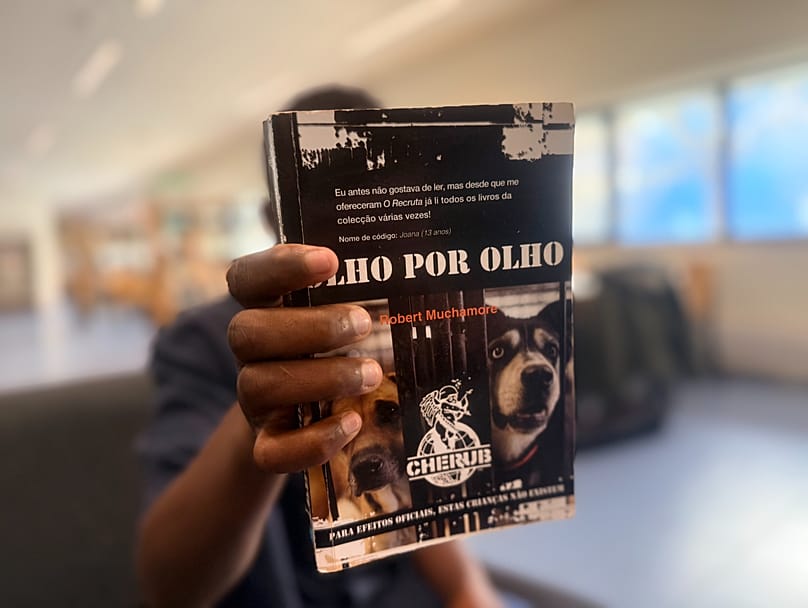
Another book that Francisco recommends is "An Eye for an Eye", by Robert Muchamore, a book in the "Cherub" series about a series of crimes involving the theft of dogs for experiments: "It's a very interesting book, but it's for children over 11 or 12, because it talks about the world of crime," he says.
His love of reading and ease of communication have made Francisco a star on social media (source in Portuguese). He is often invited by schools to speak to pupils his age and to help them realise that reading isn't necessarily a boring activity. If you don't like the first book you read, you might like the next one: "You need the right inspiration for people to start reading. There are people who read a book that isn't right for them and then end up forgetting all about it. They say they don't like reading books because they're boring, and if you ask them how many books they've read, they say it's just one."
On the day of our report, Francisco went to speak to a group of dozens of teenagers his age at the Pedro Santarém Primary School, in the Lisbon neighbourhood of Benfica. The aim was to show his peers that reading is fun: "It's not the teacher who says reading is cool, it's a classmate of the same age who says reading is cool," says Maria João Covas, headteacher of the school.
The influence of young people like Francisco can help improve reading habits, which are not as bad as many fear, according to a recent study.
There's a widespread perception that today's young people prefer to spend their time on social media rather than picking up a book, but the reality paints a different picture. According to a survey carried out last year, quoted by the newspaper Público (source in Portuguese), more than three out of four Portuguese aged 15 to 24 read at least one book during the year 2024.