















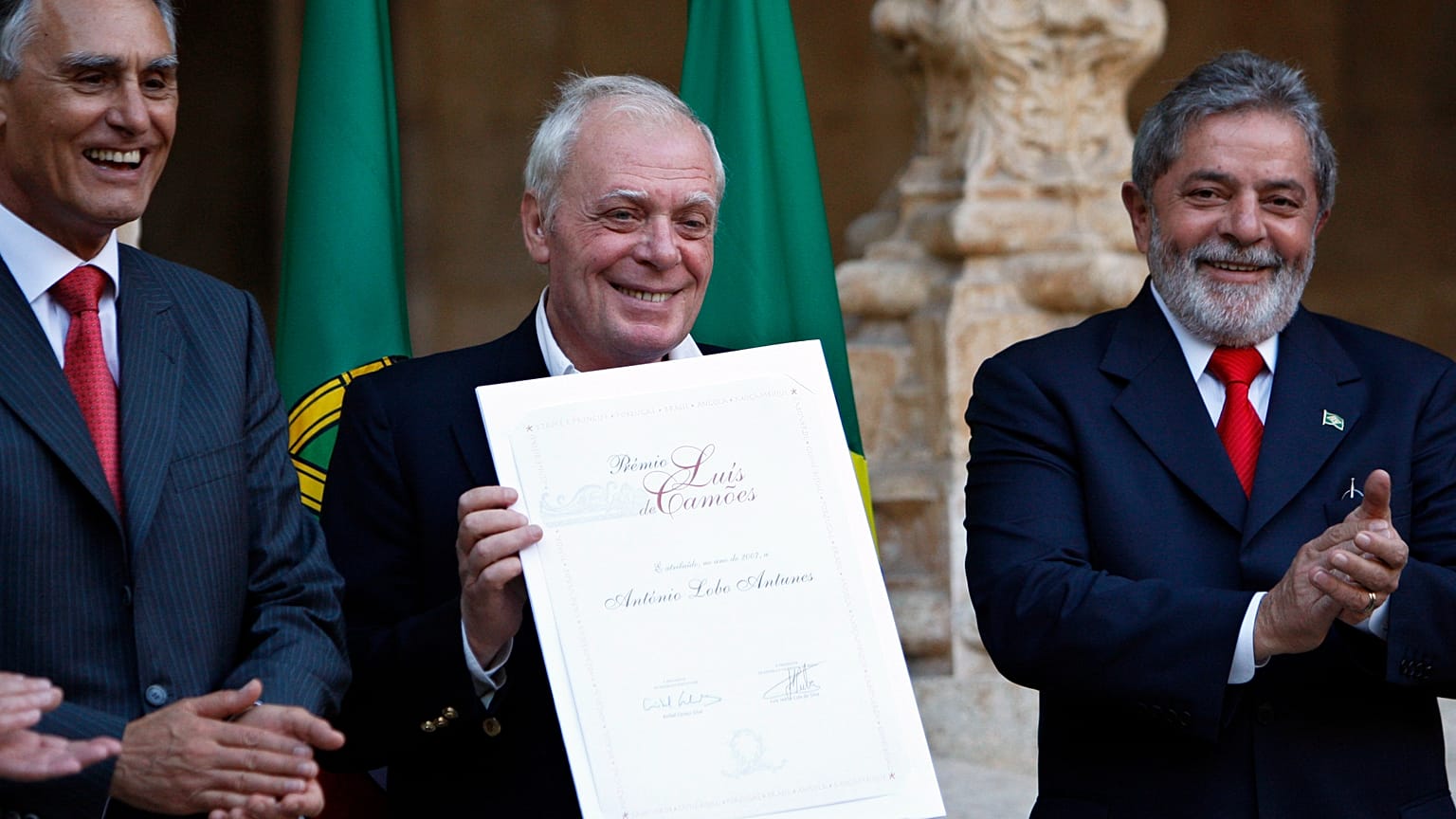













This week was marked by the death of the great Portuguese author's António Lobo Antunes, one of the country's most widely translated writers. To pay tribute, Euronews spoke with his French translator, his biographer and other writers about the legacy of the "eternal Nobel candidate."
To say that António Lobo Antunes left an indelible mark on Portuguese literature in the 20th century and the first decades of this century would be a major understatement.
 ADVERTISEMENT
ADVERTISEMENT
ADVERTISEMENT
No Portuguese author, other than 1998 Noble Literature Prize laureate José Saramago, who died in 2010, has been so widely translated and studied, both in Portugal and abroad, influencing several generations of readers and peers.
The war in Angola, where he worked as a military doctor from 1970 to 1973, would mark his entire oeuvre. From first novels _-"Memory of an Elephant" and "_The Land at the End of the World" - which were clearly autobiographical, to his most recent ones, he established his own unique and inimitable style.
Then there are the chronicles he compiled in various volumes. The most recent, As Outras Crónicas, is like an extensive syncopated and non-chronological autobiography, in which he returns incessantly to the same life stories and the eternal themes of memory, family and the traumatic experiences of war.
To measure their impact Euronews spoke with people whose lives were changed by the influence of António Lobo Antunes.
Dominique Nédellec - Translator of António Lobo Antunes' work into French
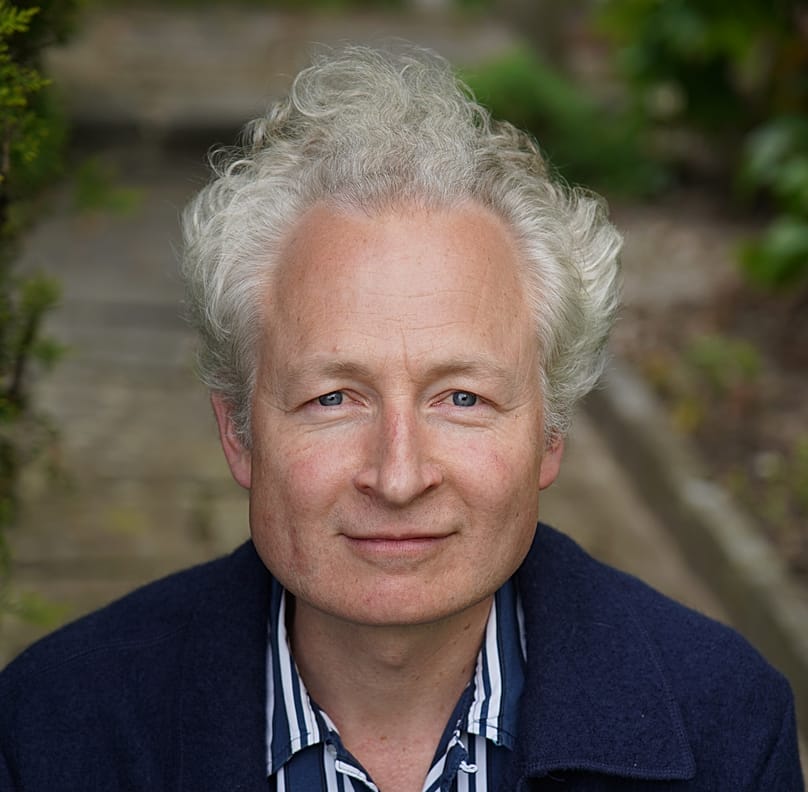
I started translating Lobo Antunes' work in 2011, with "My Name is Legion", and I haven't stopped since. After the first book, I asked him: now what do we do? He replied that it was a marriage for life. Since then I've never stopped translating him, and last week I delivered my tenth book by Lobo Antunes, "Dictionary of the Language of Flowers" (Diccionário da Linguagem das Flores), to the publisher Christian Bourgois.
It's very difficult to translate Lobo Antunes' style. To match the author's talent requires a lot of care, a lot of attention, a lot of perseverance, so I proceed at a totally different pace to the final reading. My role is to take the time necessary to advance through this tunnel of difficulties so that, in the end, the French reader doesn't realise these difficulties and can enjoy that tempestuous pace that takes everything with it, the speed, the fluidity and the richness of the content.
There has been a great transformation in style between the beginning of the work and the most recent works, from the last 15 years. For me, the latest books are like a single book. If I had to single out one, it would be "Until the Stones Become Lighter than Water", because it contains his entire universe. We have the war in Angola, with some elements that were already in "The Land at the End of the World", enriched and treated with the full mastery of his stylistic technique. For me, it's the pinnacle of his work.
José Riço Direitinho - Writer, journalist and literary critic
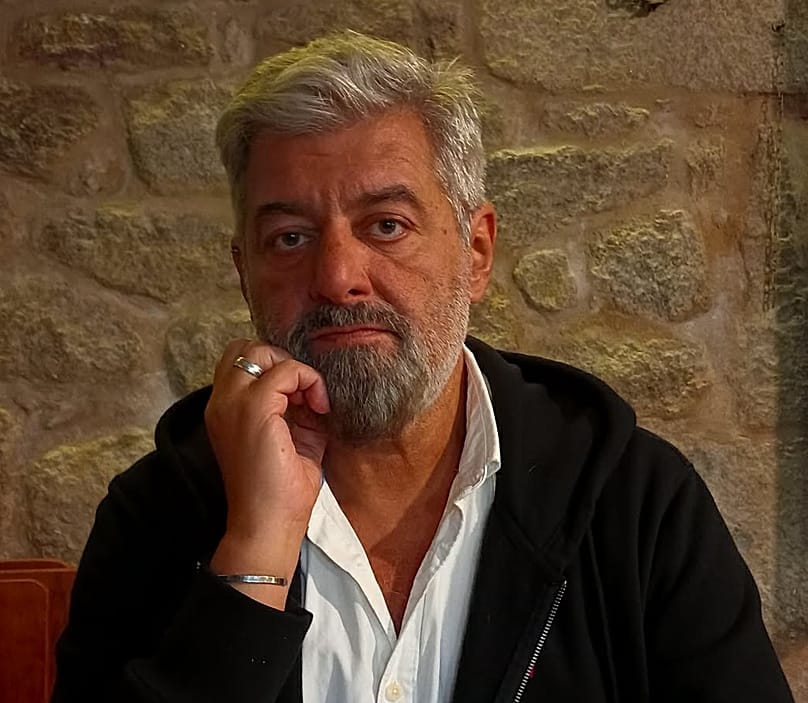
It was thanks to Lobo Antunes that I was first published in book form in 1992.
Until I was 25, I wrote a lot for DN Jovem. As I was still "getting the hang of it", as they say, I hadn't yet found my own style, so I wrote a lot "in the manner of...", in other words, I tried to replicate the style of various writers, whether it was Saramago, Almeida Faria or Lobo Antunes, so he was perhaps the author who most helped me to "get the hang of it".
When I was 18 or 19, I did an interview with him at the Miguel Bombarda Hospital and from then on we met several times. One day, he recommended me to his editor, Manuel Alberto Valente, who at the time had left D. Quixote to run ASA. It was on Lobo Antunes' recommendation that he contacted me and I sent him my book of short stories, "A Casa do Fim", which ended up being my first published book. If it hadn't been for this push from Antunes, I don't know if I would have continued writing. Maybe I would have written just for myself.
Lobo Antunes had his own very free writing style, which ended up influencing a whole generation of writers more than any other. I give the examples of Dulce Maria Cardoso, Rui Cardoso Martins or Valério Romão.
João Céu e Silva - Writer, journalist and critic, author of the biography of António Lobo Antunes
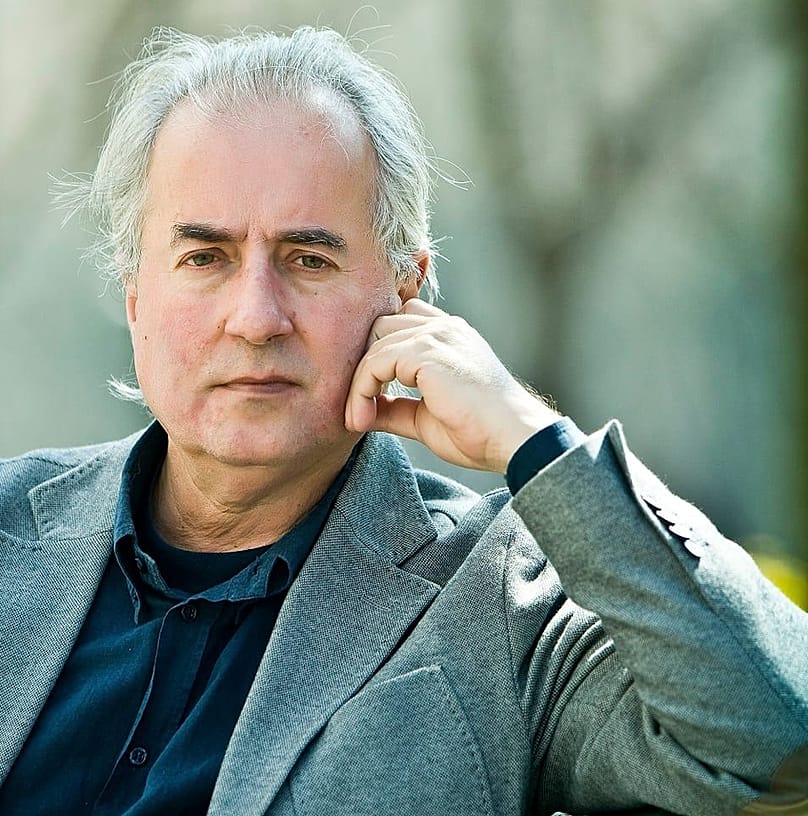
I interviewed him when he released O Meu Nome é Legião (My Name is Legion) and I started interviewing him for the biography (A Long Journey with António Lobo Antunes), which would be published in 2009. We talked for two years, almost every Friday. There were more than 60 interviews. Every time he published a book, I wrote about it. We went together to the Netherlands, to the United States, to various places where he gave presentations. This was between 2005 or 2006 and more or less after Covid.
He was one of the purest writers, because the only thing that existed in his life was writing. He wasn't a fluid writer, he wasn't easy. When you read his books, you don't notice the difficulty in writing, but he couldn't write much. If he wrote half a page in a whole day, it was a miracle. He was a writer who put a lot of thought into what he wrote and who cut down a lot of what he had written. I followed the writing process of his next books, "The Insomniac Archipelago" and "What Horses Are Those That Shadow the Sea?" I saw what his writing process was like.
Lobo Antunes had two ways of being. He was a somewhat irascible and moody person on first contact, but then he was an extremely seductive person.
Regarding the controversy with the recent reissue of the book, in which João Céu e Silva reveals that António Lobo Antunes suffered from dementia:
Many of the people who now praise António Lobo Antunes are people who haven't read anything by him for many years. In this latest edition, I commit the "sin" of writing that he was suffering from dementia. That part is only one and a half pages out of 300, but it caused quite a stir because people thought I was being opportunistic. I think that's a stupid thing to say and I didn't respond. People couldn't see that I was valorising the writer and not taking advantage of the writer. If I published a biography of an author in England, the United States or France and didn't mention his state of health, the book would never be published.
I've done my duty. Readers should fulfil theirs, which is to read Lobo Antunes. For me, the serious thing is that Lobo Antunes isn't read. That's what's serious.
I consider him to be one of the greatest Portuguese writers of the 20th century. I have no doubt that he invented a language, invented a way of writing. He appears very closely linked to the issue of the colonial war, but from a certain point onwards, particularly in his last few novels, he manages to separate himself from this issue that had been cataloguing him, and he manages to concern himself with the human being. For him, what matters is the human being, talking about the human being. This is particularly evident in "By the Rivers of Babylon" (Sôbolos Rios que Vão). For me, this was a very important evolution in his writing, in the themes he wrote about.
Susana Piedade - Writer
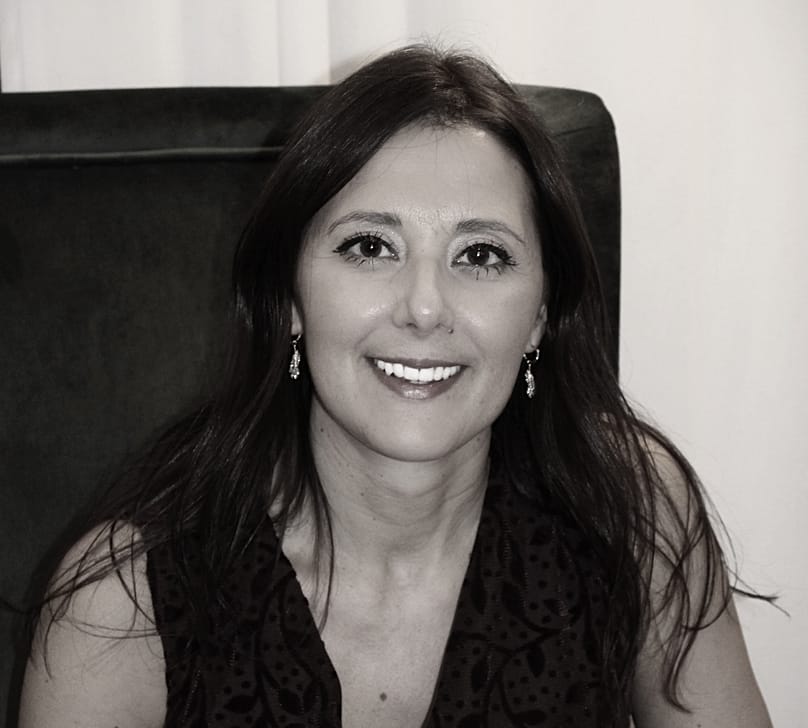
Anything I can say about António Lobo Antunes seems small to me. Perhaps because he is (always will be) a great, sublime writer, an unmistakable voice in Portuguese literature. António Lobo Antunes' writing is singular and non-conformist, it sweeps us off our feet, challenges us, makes us want to come back.
Only a genius could build so many stories and characters that seem to come out of nowhere and entangle us in such a genuine and unpretentious way. Only a great author could write as if he were speaking into your ear.
I didn't have the privilege of meeting António Lobo Antunes, but I feel like we've been together every time I've read him. I'm very grateful to him for everything he leaves us.
Official tributes
Tributes have not only come from the literary world, but also from the highest political spheres. Portugal's President Marcelo Rebelo de Sousa decreed a day of national mourning on Saturday 7 March, and paid homage to the writer with a message on his website (source in Portuguese).
A well-known reader, the president calls Lobo Antunes an "heir to Céline and Faulkner", or to José Cardoso Pires, with whom he was close friends.
President-elect António José Seguro also paid tribute to the writer in a message on his Facebook page (source in Portuguese), highlighting the work "deeply marked by lucidity, memory and the moral demand with which he looked at the country and the human condition".
Prime Minister Luís Montenegro described him as a "major figure in Portuguese culture":
Finally, Lobo Antunes's favourite football club Benfica also expressed its condolences.
In one of his chronicles, on the subject of his passion for his club and his time spent at war in Angola, he wrote:
"When Benfica played, we'd put the loudspeakers facing the woods and that way there were no attacks.
The war stopped. Even the MPLA were Benfica supporters. It was an even stranger feeling because it doesn't make sense to be angry with people who are from the same club as you. Benfica was, in fact, the best protector of the war. And none of this happened with the Porto and Sporting matches, which annoyed the captain and some of the better-born ensigns. I can understand shooting a Porto member, but now a Benfica member?".