





























The French Oscar-winning actress has chosen to make her directorial debut a documentary about the process of learning how to dance and perform alongside the celebrated choreographer Akram Khan.
Like most great actors, Juliette Binoche is a chameleon when it comes to taking on new roles but showing everyone the painful process involved is usually kept firmly behind rehearsal room doors.
 ADVERTISEMENT
ADVERTISEMENT
ADVERTISEMENT
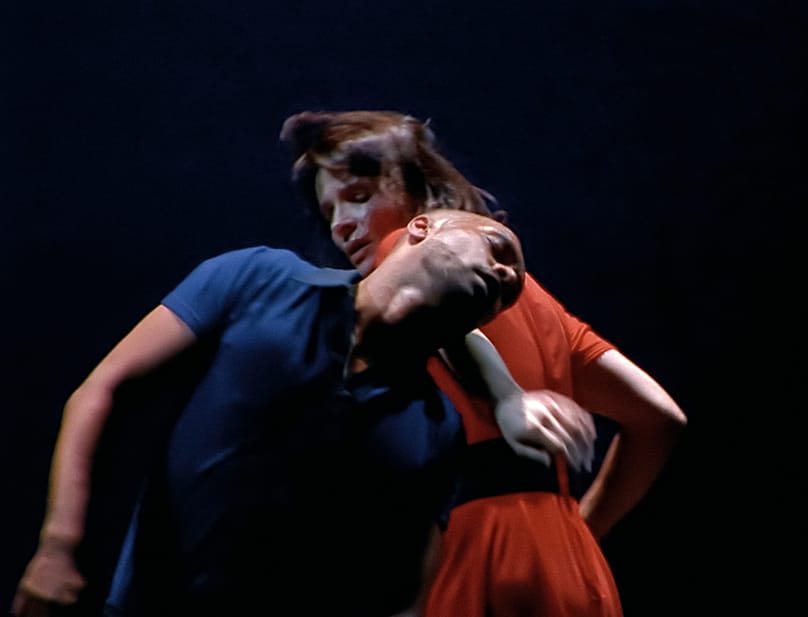
The French actresses' latest project, however, takes viewers deep inside the tough transformation as she documents the steps taken to get on stage and perform as a dancer.
The result is In-I In Motion, Binoche's directorial debut which recently screened at the Thessaloniki Documentary Festival.
It charts her collaboration with the groundbreaking British choreographer Akram Khan who's celebrated for pushing boundaries and blending modern techniques with traditional Bangladeshi and Indian influences.
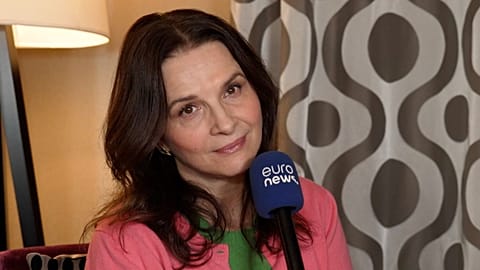
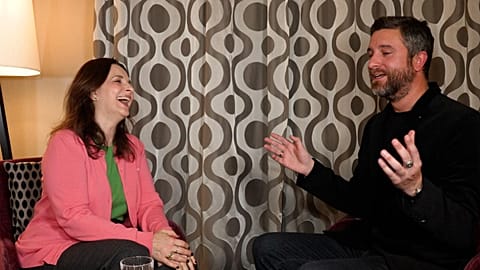
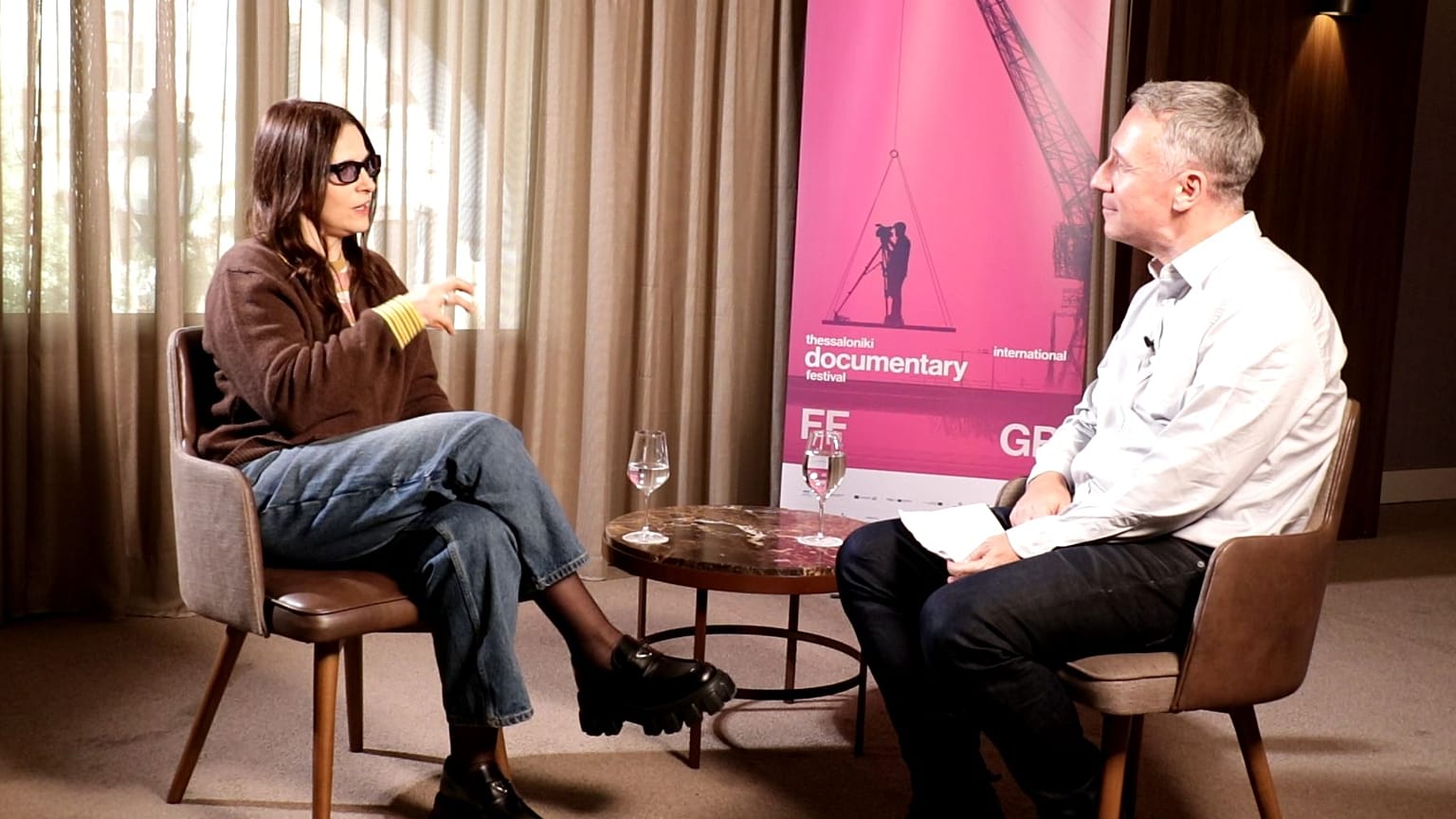
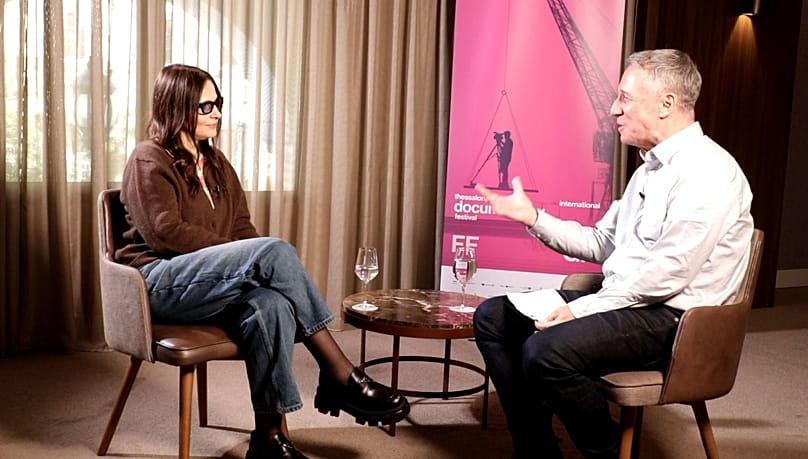
Euronews Culture's Yorgos Mitropoulos met the acclaimed actress to discuss dance, the project, politics and her views on current events unfolding around the world.
She began by telling us how the idea for the film came from the late Robert Redford.
Yorgos Mitropoulos: Why did you decide to do this documentary now, 17 years after the show?
Juliette Binoche: So I did the documentary first of all because long time ago, 15 years ago, even a little more, Robert Redford after seeing the show "In-I", said to me, you've got to make a film out of this.
And few years after, when I met two financiers and said, do you have a project you'd like to do? And I said well, I have those tapes that I've found. I asked my sister, Marion Stalens, who's a director to film the show, the seven last shows. And then we said, okay, let's do it.
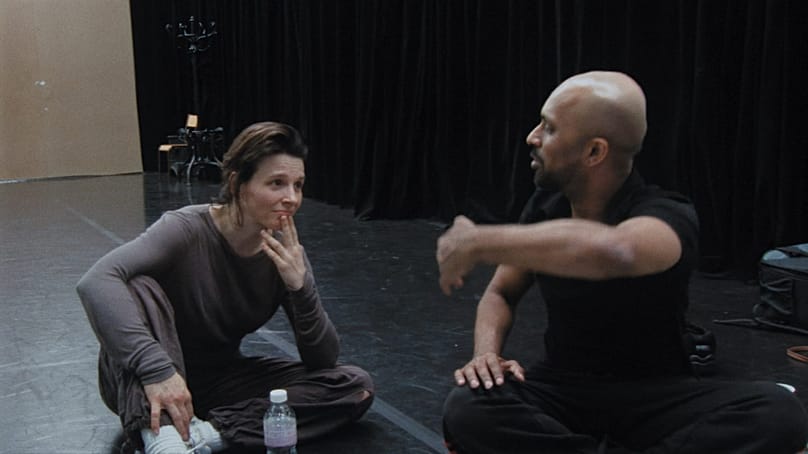
Then I thought I'd like to do a documentary on the process of the work. So I had the actual show being filmed and I wanted for people to experience what it feels like to create something new. Because Akram wanted to play and to act, and I wanted to dance, to move, so we taught each other art form, and we tried six months to make a show, and so you see the process of all this.
And the rushes are actually from my sister, Marion, who came to the rehearsal room to film us, because she was making her own film. So at the end, I gathered her rushes and some of the rushes that we used with our work camera and I mixed it and made it a film.
So, how this performance change your life? Is this a highlight in your career? Because it's something different. And what did you teach each other, you and Akram?
Juliette Binoche: What did we teach each other? Patience, love, tolerance, learning, being a starter again. When you're in your own art form, me acting, and Akram dancing, and being a choreographer. When we met, I was, you know, totally an actress. And so the fact of studying again, learning a new art form, it requires a lot of humility because you see how difficult it is to learn something new.
But then, that was the challenge we wanted to live, to put ourselves into an edge of learning. So you have to open your ears, you have to open your eyes, You have to be patient with yourself.
Because I felt there were moments I was totally blurry, I couldn't remember the movements. My body would move, my mind was moving, but not my body. So it takes a while for you to train that. So I had a wonderful trainer, you can see in the film, and we were like, you know, walking every day and running every day, and so your heart starts to get into it. But then we wanted to really make this encounter of movement and emotion. That was really our challenge.
And so it took a while to find for us a story where we could express emotions as well as movement. And so we, of course, used the theme of love because love has so many different layers and emotions. That was a good one to use.
Why do you like experimenting with different art forms and different media? And why you don't do easy things; why try a lot to do different things in different art forms?
Juliette Binoche: Because life is full of possibilities, and as an artist, I think you have to put yourself into not difficulties, but into the new. Where is the new? Where do you want to take risks? Where do want to explore?
And I've always been interested in movement, because emotions is a movement, a thought is a moment, everything is movement, life is movement.
Bergson, Henri Bergson, is only making books about movement and I experience it all the time as an actress. I've always been fascinating... how do you relate the inside to the outside or the outside to the inside?
It's always a movement that is fascinating for each of us. How can it be, you know, artistically, how can a movement be truthful and not just 'willingful'? And where's the difference?
And so I think the film is exposing all those questions that are very human questions, but artistic questions, because we are all artists, but we ignore it sometimes.
And so re-putting yourself as a new beginner, you know, a starter, allows you to be innocent again, in a way, to be humble again.
To be thankful every day that you survived that day, you didn't die, and it's really what happened when I was doing this show. Every single night I thought I was gonna die. Every single night I was grateful that I didn't die because it was very demanding.
It's not about going into places where you're suffering, but it's about exploring something new. And. you go through phases where it's difficult, but that is part of life. It's if you want to achieve something, there's always some sort of demands and the purpose is not to suffer, the purpose is to give and that's why we're here as artists, we're supposed to give.
Talking about artists and what is happening around us today. We live in increasingly troubled times with wars and genocides around us. So what can artists do about all that and is there time for doing something else, except art? Maybe actions?
Juliette Binoche: We're here as artists to celebrate life and to love it and to be united and I think we are all different where each of us we have different points of view, different you know needs but deep down there's a unity we can find and it's for us to make this journey, this road and walking on the road of each of us, in each of us in order to find out being humble again. I think that's what it is.
There's a lot of egos going on. And we have to let go of a lot values that we think cannot change. It's not true. A lot of values can change and will change. Because nature will tell us to change, you know, but if we don't do it with our intelligence and Our wisdom we will be told with a big finger. So we'd better change. Art is, I think, it's a place where you can ask questions explore questions and art is about beauty deep down.
It's all about beauty.