













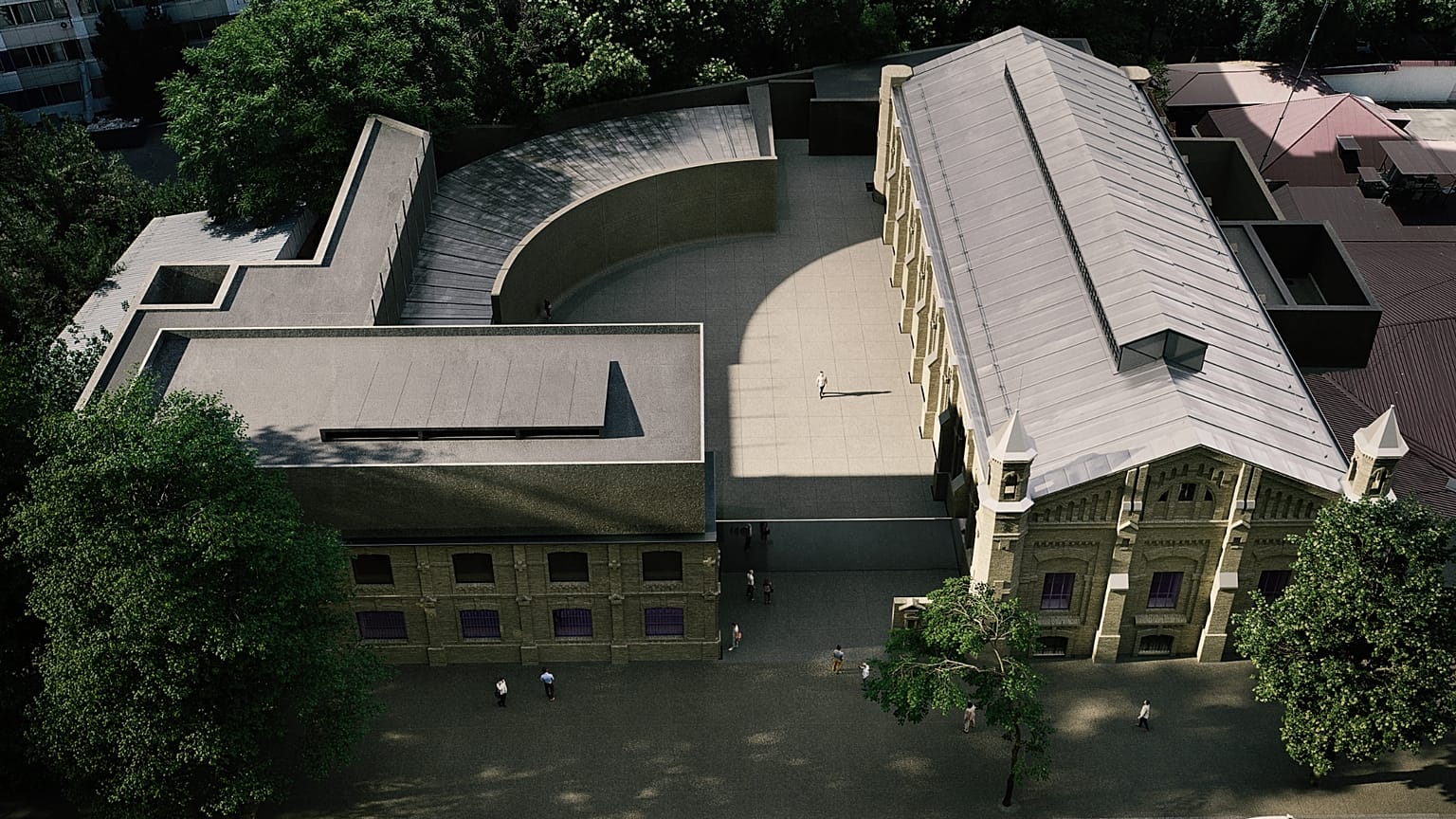













Uzbekistan will open a new Centre for Contemporary Arts at a historic former diesel power plant. The exhibition space's inaugural season includes international artists, a Venice Biennale collateral project and city-wide cultural festivals.
Tashkent’s first permanent Centre for Contemporary Arts marks the transformation of a former industrial power station into a new cultural institution for Uzbekistan and the wider region.
 ADVERTISEMENT
ADVERTISEMENT
ADVERTISEMENT
Built in 1912 as the city’s first diesel power plant, the structure has been initiated by Gayane Umerova, Chairperson of the Uzbekistan Art and Culture Development Foundation.
It is conceived as a long-term platform for contemporary art, research and public engagement, linking early 20th century industrial heritage with a programme focused on the development of a creative economy.
“When we first envisioned the CCA, I knew I wanted it to be open to all, a place for inspiration, dialogue, opportunity, and a hub for the community,” Umerova explained.
“Through sustained investment in cultural infrastructure and programming, we are, for the first time, building a creative economy across Uzbekistan, and I’m proud of the opportunities for future generations being created through the dynamic programming at the CCA.”
Architecture and design philosophy
The building’s conversion is led by the Paris-based architectural practice Studio KO, founded by Karl Fournier and Olivier Marty. Their approach integrates architecture, interiors and landscape within a single framework, drawing on the site’s industrial past while adapting it for exhibitions, performances and public programmes.

The architectural model, first presented at Art Basel Paris in October 2025, outlines a complex that will include a large exhibition pavilion, lecture halls, workshops, a library and bookshop, an open-air cinema that converts into a stage, a café and administrative offices. Traditional Uzbek materials and light-filtering design elements have been incorporated to maintain a dialogue between local craft and contemporary form.
Leadership and vision
The Centre’s Artistic Director and Chief Curator is Dr Sara Raza, whose curatorial practice spans Central Asia, the Middle East and North Africa.
“At its core, the Centre is a space for dialogue between artists and intergenerational local, global, and digital audiences to participate in art and ideas,” she says.
The institution is intended to operate as an open-access space, with free entry, positioning itself both as a regional cultural hub and as a civic gathering point in a city historically shaped by exchange along trade routes linking Europe and Asia.
Beyond exhibitions, the CCA will support research and professional development. Since 2024, preparatory initiatives have included artist residencies, youth workshops and digital programming through CCA Radio.
Structured internships, fellowships and traineeships are planned for early-career curators and cultural managers. In collaboration with the Architectural Association in London, the Centre will launch a three-year Visiting School programme from 2026 to 2028, focusing on vernacular architectural thinking in Uzbekistan through fieldwork, research and public presentations.
2026: The first exhibition-led year
The year 2026 will be the Centre’s first full exhibition season. The inaugural exhibition, Hikmah (Wisdom), curated by Dr. Sara Raza, will open alongside the public launch in March.
The exhibition will feature site-specific works that respond to the building’s architecture while exploring themes of knowledge and insight.
Participating artists include Kimsooja, Ali Cherri, Nadia Kaabi-Linke, Muhannad Shono, Nari Ward, Shokhrukh Rakhimov, and Tarik Kiswanson.
A central work, Flying Carpets by Nadia Kaabi-Linke, is on loan from the Solomon R. Guggenheim Museum in New York and will be shown in Central Asia for the first time.
From May to November, the Centre will present a major exhibition of Vyacheslav Akhunov as a collateral project of the 61st Venice Biennale. Spanning five decades of multidisciplinary practice, the exhibition will include painting, drawing, video and installation works, as well as previously unrealised pieces from the 1970s. The presentation situates Uzbek contemporary art within a broader international context.
In September, the programme will continue with Centre for Cosmic Energy, guest curated by Zelfira Tregulova. The exhibition revisits the work of Ilya and Emilia Kabakov within the former industrial setting, reframing the building as a space for speculative artistic inquiry.
Public programmes and city-wide engagement
The Centre’s launch will coincide with the Navruz Gala and Festival, scheduled from 21 to 23 March 2026. The multidisciplinary programme will include music, performance, poetry, film and food events, positioning the institution as an active civic venue from its first days of operation.
Summer programming will extend into the city through Tashkent Summer Days, running from 21 June to 9 August. Curated in collaboration with Invisible Island Studio, the seven-week public art initiative will activate multiple districts and mahallahs, drawing on the memory of historic open-air festivals and cinema culture while introducing contemporary artistic interventions into public space.
The year will conclude with Tashkent Film Encounters in December, a programme that revisits the legacy of the Tashkent International Film Festival, held between 1968 and 1988, and reinterprets it as a contemporary platform for global cinema and cross-cultural dialogue.
Read more