



























How Orhan Pamuk's television adaptation of 1970s Istanbul for Netflix is taking over Turkey with its portrayal of love, memories and objects.
'It was the happiest moment of my life; I didn't know it'
 ADVERTISEMENT
ADVERTISEMENT
ADVERTISEMENT
Orhan Pamuk's 2008 novel "The Museum of Innocence" is regarded as one of the most subtle portrayals of memory, loss and desire in Turkish literature. Now, years later, this layered story has arrived on Netflix, not merely as an adaptation but as an attempt to respectfully reconstruct the novel's intellectual universe.
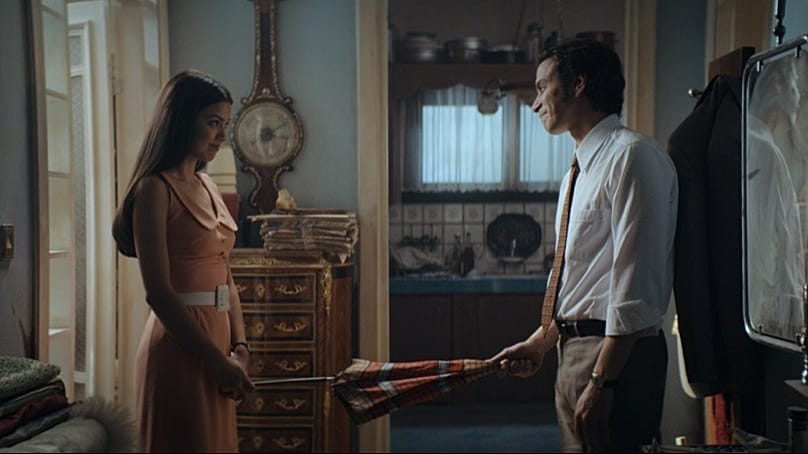
Set in Istanbul in the 1970s, the story follows the passionate love that blossoms between Kemal, the son of a wealthy family, and his distant relative Füsun. Tracing love, happiness, longing and lost possibilities, the series uses a multi-layered narrative to transport viewers back into Istanbul's past.
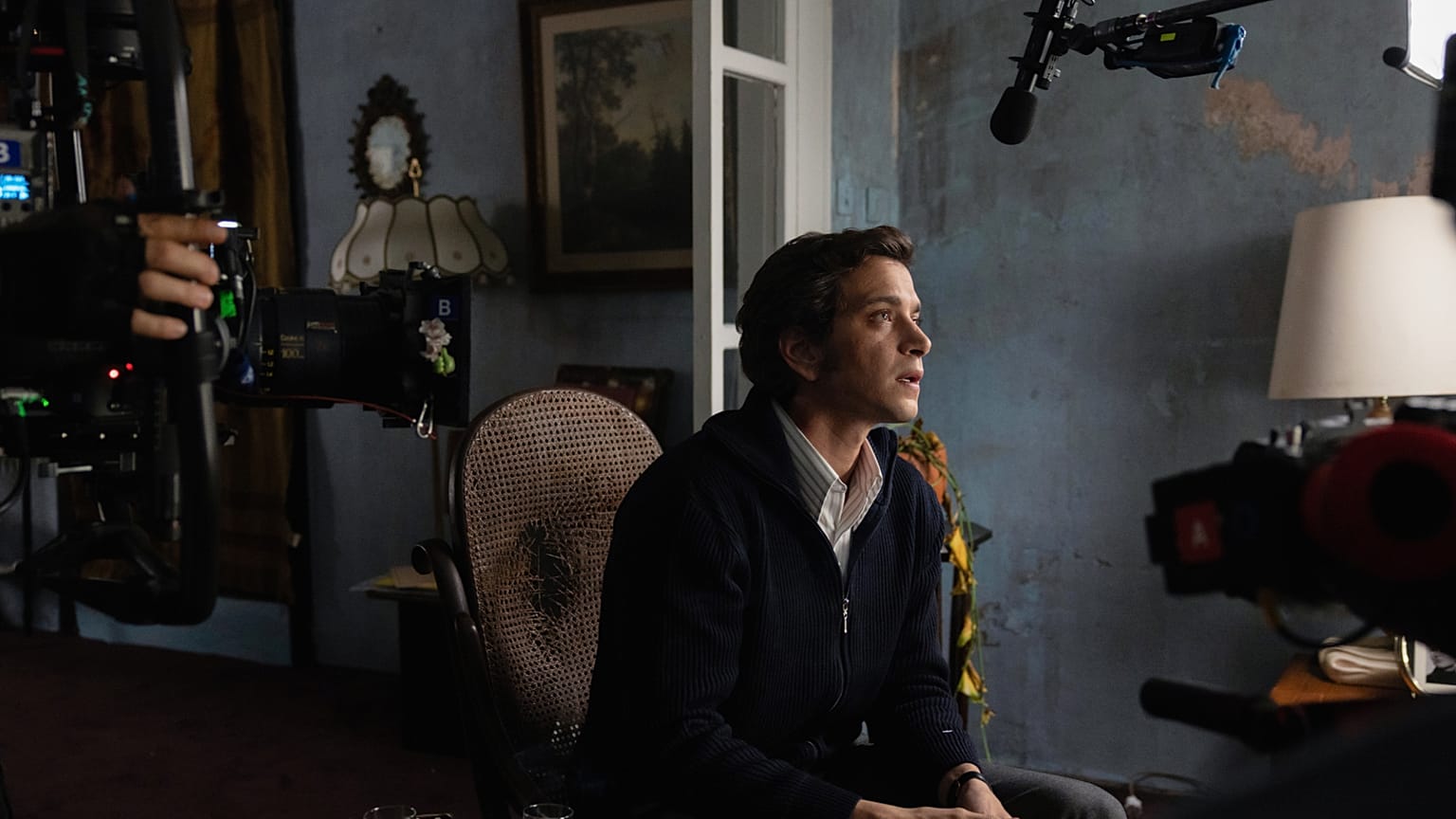
Directed by Zeynep Günay and written by Ertan Kurtulan, the series stars Selahattin Paşalı and Eylül Lize Kandemir in the leading roles. The cast also includes seasoned Turkish actors such as Oya Unustası, Tilbe Saran, Bülent Emin Yarar, Gülçin Kültür Şahin and Ercan Kesal.
Since the series launched on Netflix, the novel "The Museum of Innocence" has frequently sold out in bookshops. Social media feeds have been almost entirely saturated with images from the show, and the Museum of Innocence in Istanbul's Çukurcuma district, which shares its name with the book, has faced a renewed wave of interest from visitors.
The birth of a novel, a museum and a memory
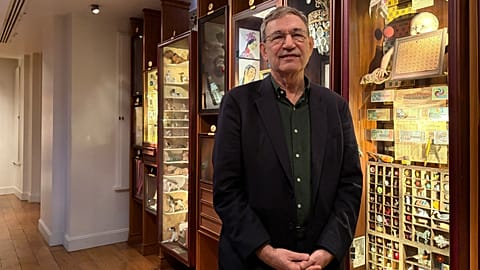
Pamuk's novel was born not only as a work of literature, but also as an idea. The Nobel Literature Prize winner did not want to be content with telling a love story; by exhibiting the objects through which that story unfolds in a 'real' museum, he set out to blur the boundaries between fiction and reality. The project was conceived as something that could exist both as fiction and in physical form, keeping an imaginary story alive through 'real' objects.
As the author puts it, a visitor to the museum would, just like a reader who comes to believe that the novel's protagonist Kemal is a real person, eventually sense the 'reality' of the story being displayed. While constructing the novel, Pamuk treated every object as a vessel of narrative; the museum was therefore designed not simply as an exhibition space, but as an encyclopaedic dictionary of emotions.
For Pamuk, The Museum of Innocence is as much a mode of storytelling as it is a novel. As he explores feelings through objects, he seeks out love, impatience, jealousy, shame and loss in the memory of things. The objects are as vivid as the characters; each is a tangible trace of a recollection, a feeling.
Pamuk's fascination with collecting, keeping and ordering things from childhood onwards forms the emotional bedrock of the museum idea. In his youth, when he was absorbed in painting, he developed the habit of thinking about forms and objects, and over time he transferred this visual interest into words. In "My Name is Red" he delved into the inner worlds of characters who paint; in "The Museum of Innocence" he now paints the emotional and historical memory of objects.
The first spark of both the novel and the museum came in 1982, when Pamuk met one of the last Ottoman princes, Ali Vasıb Efendi. The prince's life in exile, the way a figure severed from the palace clung to the past, and his reckoning with memory, planted in Pamuk's mind the idea of 'turning a life into a museum'. That encounter became both the conceptual core of The Museum of Innocence and the starting point of the 'personal history' theme that the author would go on to pursue in later works.
After the 1999 earthquake, Pamuk's walks through the neighbourhoods of Cihangir and Çukurcuma helped the story find its setting. An old apartment building became both the place where the novel unfolds and, later, the real address of the museum. The building turned into the focus of Kemal's love, and into a stage where the visitor would step into the story.
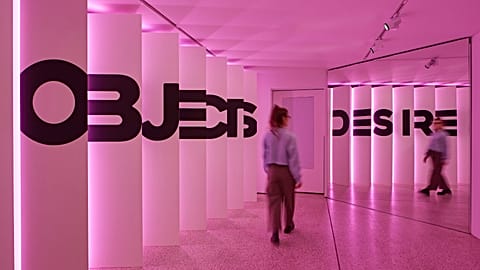
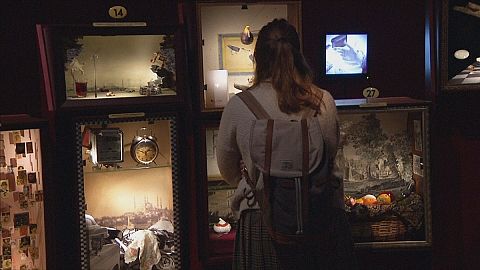
Opened in the spring of 2012, the Museum of Innocence was realised as a space of memory that exhibits, one by one, the objects described in the novel. Each item - Füsun's earring, a lighter, a perfume bottle, a cigarette butt - stands as a witness to Kemal's lost love. As visitors move past the display cases, they follow not only objects, but also the traces of a life. The museum thus becomes the spatialised form of a narrative.
This fluidity between novel and museum occupies a key place in Pamuk's understanding of literature. As the novel turns into a museum, the museum, in turn, becomes a novel. This dual structure blurs the line between 'reality and fiction'. Pamuk creates an experiential space in which a novel is not only read, but also walked through.
In the author's words, this project is 'an imaginary story hidden in the innocence of real objects'. The Museum of Innocence is less a love story than a tale of the relationship between human beings, objects, memory and time.
'The Innocence of Objects' and the guilt of remembering
At the heart of the novel lies an 'archaeology of objects' that develops around Kemal's love for Füsun. In the wake of the woman he has lost, Kemal reconstructs every moment he shared with her through objects. This act is not simply about collecting; it is the concrete form of a desire to remember.
A cigarette butt, a hair clip, a cup: each becomes the carrier of a moment, a glance, a touch. In Füsun's absence, objects become the only way to sustain her presence.
Kemal's museum is constructed like an emotional architecture that tries to make up for a loss. Each display case carries a fragment of the love story while posing a question to the reader: 'Did we love a person, or the time we spent with them?'
In the Netflix production, one of the most striking creative choices is to weave Orhan Pamuk himself into the narrative, both as the author of the novel and as a writer character within the series. This multi-layered storytelling technique gives visual resonance to a structure that, in the book, already blurs the line between fiction and reality.
The author appears almost as a guardian of memory wandering among his own characters, both the witness to the narrative and the figure who brings it into being.
Love or obsession?
One of the most notable aspects of the series is the way it presents the asymmetrical love at the heart of the novel not as something to be judged, but as two different ways of loving. Kemal's love is intense, possessive and fixated on remembering.
Füsun's, by contrast, is quiet, repressed and shaped within social constraints. These two different experiences serve as a reminder that there is no single definition of love. Yet the story is fundamentally centred on Kemal; the way he lives this love transforms his identity and his very existence.
Some critics question the morality of Kemal's relationship with a woman much younger than himself; others interpret his collecting of Füsun's belongings as a form of kleptomania or obsession. Yet at the core of the story we see not so much fixation as the way love takes shape within Kemal's inner world. This is an experience that arises from his point of view: neither glorified nor condemned, simply related as it is. There is, in fact, no side here we are invited to empathise with.
In the series, this difference is brought into focus through the contained tension of the performances. Every touch of Kemal's summons a memory, while each silence from Füsun becomes another form of resistance. In this way the viewer moves beyond the question 'Who loved more?' and is left instead with 'Who remembered love more?' For this reason, to label Kemal's love as mere obsession would be to overlook both the complexity of the feeling and the tragic depth of remembering.
Period aesthetics: the sensory memory of 1980s Istanbul
The production not only tells a love story, it also carefully recreates the social fabric of 1980s Istanbul. The light of the period, the clothes, the texture of interiors and even the music playing in the background evoke the atmosphere of those years, without ever slipping into the aesthetics of a nostalgic postcard.
This realism also preserves the sense of period alienation at the core of the novel. The audience can feel both the social hierarchies of the time and the way class differences seep into love. In this respect the series draws a remarkably strong portrait of the era.
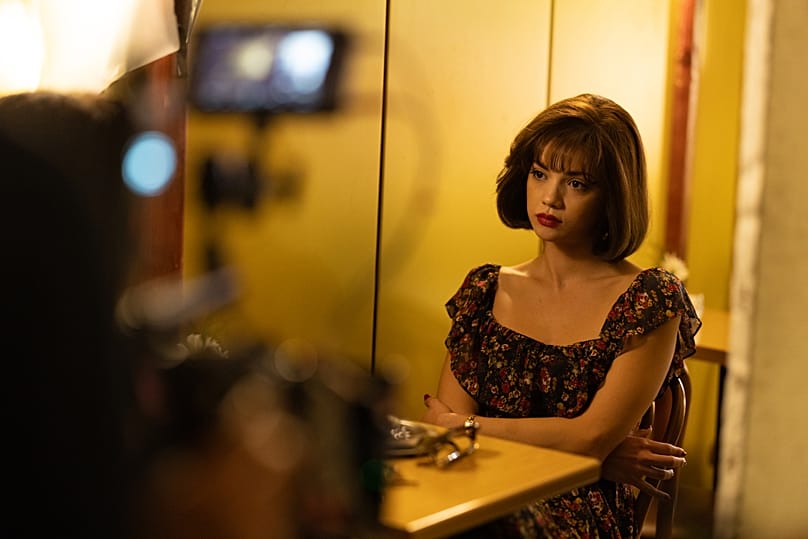
At the same time, casting a relatively unknown actor in a role like Füsun's proves to be a well-judged decision. The fact that the actor is not overly familiar helps sustain the distance that prevents us from fully entering Füsun's enigmatic world, deepening the character's impact.
Should you watch it?
The Museum of Innocence series remains faithful to Orhan Pamuk's novel while successfully translating it into a visual language. The dialogue, period details, characters' silences and the symbolic use of the museum all carry the emotional depth of the novel onto the screen.
Pamuk's idea of an object-memory correlation takes on concrete form here: memories now live not in words, but on the surface of objects. This is precisely where the strength of the series lies: it tells not just a love story, but the aesthetics of remembering.
Ultimately, this adaptation is more than a retelling of a novel; it is a cinematographic tribute to Orhan Pamuk's universe, the story of a man who loves a woman, loses her, and makes that loss immortal through objects.
Perhaps above all, the series invites us to reconsider this sentence: 'You do not love a person, but the time you spend with them. And sometimes, only objects remember that time.' With all these layers, The Museum of Innocence stands out as one of the most finely crafted Turkish TV productions to put visual memory at its centre: not just an adaptation, but a lasting meditation on how a feeling, a period and a city are remembered.
The Museum of Innocence is available now on Netflix