















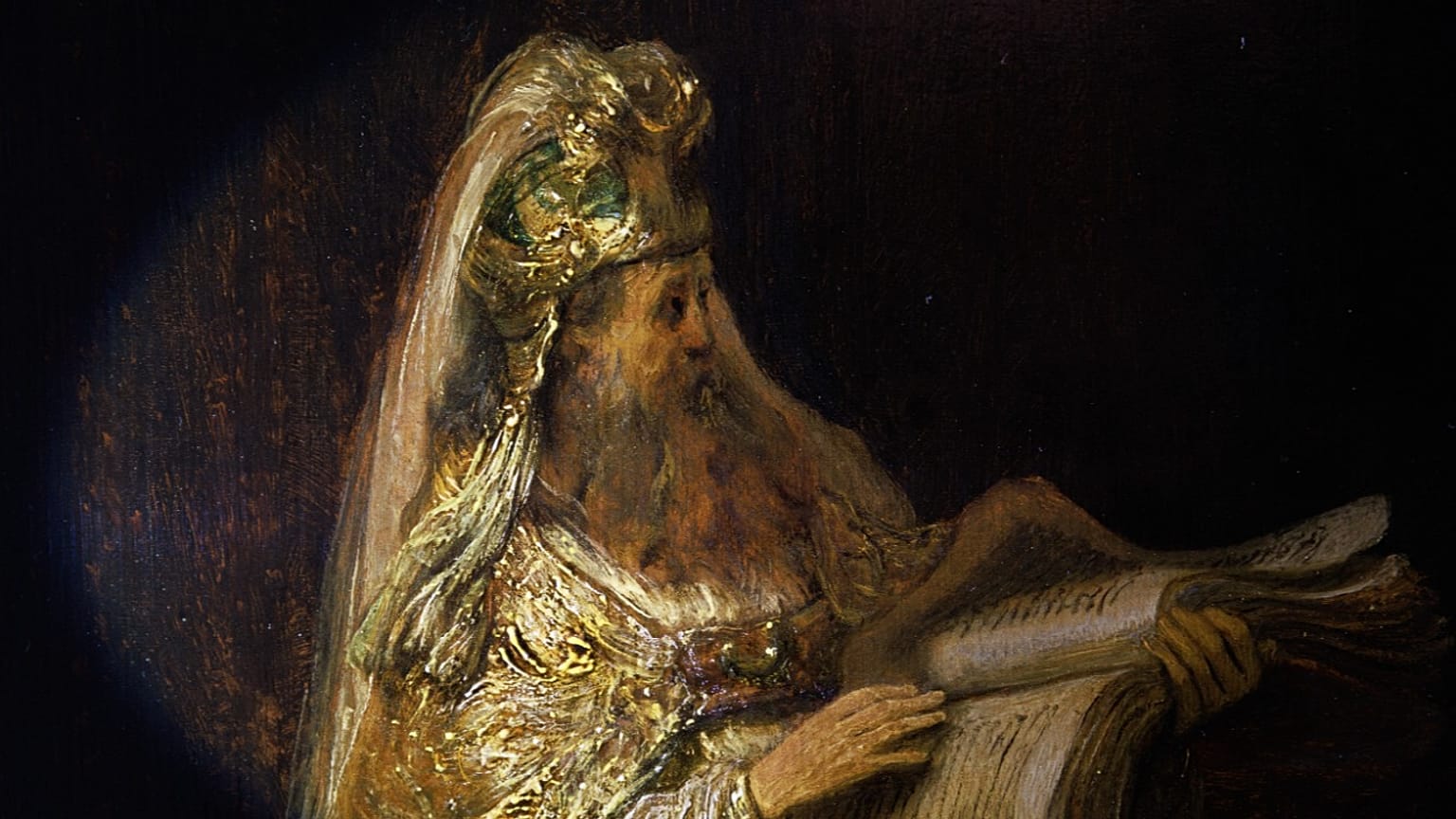













The Dutch master has been revealed as the maker of 'Vision of Zacharias in the Temple', a 17th century work that has been authenticated using advanced techniques by researchers at the Rijksmuseum in the Netherlands.
Researchers at the Rijksmuseum in the Netherlands have revealed a new painting by the Dutch master Rembrandt.
 ADVERTISEMENT
ADVERTISEMENT
ADVERTISEMENT
By closely comparing Vision of Zacharias in the Temple with other stylistic and thematic alterations made by Rembrandt van Rijn, researchers have concluded that the 17th century piece is genuine and from the same period.
The painting depicts a scene from the biblical story of high priest Zacharias. It shows the moment Zacharias receives a visit in the temple from the Archangel Gabriel.
The angel tells Zacharias that, despite his and his wife’s advanced age, they will have a son: John the Baptist. The angel is not shown in the painting, but the light shining from the upper right corner heralds his arrival. Zacharias’ expression of surprise reflects his incredulity.
"It’s wonderful that people can now learn more about the young Rembrandt – he created this very poignant work shortly after moving from Leiden to Amsterdam", said Taco Dibbits, Rijksmuseum director. "It is a beautiful example of the unique way Rembrandt depicts stories."
Under the radar
In 1960, the painting was excluded from Rembrandt’s oeuvre. After being purchased by a private individual in 1961, it disappeared from public view. Unaware of the picture’s whereabouts no experts had been able to study it since that time.
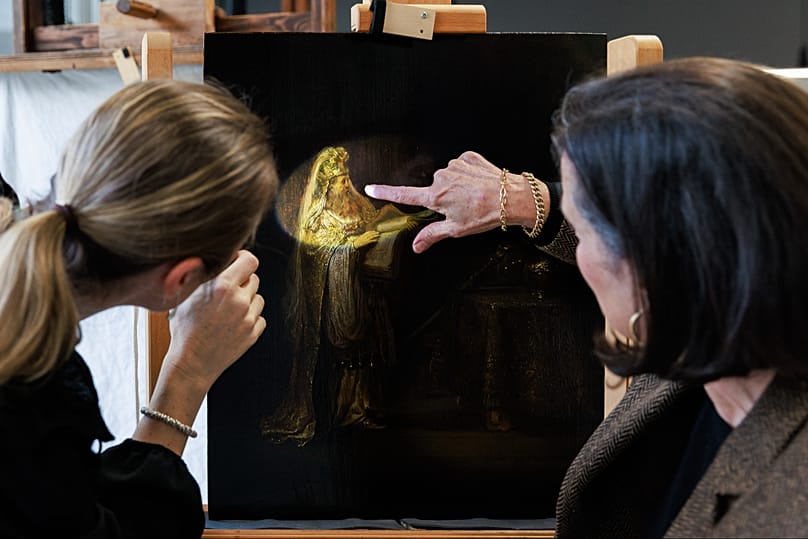
However, the current owner recently contacted the Rijksmuseum, allowing the painting to be examined for the first time in 65 years.
That move resulted in a two-year study which has revealed that all the paints used for the Vision of Zacharias in the Temple are found in other Rembrandt works from the same period.
The painting technique and the build-up of paint layers are also comparable to other early works by Rembrandt. Macro-XRF scans and visual inspection additionally demonstrated compositional changes that support the authenticity of the work.
Investigation into the signature shows that it is original, and dendrochronological analysis of the wooden panel confirms that the date of 1633 on the painting is correct.
Thematically, the work also fits seamlessly into the oeuvre of the then 27-year-old artist, alongside Daniel and Cyrus Before the Idol Bel (1633, J. Paul Getty Museum, Los Angeles), Simeon's Song of Praise (1631, Mauritshuis, The Hague), and Jeremiah Lamenting the Destruction of Jerusalem (1630, Rijksmuseum, Amsterdam).
The work is on long-term loan to the Rijksmuseum from a private collector and will be on view to the public from Wednesday 4 March.