















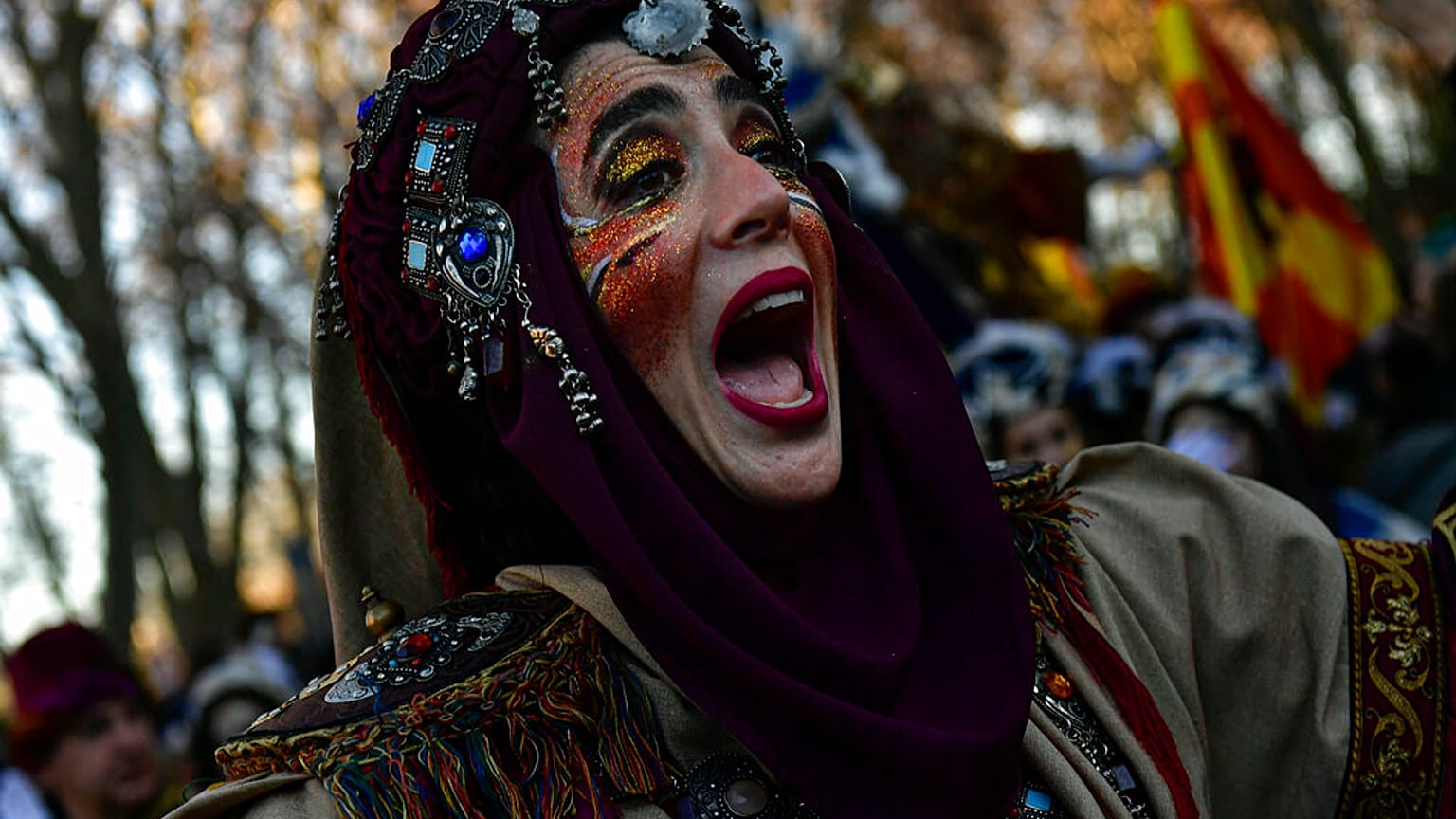














On 6 January, the visit of the Magi to Jesus is celebrated by millions around the world. It's a story that's been handed down through generations but actually barely mentioned in a Gospel, however, it's the deep-root of secular tradition in Italy and, in Europe, above all a culinary ritual.
Epiphany is celebrated on 6 January: a religious festivity that, as often happens, has also developed its own profane declination over time. Just as the birth of Jesus, on 25 December, was later joined by the figure of Father Christmas, in the case of the liturgical feast at the beginning of January, popular culture in Italy has seen the emergence of the Befana - an elderly woman capable of flying on a broomstick.
 ADVERTISEMENT
ADVERTISEMENT
ADVERTISEMENT
The festivity is linked to the theophany, a word that comes from the Greek theophàneia, and is composed of theos, 'god', and phàinein, 'to manifest'. It is therefore the manifestation of divinity. Another similarly used term is Epiphany, from the Greek επιφάνεια, epiphaneia, meaning "apparition".
The concept is typical of many religions. In this specific case, as the Vatican recalls, in the West, 6 January commemorates the visit of the Magi to the newly born Jesus. It is therefore "the moment when the Lord 'manifests' himself to the pagans, and with them to the whole world. In the Eastern Churches, this solemnity emphasises the 'manifestation' of the Trinity during the baptism of Jesus in the Jordan'.
The 'manifestation' of the divinity to the world in Catholicism
Moreover, continues the Holy See's information portal, "with Epiphany the prophecy of Isaiah is fulfilled, which the liturgy has chosen as the first reading: 'Arise and be clothed with light, for your light comes'. As if to say: don't close yourself off, don't get down, don't remain prisoner of your convictions, don't get demoralised, react, look up! Like the Magi, look at 'the stars' and you will find 'the star' of Jesus'.
Hence another legend, that of the comet star followed by the Magi to reach the hut where Jesus was born, to whom they then brought gifts of gold, frankincense and myrrh. Their figures are actually only mentioned in the Gospel of Matthew(which has been modified several times over the centuries), which, however, does not specify their names - Melchior, Balthasar and Gaspar - nor that they were three. All details that Christian tradition added later.
The origin of the Magi, the Befana and the rite of the stocking
The oldest origin of the Magi, however, indicates they were 'priests of the ancient Persian religion, to whom late Greek traditions attributed talents as astrologers, soothsayers and sorcerers', as explained by the Treccani.
A narrative that has also repeatedly found its way into numerous artistic transpositions, most notably Giotto's fresco in the Scrovegni Chapel in Padua.
Conventionally, it is a holiday that represents a sort of 'appendix' to Christmas and New Year's Eve, and closes the Christmas season. In Italy, in fact, schools have always beenclosed on 6 January (while in other European nations, lessons begin earlier and Epiphany is not a public holiday) hence the widespread expression: 'the Epiphany takes all holidays away'.
Befana derives precisely from the term Epiphany, which has been gradually distorted in popular culture into befanìa. The tradition evokes an elderly lady, with a particularly ungainly appearance, who on the night between 5 and 6 January flies from house to house on her broomstick, bringing gifts and sweets to children, each contained in a stocking.
Ties that bind the sacred and profane narratives
There is, however, another legend that links the sacred and the profane. The Befana, according to some narratives, was in fact met by the Three Wise Men during their journey from the East to Jerusalem. The three would have asked her for directions and invited her to follow them on their journey. However, the elderly woman allegedly refused, only to later repent and, in a bid to make amends, started looking for Jesus in every home. Giving something to every child she came across.
The figure of the woman 'who comes at night with her shoes all broken', however, has its roots above all in a popular tradition linked to thepropitiatory rites of farmers, who in the middle of winter hoped for a good harvest in the year that had just begun.
Today, the holiday is celebrated in a variety of ways in Italy: with folk festivals, lighting of fires and, of course, gifts offered to children. Often celebrations are organised in the streets: among the most famous are those in Piazza Navona in Rome**.** In most of Europe, on the other hand, Epiphany is mainly linked to a culinary ritual, often that means the preparation of certain cakes and sweets such as the Galette des rois in France.