














From a retired instructor to his son and grandson, one family’s journey through welding education highlights why skilled trades remain essential to Kazakhstan’s economy – and why human craftsmanship still matters in an age of automation.
Sparks fly daily inside a vocational college workshop in Kazakhstan, where metal is cut, joined and reshaped by hand. For the Urazaliyev family, this is more than a workplace – it is a shared history that spans three generations and reflects the enduring importance of skilled trades in Kazakhstan.
 ADVERTISEMENT
ADVERTISEMENT
ADVERTISEMENT
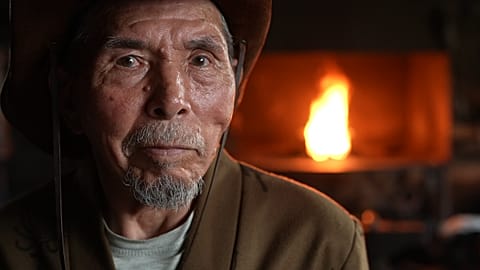
Tubynyaz Urazaliyev, a retired welding instructor, still remembers his first encounter with the profession as a child.
“When we were kids, we used to run to the railway. Welders worked there. Sparks were flying – it fascinated us,” he recalls.
His son, Almaz Urazaliyev, now a vocational welding instructor himself, describes welding as something almost magical.
“For me, it always felt like New Year. Welders don’t need sparklers. They don’t wait for New Year – they light them every single day,” he says.
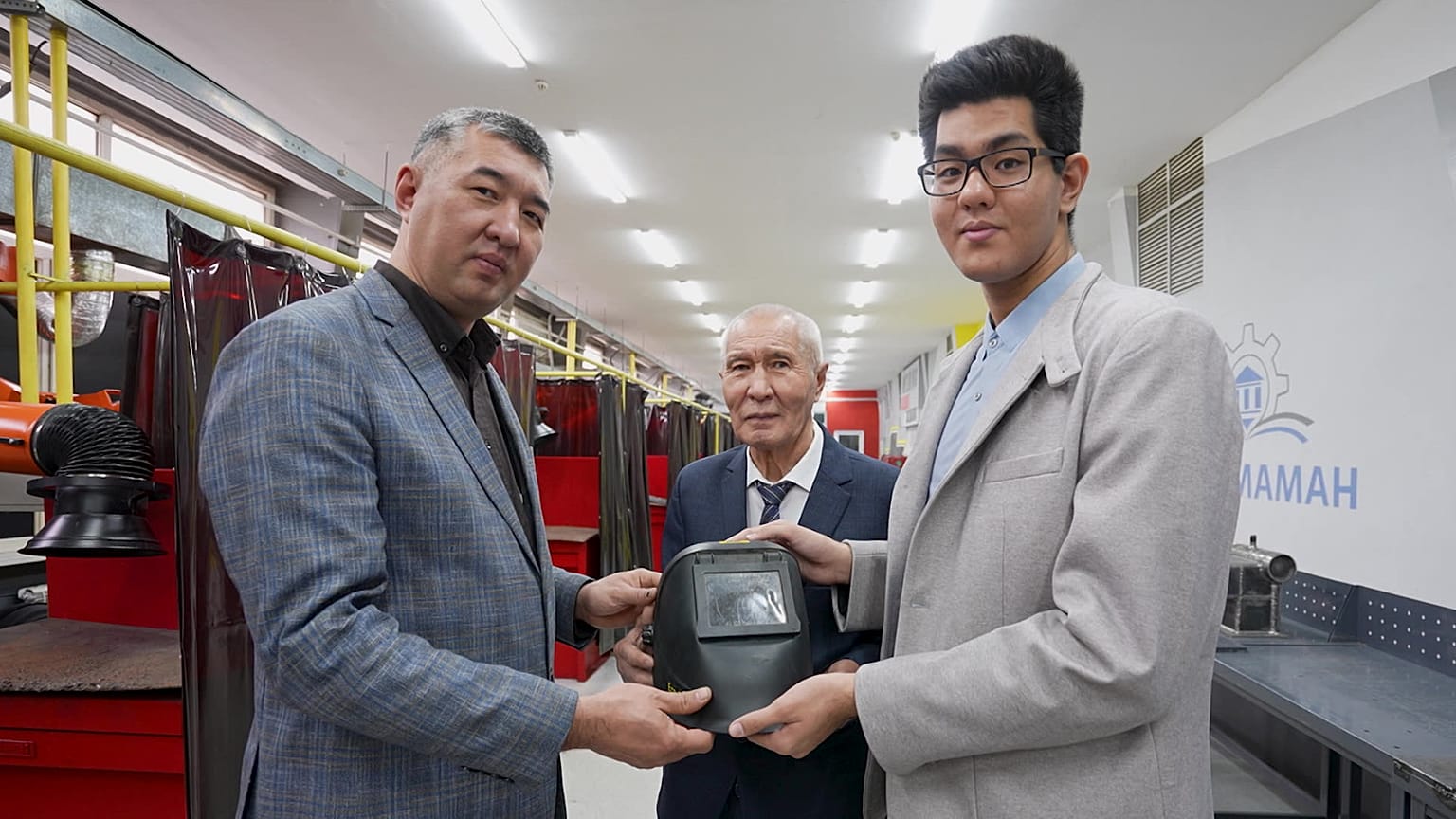
After graduating from college in 1998, Almaz returned to the same institution to teach. At the time, he was barely older than his students.
“I was young myself, teaching lads not much older than me,” he explains. What began as a job soon became a family tradition. Years later, his own son enrolled at the same college.
Daulet Tubaniyazov, now a student himself, says the example set by his father and grandfather shaped his choice.
“I saw how respected my grandfather was as a true professional. I always wanted to be like him and my father,” he shares.
Hands-on education and social mobility
At the college, education is free. Students receive meals and a scholarship, and instructors emphasise hands-on training over theory alone.
“We have theory teachers, and we have instructors,” Almaz explains. “Instructors work with real metal, real tools. This is where students learn the basics.”
For the Urazaliyevs, teaching is not a one-way process.
“Passing on what you’ve learned is fascinating,” Almaz adds. “But it’s not just me teaching them – they teach me too. Patience. Character. Every child is an individual.”
Why welders are still indispensable
“Nothing happens without welding,” says Almaz. “Look around your city – buildings, fences, cars. All of it is the work of welders. Even something like the Eiffel Tower!”
His son argues that welding is both technical and creative:
“A welder can also be an artist. You can create sculptures, beautiful metal forms.”
Despite rapid advances in automation, the welders stress that human skill remains essential.
A renewed focus on working professions
Kazakhstan is now facing a renewed demand for skilled workers. President Kassym-Jomart Tokayev had declared 2025 the Year of Working Professions, framing manual and technical jobs as key to the country’s economic and social development.
According to Kazakhstan’s Ministry of Labour and Social Protection, total labour demand over the next six years is expected to reach around 1.6 million workers. Nearly 900,000 of those positions will require vocational or technical education. Welders are among the most sought-after specialists in construction and manufacturing.
Yet challenges remain. “What problems do young workers face? Housing. Harsh conditions,” Tubynyaz says, recalling long months spent on remote pipeline projects. “Many can’t handle it.”
He also points to the decline of large-scale production. “Big factories are gone. Industry needs to be developed again,” he says.
As Kazakhstan looks to revitalise its industrial base, stories like the Urazaliyevs’ underline a simple truth: even in a digital age, progress still depends on skilled hands, patience – and people willing to pass their craft on.