















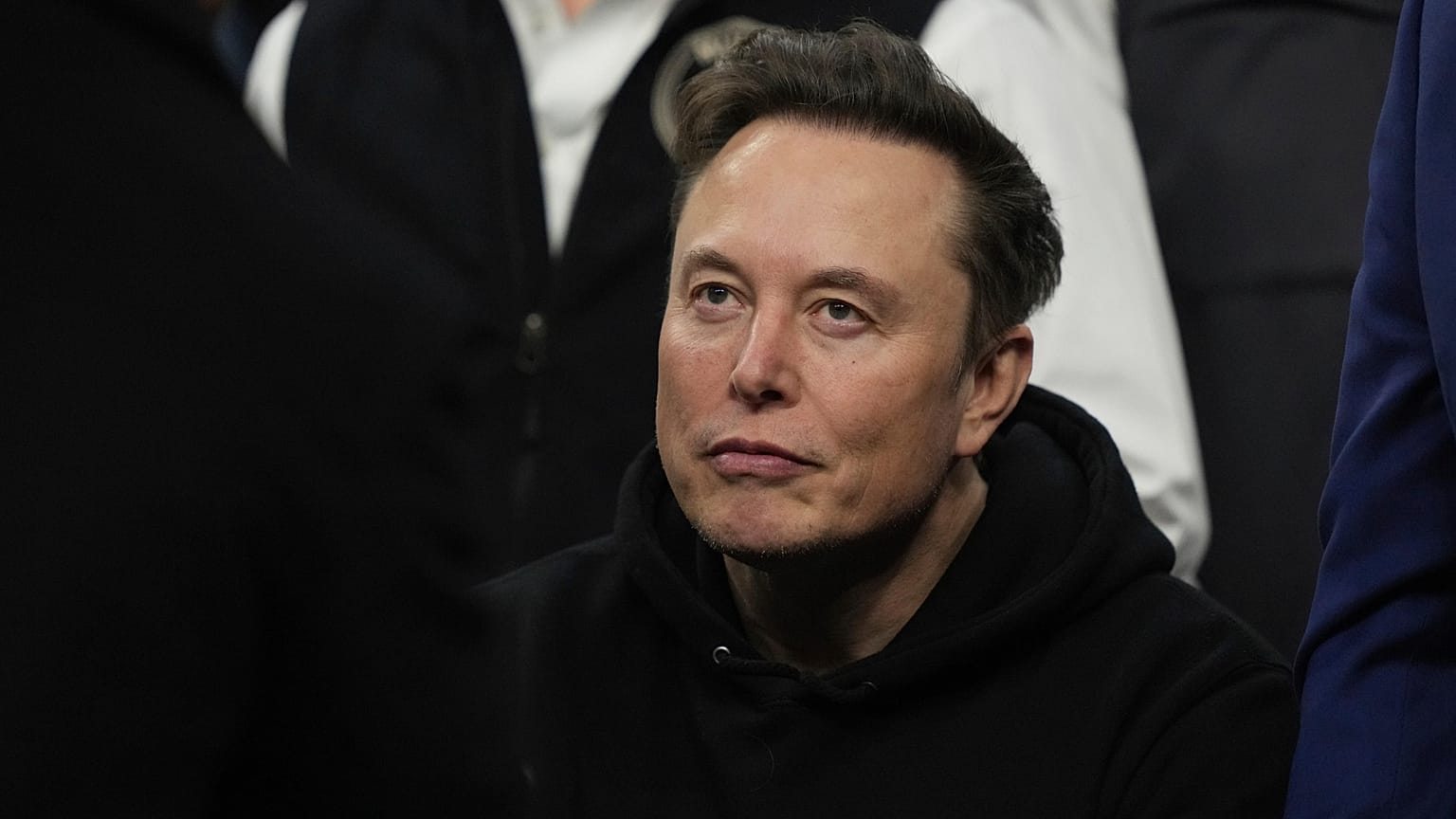













The rocket and satellite company beat Wall Street's loss forecasts in its first quarterly report as a public company, even as investors question its heavy AI spending and whether Elon Musk has oversold its prospects.
SpaceX has reported a smaller loss than Wall Street expected alongside a surge in revenue in its first quarterly results as a public company.
 ADVERTISEMENT
ADVERTISEMENT
ADVERTISEMENT
The rocket, satellite and AI firm sharply increased spending in the quarter, particularly on artificial intelligence.
The company run by Elon Musk posted a loss of $541 million (€469mn) or 9 cents a share in the three months to the end of June.
That was less than half what analysts had forecast. Revenue jumped to $7.8 billion (€6.8bn) up more than 90% from the year-earlier period.
The standout performer was SpaceX's biggest cash generator, its "connectivity" business. Revenue there rose 66% year-on-year as subscribers to its Starlink satellite internet service doubled to 12 million.
"It's not out of the question that at some point, Starlink will deliver a majority of the world's internet," Musk told analysts on a call.
Stock swings on IPO worries
SpaceX shares rose 9% in regular trading on Tuesday but gave back most of that gain after hours. The stock has fallen by roughly half since peaking in June, shortly after an initial public offering that briefly made Musk the world's first trillionaire.
Investors are concerned Musk may have oversold the company's prospects in space travel and its Grok AI chatbot. Markets are also braced for volatile trading later in the week, when a lockup provision preventing some company insiders from selling shares begins to expire.
Shares jumped 19% on their first day of trading in June. The subsequent slide, combined with a drop in shares of Musk's electric carmaker Tesla, has pulled his fortune down to $783 billion (€679 billion), according to Forbes.
AI spending under scrutiny
SpaceX's spending on infrastructure and research and development jumped to $18 billion (€15.6bn), from less than $3 billion (€2.6bn) a year earlier. Chief financial officer Bret Johnsen said investors should expect similarly high capital expenditure over the next two quarters.
Musk defended the spending, an issue also facing other technology companies pouring money into AI.
He said the growth it was fuelling meant SpaceX would reach $1 trillion (€870bn) in annual revenue a year earlier than planned, in 2030 rather than 2031.
Starship tests loom
Musk faced repeated questions about Starship, the giant rocket central to his long-term ambitions for the company. It successfully deployed satellites during a test late last month.
He said SpaceX plans to test Starship's reusability at the end of the month, attempting to catch the spacecraft and its booster with mechanical arms on their return to base.
NASA hopes to use Starship to return astronauts to the Moon.
"We want to put boots on the ground — boots on the Moon — in 2028," SpaceX President Gwynne Shotwell said.
More than 900 million shares are due to be released for trading on Thursday, more than doubling the amount currently available, as the first of several lockup tranches expires over the coming months.
SpaceX also owns the social media platform X, formerly Twitter.