
















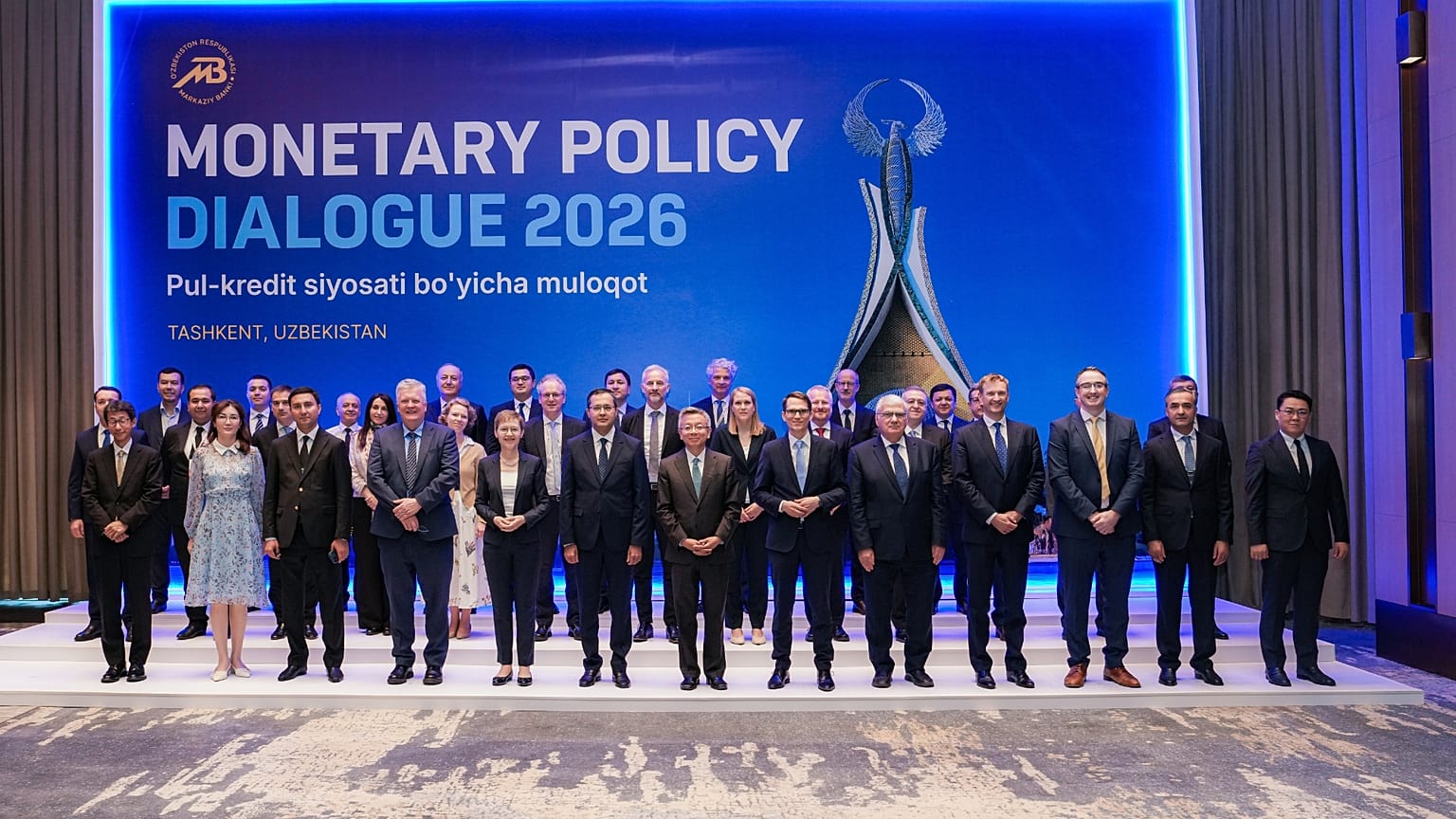














Economists at the Tashkent Monetary Policy Dialogue warned that premature rate cuts could keep inflation above target. Uzbekistan’s lower inflation, falling expectations and reduced dollarisation show how credibility shapes monetary policy.
Central banks risk keeping inflation above target if they lower interest rates too quickly, economists warn, as policymakers face a more difficult phase after years of elevated prices and repeated economic shocks.
 ADVERTISEMENT
ADVERTISEMENT
ADVERTISEMENT
The warning came during the first Monetary Policy Dialogue in Tashkent, where representatives from the International Monetary Fund, central banks and academia examined how monetary policy should respond to uncertainty, inflation pressures and changing financial conditions.
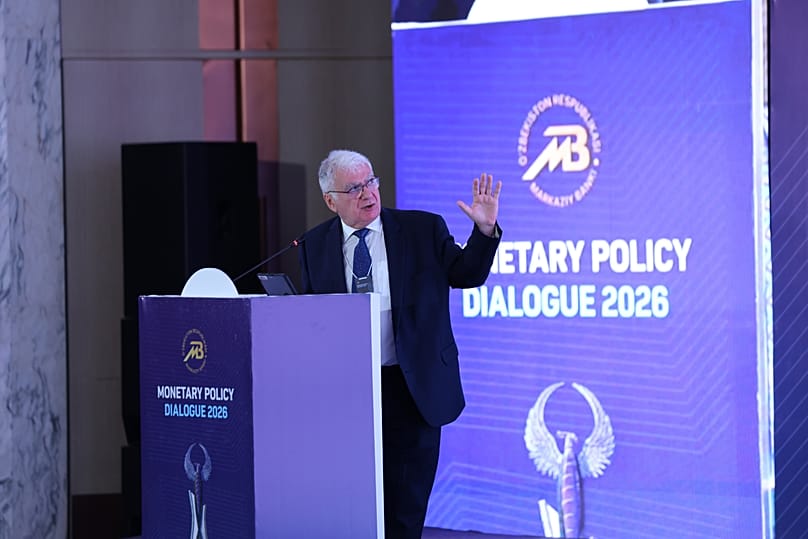
Athanasios Orphanides, professor at the Massachusetts Institute of Technology and former governor of the Central Bank of Cyprus, said the post-pandemic period had exposed the cost of misreading inflation.
“If we look at the post-pandemic experience, many central banks around the world did not calibrate policy correctly and ended up with inflation that was significantly higher than the definitions of price stability that they were aiming for,” Orphanides told Euronews.
“The risk, I fear, remains that for many central banks, policy easing is contemplated too early.”
Repeated shocks complicate policy decisions
The issue is not only the timing of interest-rate cuts. For central banks, the broader challenge is maintaining credibility when shocks to prices, supply chains and demand are harder to predict.
Koba Gvenetadze, the IMF’s resident representative in Uzbekistan, said policymakers need to compare what worked and what did not during the crises of recent years.
“There have been repeated shocks for the last five years and that is why lessons learned from those shocks and the sharing of experiences are absolutely very important,” she told Euronews.
The pandemic, Gvenetadze added, showed why central banks cannot always treat supply disruptions as short-lived.
“We have learned from the COVID experience, for example, that even if there are supply shocks which impact inflation, maybe in the beginning they don’t impact inflation, but at a later point they may start impacting inflation,” she said.
Inflation targeting and credibility
Inflation targeting remains, in Orphanides’ view, one of the most effective frameworks for guiding monetary policy when economic conditions become harder to read.
“A framework that works very well in my view, and this is the framework that has been adopted in recent years in Uzbekistan as well, is inflation targeting,” he said.
“By focusing on stabilising inflation and maintaining price stability, the central bank simply provides the foundation for all of the other adjustments that need to take place when shocks hit the economy.”
Uzbekistan has been moving towards full-fledged inflation targeting as part of broader market reforms.
Figures presented by the Central Bank showed inflation falling from nearly 20% in 2018 to 5.5% in May 2026. Inflation expectations among households and businesses also declined, from an average of 20% to about 10%.
The figures are important for the inflation-targeting transition, which depends not only on lower headline inflation but also on whether businesses and households believe price growth will remain under control.
Dollarisation falls as reforms continue
The Central Bank also cited lower dollarisation as a sign of growing confidence in macroeconomic stability.
It said foreign-currency deposits now account for around 20% of banking deposits, compared with nearly 50% previously, while dollarised lending stands at 37%, down from 54%.
For investors and businesses, lower dollarisation can signal greater confidence in the domestic currency and make monetary policy more effective through local financial markets.
Samigjon Inogamov, director of the Central Bank of Uzbekistan’s Monetary Policy Department, said policymakers are working through a sequence of reforms, including deeper domestic financial markets, financial-account liberalisation and the development of a more robust capital market.
Inogamov said the central bank would maintain tight monetary conditions to achieve its inflation target and strengthen the credibility of monetary policy.