




























The former president is to give evidence this Wednesday and Thursday over the Plus Ultra bailout and the jewellery found in his Ferraz office, valued at over one million euros.
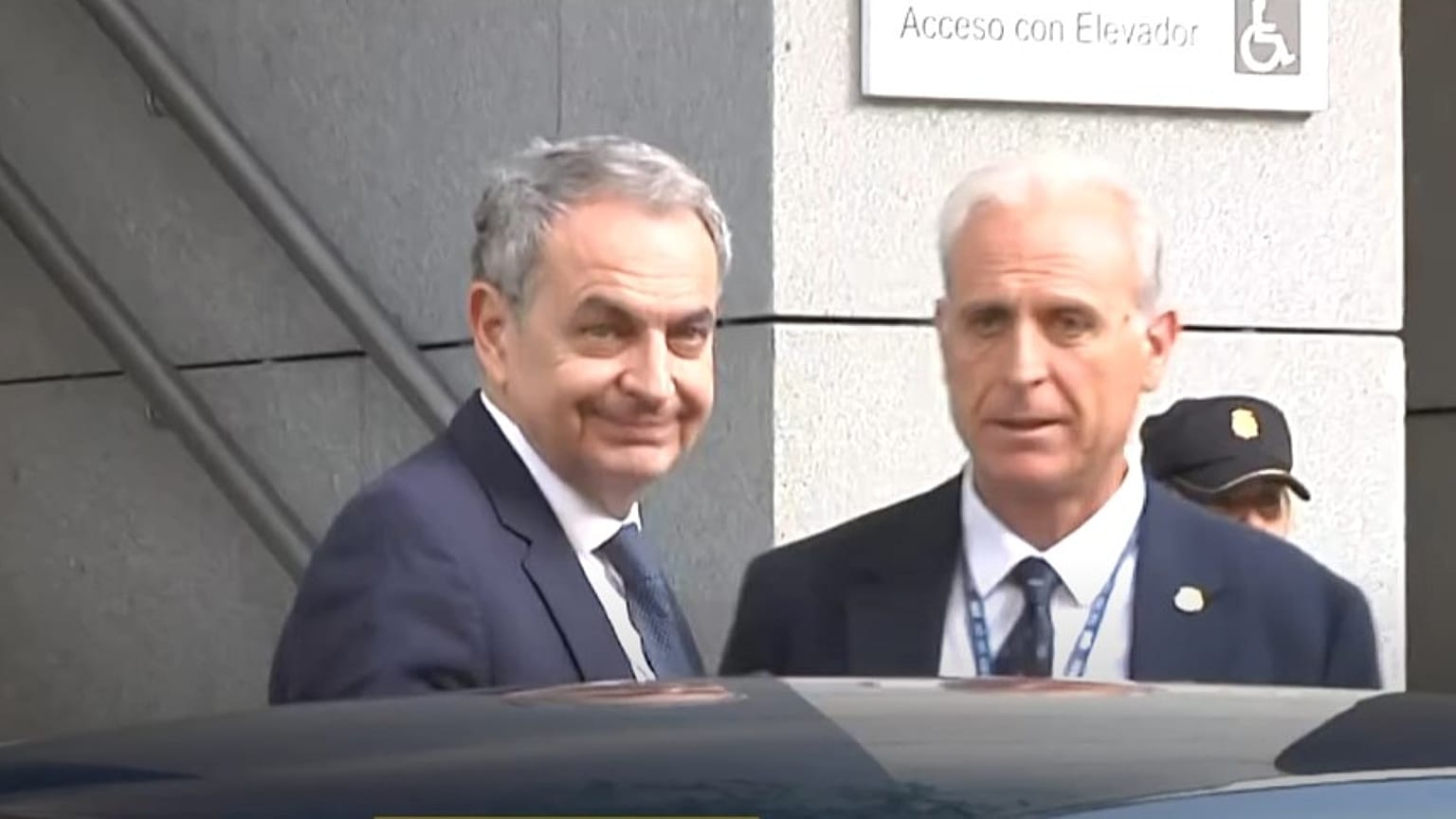
For José Luis Rodríguez Zapatero, today marks a turning point. The former prime minister is appearing before Judge Calama as a suspect, becoming the first head of a Spanish government to stand accused in a corruption case since Spain’s transition to democracy.
 ADVERTISEMENT
ADVERTISEMENT
ADVERTISEMENT
The summons, which starts today at 09:00 and will run through to tomorrow, aims to shed light on two issues at once. On the one hand, the public bailout of 53 million euros granted to the airline 'Plus Ultra'. On the other, the discovery of luxury jewellery during a search of his office in Ferraz, which has led the judge to open a separate case because of their value. They have been provisionally valued at 1.3 million euros and their origin, the investigation notes, has not been justified.
The ruling that underpins the case also refers to the company owned by the former prime minister’s daughters, What The Fav, which received up to 2 million euros for "consultancy" and layout and design work that may have been used to disguise the collection of alleged kickbacks. The investigating judge, who describes Zapatero as the leader of an "organised scheme", will hear the former prime minister’s explanations behind closed doors today.
A 'horribilis' week for the government
Zapatero is not just a former prime minister sitting before a judge; for years he has been one of the most important assets within the Socialist Party. His appearances at rallies and campaign closings, along with his good relationship with Pedro Sánchez since he moved into La Moncloa in 2018, mean this case has been one of the hardest blows for the PSOE and the government itself.
Although the former prime minister’s defence team, led by Víctor Moreno Catena, had already tried to limit the scope of the questioning by asking for the jewellery to be left out of the first session, the judge rejected this, arguing that there is no "real impairment of his right to a defence".