





























After eight years of fraught negotiations, Europe and Australia have finally struck a trade deal. From champagne to critical minerals, here is what changes — and for whom.
It took eight years, fifteen rounds of talks, one suspended negotiation in 2023 and one global trade war. And now, finally, a long-awaited agreement.
 ADVERTISEMENT
ADVERTISEMENT
ADVERTISEMENT
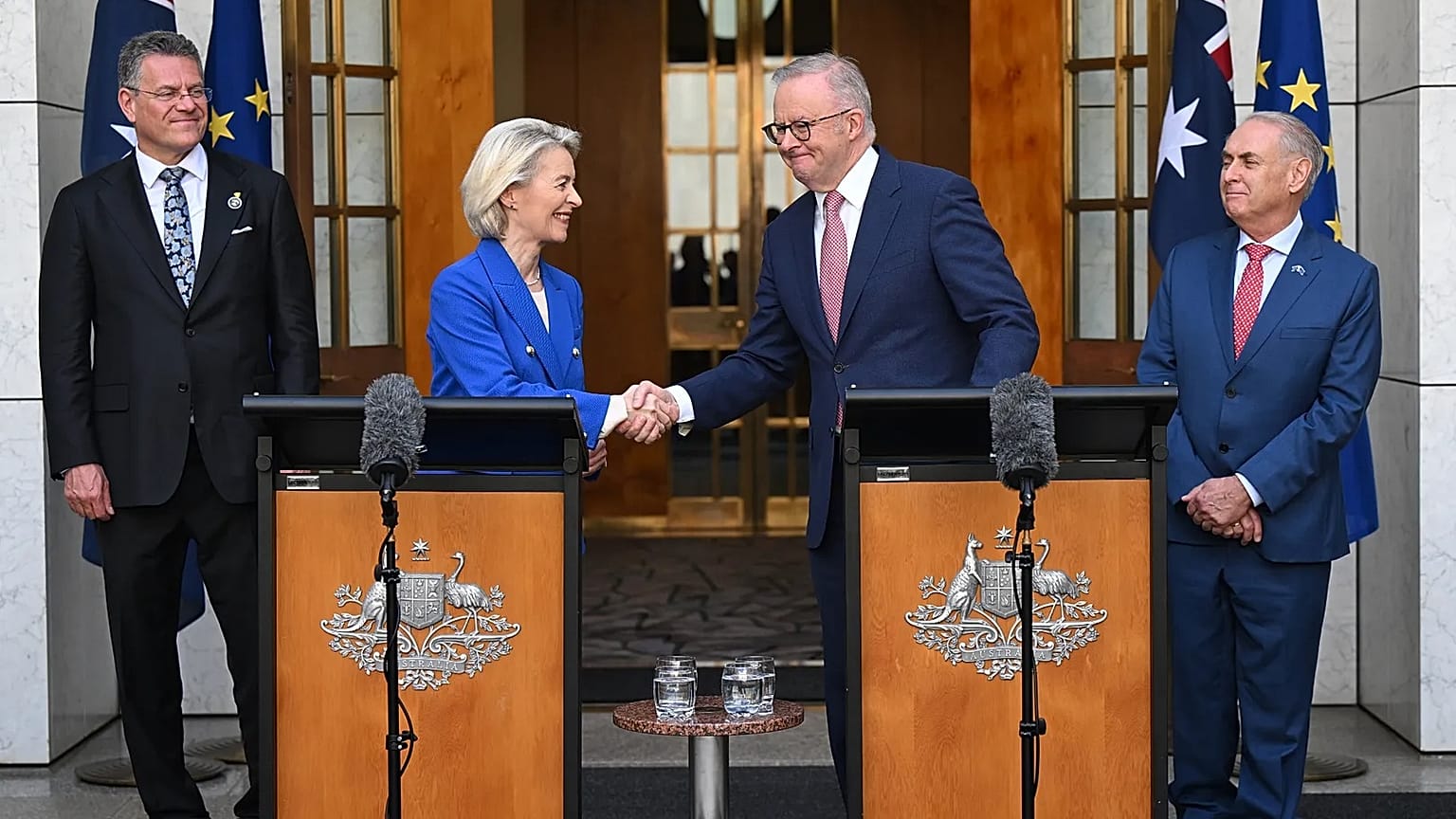
This week, European Commission President Ursula von der Leyen and Australian Prime Minister Anthony Albanese shook hands on a free trade agreement that promises to reshape the commercial relationship with Europe's seemingly least complicated trading partner — an enviable feat in tense times for international trade.
Unlike most of the EU's recent trading partners, Australia poses few of the political headaches that have dogged deals with Mercosur countries or India.
Both sides share a commitment to rules-based trade, democratic governance and, increasingly, a wariness of economic overdependence on China, making Canberra a natural partner for Brussels as it scrambles to diversify in the shadow of US President Donald Trump's tariff war.
EU-Australia bilateral trade in goods already tops €49.4bn a year, according to the European Commission, but until now a thicket of tariffs has kept both sides from realising the full potential of that relationship.
The deal cuts through it, and the effects will be widely felt, especially by producers of trademark EU products that have seen a reduction in their sales in the US.
Buying European, halfway around the world
Europeans have long paid a premium for their own products to reach Australian shelves.
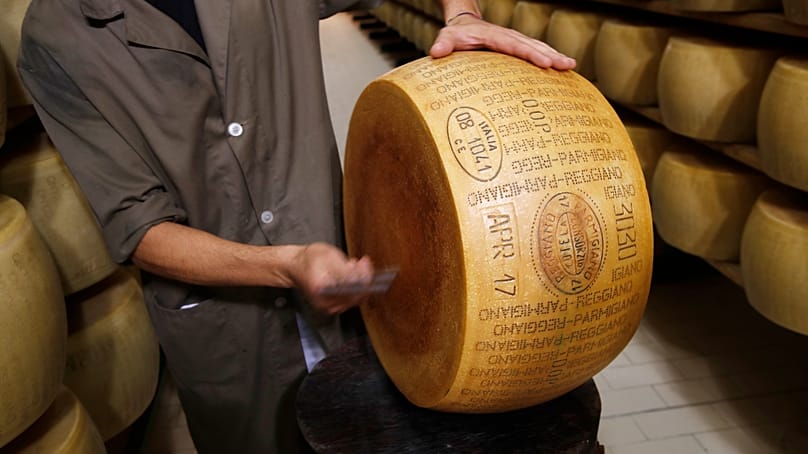
That changes now. Australian tariffs on European wine, sparkling wine, fruit, vegetables and chocolates will drop to zero from day one, with cheese following over three years.
Champagne, spirits, biscuits, and pasta will also now be cheaper at the checkout in Australia.
For European producers, it is not just about price.
Geographical indications — the EU-backed protections that distinguish Champagne from sparkling wine or Pecorino Romano from generic sheep cheese — have long been a sticking point and will now be fully protected after a short phasing-out period.
Feta is messier, with existing Australian producers who have used the name continuously for at least five years may keep doing so, provided the product's origin is clearly labelled.
Prosecco producers in Australia's King Valley can keep selling domestically, but exports stop after a decade.
Other food items that will become cheaper down under are the Kransky smoked sausage, EU honey and olive oil, while Europeans will now get to enjoy cheaper seafood — including lobster — as well as Australian walnuts, almonds and macadamias.
Cars get a fast lane
European carmakers have long chafed at Australia's luxury car tax, a 33% levy that has effectively shut out the upper end of the EU automotive range.
The deal does not kill the tax entirely, but it opens a significant door.
Australia will raise the luxury car tax threshold for electric vehicles to 120,000 Australian dollars, meaning roughly 75% of EU-made EVs will no longer be subject to it.
Australia will also fully liberalise market access for all EU passenger cars, with duties on trucks phased out over a short period. The European Commission projects EU motor vehicle exports could rise by 52%.
Germany's premium manufacturers — BMW, Mercedes and Porsche — stand to gain most immediately. A separate 5% tariff on imported cars has also been cut.
Dairy, a €400m opportunity
The EU exported dairy products worth nearly €400m to Australia in 2025, with cheese being the largest share, followed by butter, milk powders and infant formula.
Under the deal, those flows get a significant boost, with the Commission forecasting dairy export gains of up to 48%.
European industry body Eucolait called it a significant and positive step, welcoming both the tariff eliminations and the protection of geographical indications.
The critical minerals play
This is where the deal stops being about shopping baskets and starts being about geopolitics.
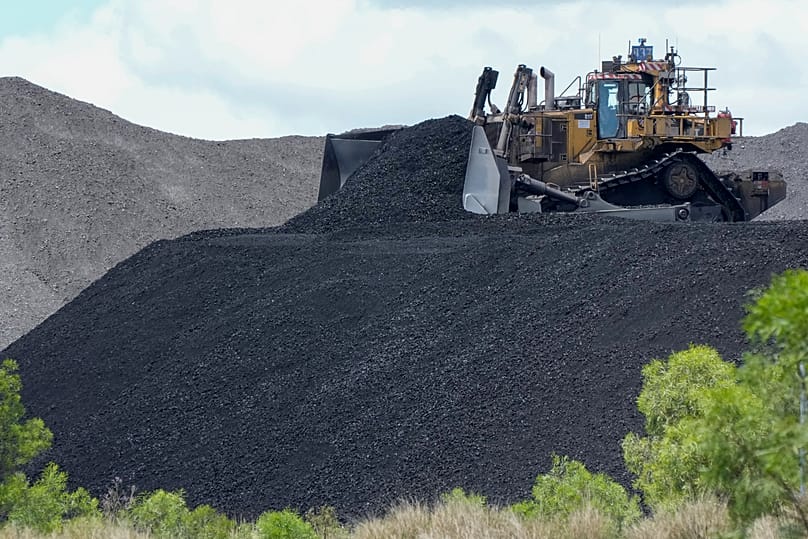
The agreement eliminates EU tariffs on Australian critical minerals, including lithium and manganese, and important move considering both countries are concerned about the fact that China currently controls roughly 90% of global rare earth processing — minerals essential to EV batteries, wind turbines, and defence technology.
"We cannot be over-dependent on any supplier for such crucial ingredients, and that is precisely why we need each other," von der Leyen told Australia's parliament on Tuesday.
Diversifying away from that dependency has been a stated Brussels priority for years.
Bruegel analyst Ignacio García Bercero had argued as recently as May 2025 that the EU's network of trade and investment agreements is critical to strengthening economic resilience and is the best geopolitical instrument in support of alliances to respond to global challenges, with Bruegel explicitly flagging an Australia deal as a priority alongside India and key ASEAN partners.
The farmer problem
Not everyone is celebrating. European farm lobbies have been here before — they mounted fierce resistance to the Mercosur deal — and they are not standing down now.
Pan-European agriculture group Copa-Cogeca called the concessions unacceptable, citing the cumulative impact of successive trade agreements.
Beef is a major flashpoint. The annual quota for Australian beef will rise over 10 years to 30,600 metric tons — around 0.5% of EU domestic consumption and less than 2% of all Australian beef exports.
Both sides retain the right to trigger safeguard measures if import surges threaten domestic producers.
The structural tension here has deep roots. In a 2023 analysis that proved prescient, Bruegel senior fellow André Sapir identified why these talks were always going to be politically painful.
"Agricultural products and raw materials account for almost 85% of Australia's exports, but less than 20% of the EU's exports, while [manufacturing products] account for more than 80% of the EU's exports but less than 10% of Australia's exports," the analysis said.
Both sides had to open up in exactly the sectors where their farmers and workers were most exposed.
The bigger picture
The deal did not happen in a vacuum.
Since Donald Trump returned to power, trade agreements have taken on sharper geostrategic weight for the EU, which has struck deals over the past months with Mexico, Switzerland, and Indonesia, while the Mercosur pact moves toward provisional application.
Australia is the latest — and arguably the most symbolically significant — addition to that list.
EU exporters are expected to save more than €1bn a year in duties, with total EU goods exports to Australia projected to grow by up to a third over the next decade, according to the EU Commission.
Both sides now face the task of ratification, which could face roadblocks if farmers on both sides mount a significant challenge.
The agreement also eliminates EU tariffs on Australian hydrogen, a detail that has slipped under the radar in most coverage of the deal.
For a bloc still reconfiguring its energy supply chains in the wake of its rupture with Russian gas, securing preferential access to a major clean hydrogen producer carries weight well beyond the headline numbers.
Hydrogen can be burned as a fuel or used in fuel cells to generate electricity, producing only water as a byproduct — making it one of the cleanest energy sources available.
The catch is that producing it requires a lot of electricity, which is why Australia is well-placed with its vast renewable energy potential from solar and wind that can power the production process cheaply at scale.
The EU wants it as a substitute for the natural gas it used to import from Russia, particularly for heavy industry such as steel, chemicals and cement.