




























European markets have opened lower as investors await the European Central Bank’s rate decision, with a sharp rise in gas and oil prices fuelling fresh inflation concerns.
All eyes are on the European Central Bank’s rate decision, with markets opening in the red across Europe.
 ADVERTISEMENT
ADVERTISEMENT
ADVERTISEMENT
The FTSE 100 in London and the CAC 40 in Paris lost 1.3% in the opening, whereas the DAX in Frankfurt was 1.5% down, tracking weaker sentiment from Asia as investors await the ECB’s announcement later today.
Energy markets have been driving concerns, with European natural gas prices surging by around 25% to above €68 per megawatt hour by 09:00 CET. This is their highest level in more than three years.
The jump follows Iranian missile strikes on key energy infrastructure in the Middle East, including Qatar’s Ras Laffan Industrial City, the world’s largest liquefied natural gas export hub.
Oil prices have also climbed sharply, with WTI crude rising above $96 a barrel and Brent crude crossing $114 in the morning in Europe.
ECB expected to hold rates
The ECB is widely expected to leave interest rates unchanged, with the deposit rate at 2%, the main refinancing rate at 2.15% and the marginal lending facility at 2.40%.
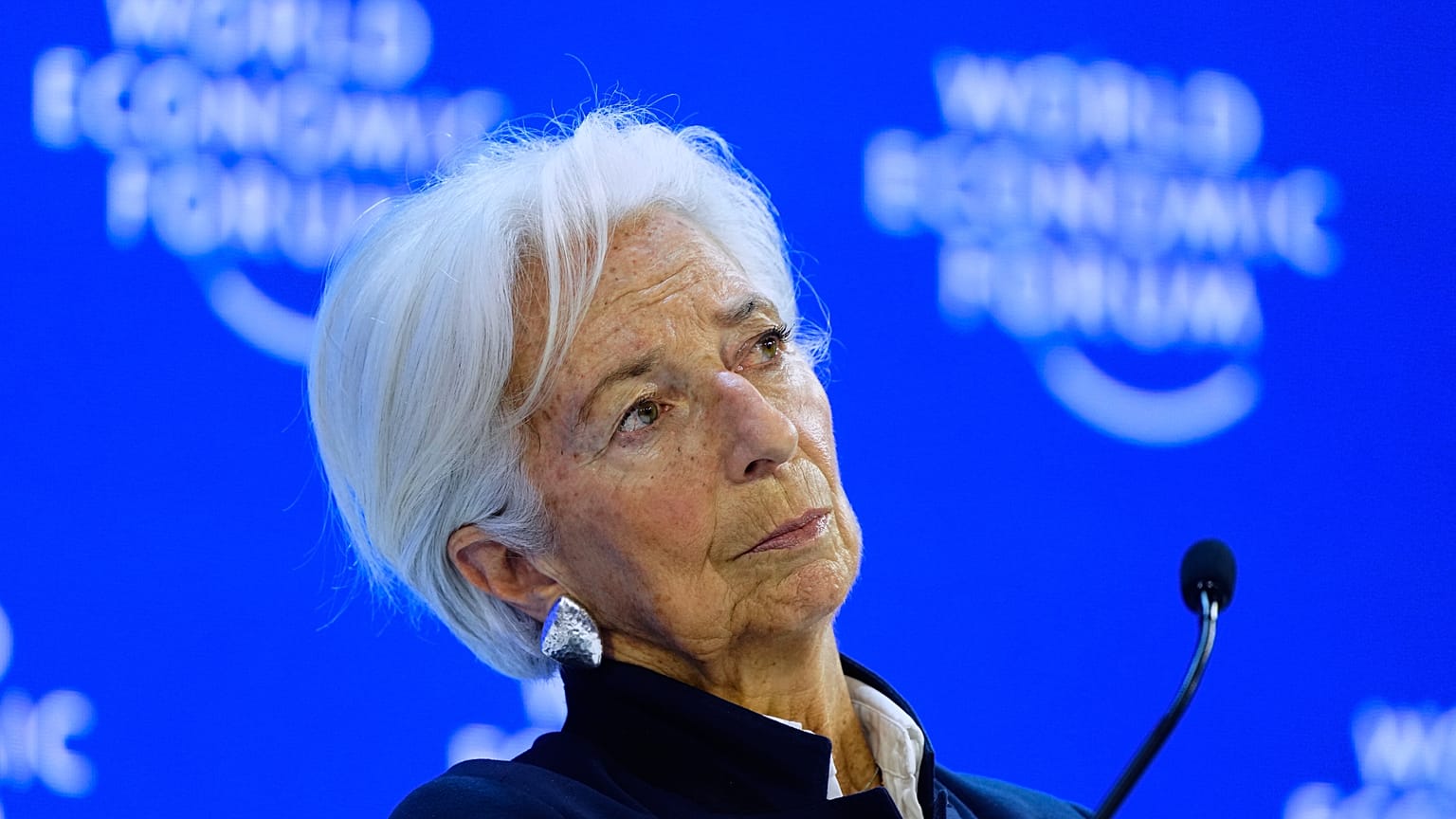
Investors will focus on ECB President Christine Lagarde’s remarks for signals on the future path of policy.
Inflation in the eurozone stood at 1.9% in February, just below the central bank’s 2% target.
However, markets have scaled back expectations for rate cuts in 2026, with growing bets on one or two rate rises this year as higher energy prices threaten to push inflation up again.
Bank of England also in focus
The Bank of England is also expected to keep rates on hold at 3.75%. Policymakers had been moving closer to cuts, but the prospect of prolonged high energy prices has led investors to reassess.
“If energy prices remain high for six months, the Bank would probably delay cuts until 2027,” said Andrew Wishart of Berenberg.
UK labour market shows mixed picture
In the UK, unemployment held at a five-year high of 5.2% in the three months to January, according to the Office for National Statistics, though the figure was below expectations.
The dataset also pointed to steady job growth over recent months. “After nearly a year of disappointment, signs of stabilisation are emerging,” said Deutsche Bank economist Sanjay Raja.
Asian markets decline
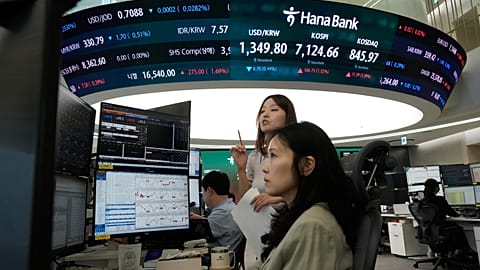
Asian markets fell sharply overnight. Japan’s Nikkei 225 dropped 3.4% after the Bank of Japan kept its benchmark rate at 0.75%, citing heightened tensions in the Middle East.
South Korea’s Kospi fell 2.7%, Hong Kong’s Hang Seng lost 2%, and China’s Shanghai Composite dropped 1.6%. Australia’s S&P/ASX 200 declined 1.7%, Taiwan’s Taiex fell 1.9%, and India’s Sensex dropped 2.3%.
“The combination of higher oil prices, rising US yields and a stronger dollar is acting as a macroeconomic wrecking ball,” said Stephen Innes of SPI Asset Management.
Losses deepened after the US Federal Reserve held interest rates steady. Fed Chair Jerome Powell said the outlook remained uncertain, particularly given rising oil prices and the impact of tariffs.
US wholesale inflation rose to 3.4% last month, suggesting price pressures were already building before the latest escalation.
In early trading on Thursday, the US dollar fell to 159.71 yen from 159.88 yen, while the euro rose to $1.1467 from $1.1453.