

















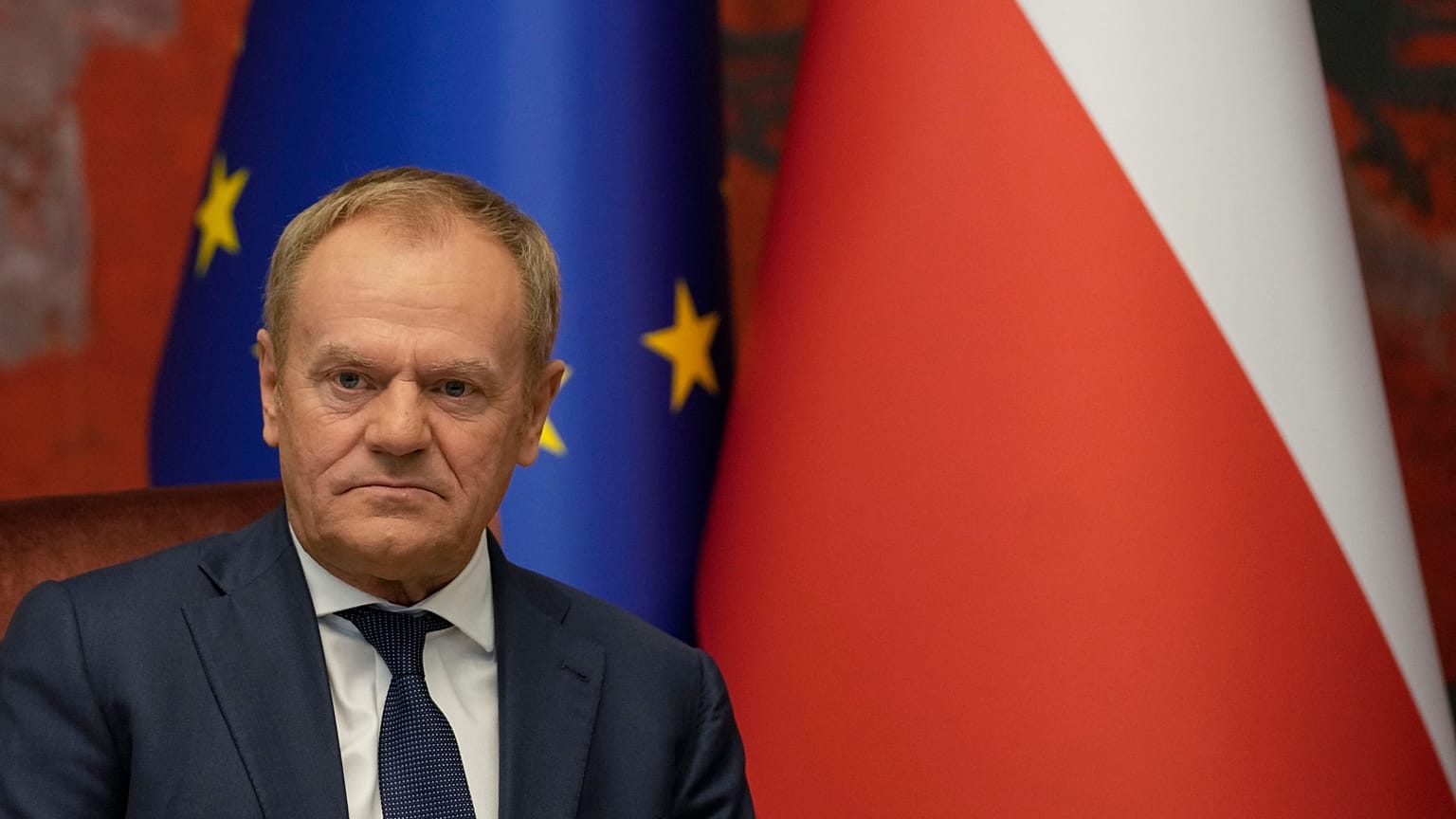













Brussels warns that without spending restraint and structural fixes, Warsaw’s debt trajectory could worsen markedly despite limited short-term risks.
Poland could be on course for a dramatic debt surge over the next decade unless it tightens its public finances.
 ADVERTISEMENT
ADVERTISEMENT
ADVERTISEMENT
The shift could push Europe’s largest eastern economy into the EU’s top tier of heavily indebted states, according to the European Commission.
In its Debt Sustainability Monitor 2025, the Commission projects that Poland’s public debt could climb to around 107% of GDP by 2036 in a scenario where major fiscal reforms and spending cuts are not implemented.
From today’s relatively modest debt level, that would mark a sharp deterioration and a potentially seismic change in Poland’s standing inside the bloc.
According to the Commission’s projections, only Italy (149%), France (144%), Belgium (137%) and Spain (108%) would have higher debt-to-GDP ratios than Poland in 2036.
By contrast, Eurostat data for the third quarter of 2025 put Poland’s debt ratio at 58%, leaving it below many other EU countries.
The Commission assesses Poland’s public finances across three horizons. In the short term — the next two years — risks are seen as limited, and markets still regard Poland as a credible sovereign borrower.
Beyond that, however, the outlook worsens: medium- and long-term risks rise, driven by a persistent structural deficit and the mounting cost of servicing a larger debt stock.
The report also warns that Poland’s gross borrowing needs could reach around 20% of GDP by 2036, implying heavier reliance on financial markets and higher debt-servicing costs.
The Commission expects the structural deficit — namely the gap between revenues and spending excluding interest payments — to remain in the red, which, without fiscal adjustment, would keep debt on an upward trajectory.

The EC's analysis also considers various stress scenarios. In the event of a deterioration in the relationship between growth rates and debt service costs, the debt level in 2036 would be even higher than in the baseline scenario.
However, an improvement in the primary balance could significantly reduce the debt growth rate as soon as 2027.
Is Poland in danger of a 'Greek scenario'? Expert warns of debt spiral
The European Commission’s warning that Poland’s debt could breach 100% of GDP has sparked a political and economic backlash at home, with critics questioning whether the threat is real and what it would mean for a country that has so far avoided the debt traps seen elsewhere in Europe.
Andrzej Sadowski, an economist and president of the Adam Smith Centre, argues that Europe’s recent history offers a blunt lesson: EU membership — and even the protection of the euro — is not a guarantee against a sovereign debt crisis.
“We have a direct example among European Union countries with the bankruptcy of the Greek state. It is euphemistically referred to as technical bankruptcy, but the fact is that the state became insolvent,” Sadowski said.
He pointed to a symbolic moment during Greece’s crisis, when public television stopped broadcasting for several days because of a lack of funds.
“Neither being in the European Union nor even having the euro protects against the consequences of bad governance,” he added.
Accumulating debt and "applied brake"
According to Sadowski, Poland has been struggling with deteriorating business conditions for years.
"On the one hand, we have a growing debt, and on the other, an increasingly drawn-out brake on economic development," he said.
Sadowksi points to, among others, the results of the Fraser Institute's Index of Economic Freedom and rankings on the tax system and the level of regulatory complexity.
"Even in the over-regulated European Union, Poland ranks virtually last in terms of economic freedom," he noted.
He also adds that declines in the corruption perception rankings go hand in hand with a reduction in economic freedom.
"The less economic freedom, the more corruption. And corruption is nothing but an additional tax," he stressed.
Deregulation instead of further debt
Sadowski says Poland should not rely on higher taxes to stabilise its finances, arguing instead for genuine regulatory reform combined with lower state operating costs.
“If deregulation is not followed by a reduction in the number of civil servants, it means that we are dealing with feigned deregulation,” he said.
He added that meaningful structural changes could materially reduce the government’s borrowing needs.
“The way out of this spiral is precisely through real deregulation. Then we will find that the government’s borrowing needs do not have to be as high as they are today,” he concluded.