












Any pollution entering the water could have a possible impact on Mediterranean seagrasses that absorb substantial quantities of climate-heating carbon dioxide.
Spanish authorities are scrambling to contain any damage to its "vulnerable" Mediterranean waters following a huge oil spill.
 ADVERTISEMENT
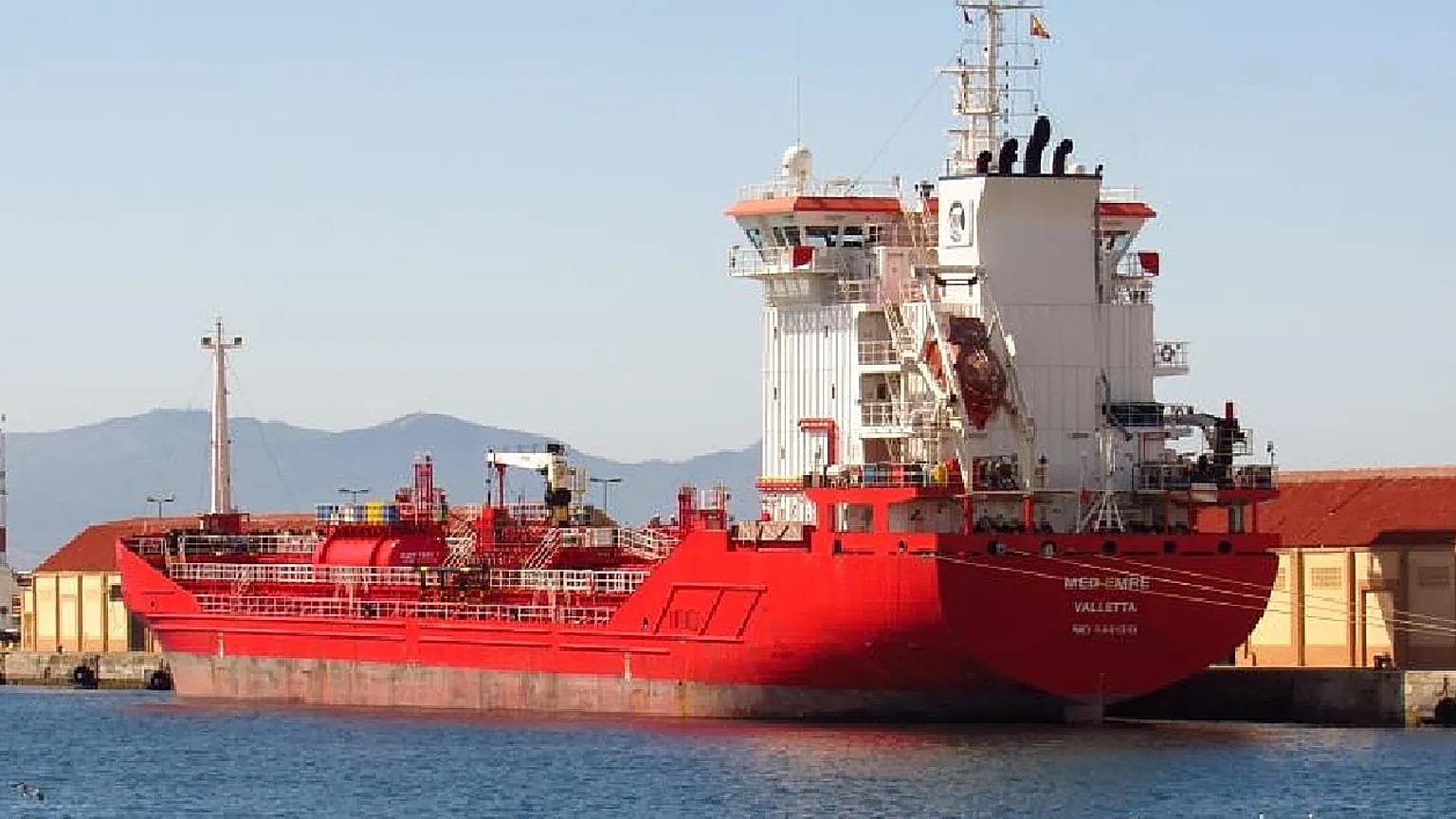
On Thursday (26 November), a tanker carrying up to 7,000 tonnes of diesel sank off the coast of Ibiza, leaving one dead.
The Maltese-flagged Med Emre was travelling from the southern port of Algeciras to Barcelona when it sank in the early hours of the morning. 17 crew members were rescued but one was later confirmed dead in hospital.
According to maritime data tracking firm Kpler, the vessel was transporting around 66,000 barrels of refined products.
It is currently unclear what caused the sinking.


A government mechanism designed for marine pollution events had been activated, "but this does not presuppose that pollution has been detected on the coast", Spanish government sources told news agency AFP.
A boat and a plane belonging to Spanish maritime rescue service Salvamento Maritimo had been sent to assess the possible environmental damage, the Balearic emergency services added.
The Civil Protection authority had requested the activation of the European Union's Earth monitoring system Copernicus to obtain images of the area, said the government sources.
'Amplified' potential for pollution
Maritime security expert Emilio Rodriguez Diaz from the University of Cadiz told local news that the area affected by the oil spill was "particularly vulnerable".
Any pollution entering the water could have a possible impact on tourism and on Mediterranean seagrasses that absorb substantial quantities of climate-heating carbon dioxide.
Mediterranean seagrass acts as a major blue carbon sink, trapping carbon in deep rhizome and sediment layers while oxygenating coastal waters - but warming waters from climate change is already fuelling their demise.
Oil spills are one of the most concerning sources of marine pollution as they're difficult to clean up and can last for a long time.
"They can severely pollute marine and coastal habitats, causing damage to the natural environment and the economy," says the European Environment Agency.
"The Mediterranean Sea’s highly industrialised nature, characterised by the many extensive ports, refineries and petrochemical plants along its coastlines, amplifies the potential for pollution incidents."
Spain's worst oil spill
But Diaz downplayed comparisons to the 2002 Prestige oil disaster, Spain's worst environmental accident so far.
That spilled more than 60,000 tonnes of fuel and blackened thousands of kilometres of Atlantic coastline, affecting Spain, Portugal and France.
The Med Emre was a modern ship, built in Turkey in 2019, with a double hull to ensure that, "in the event of a leak (or) a collision, that intermediate part between the cargo hold and the outer layer would flood", he said.
"It's a kind of buffer that prevents the cargo... from being released into the environment."
In December 2024, a US-sanctioned Russian cargo ship sank in international waters off Spain's southern Mediterranean coast with 16 people on board -- two of whom were never found.
A Spanish government letter to parliament earlier this year revealed the ship was transporting "components of two nuclear reactors similar to those used by submarines".
The vessel's owner, a company that belongs to the Russian defence ministry, denounced at the time "a targeted terrorist attack", without providing evidence.