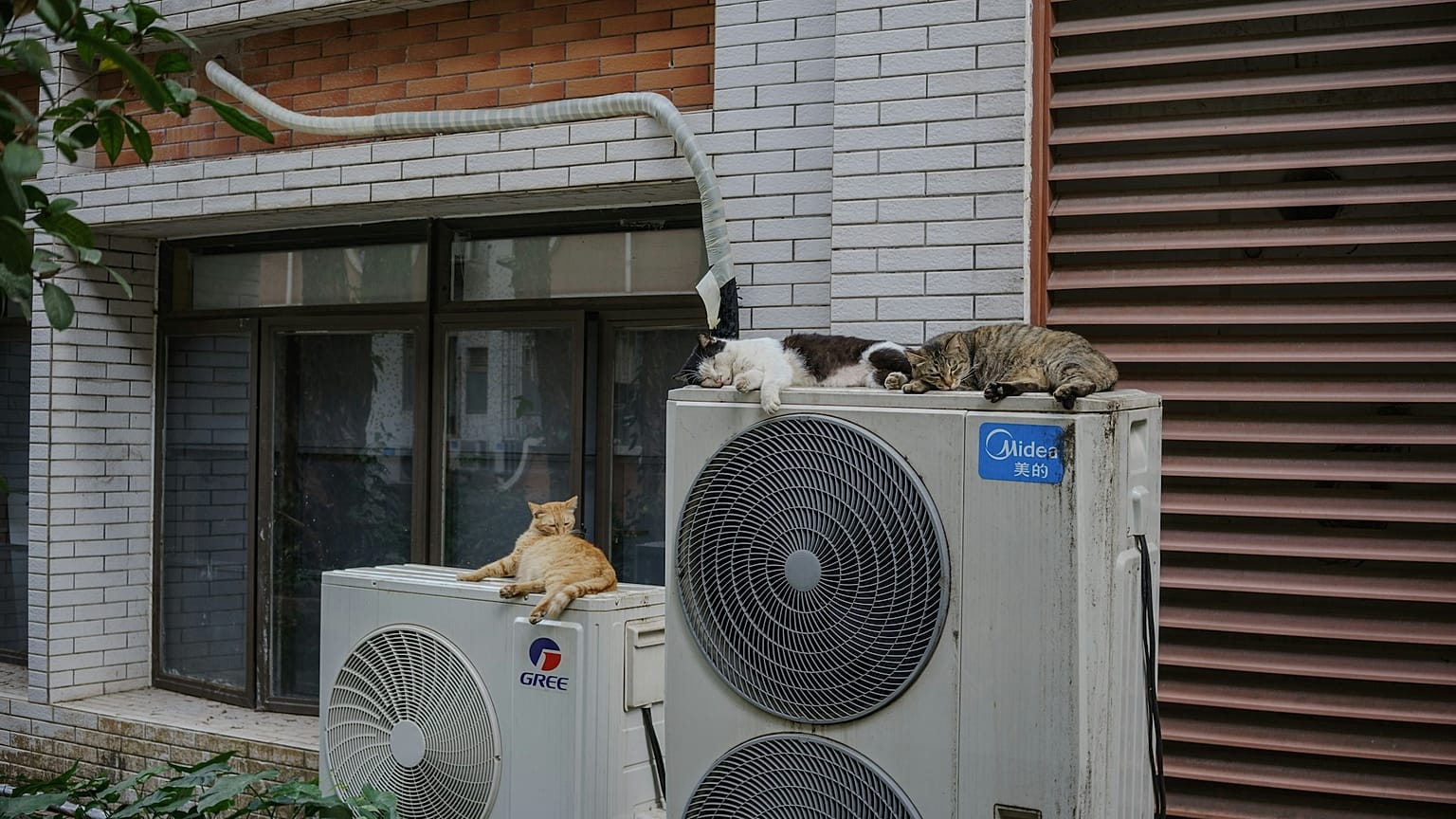













Almost one in three Europeans say they cannot afford the upfront cost of installing a heat pump.
For Europeans worried about how much it will cost to heat their homes this winter, switching to a heat pump is an attractive prospect.
 ADVERTISEMENT
That is, if they can get past the cost of installing one.
Interest in heat pumps is growing across Europe – especially in households struggling to pay their energy bills - according to a survey of 6,000 people in France, Germany, Italy, Spain, Poland and the UK.
But almost one in three said they can’t afford the upfront installation costs, making it the most cited obstacle to making the switch.
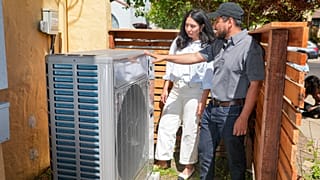

How much can heat pumps save on energy bills?
Heat pumps, which work by capturing energy from air, water or the ground and turning it into heat or cold air, typically deliver three to four kWh of heat for every one kilowatt-hour (kWh) of electricity they consume. Once they are installed, they can have a big impact on your bottom line.
According to the IEA, heat pumps are cheaper to run than gas boilers in almost every EU country, offering annual energy savings of up to €800.
When used effectively, air-source heat pumps could heat homes for as little as €2.20 on a typical winter day, according to British property developer Barratt Redrow.
Jean-Paul Harreman, director at market intelligence provider Montel, says that, even in very cold weather, “the efficiency is better from a heat pump than from a gas boiler.”
How much does it cost to install a heat pump?
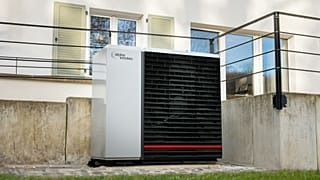
Making the switch still requires investment. Installing a heat pump can cost several thousands euros more than a gas boiler. Often, the installation costs as much as the equipment itself, if not more.
In the UK, the average cost of installing an air-source heat pump was about €15,000 in 2025 – five times the cost of installing a new gas boiler.
And the prices are not uniform across the continent, either. In Germany, it can cost up to €40,000. Much of that difference boils down to the equipment, Jan Rosenow, a professor of energy and climate policy at the University of Oxford, explained in a recent analysis.
Germany’s heat pump market is dominated by more expensive European manufacturers, while cheaper brands – including some sourced from Asia – are more widely available in the UK, France and the Netherlands.
Stricter installation requirements and taxation are also factors. For example, Germany charges 19 per cent VAT on heat pump installations, while the UK scrapped VAT on them in 2022. Some homes may also need to have their radiators replaced or their electrical systems upgraded, which adds to the bill.
But labour, Rosenow added, is not a major factor in prices. “We expected labour costs to make a big difference but were surprised to find that they didn’t.”
That leaves room for installation prices to come down as equipment becomes cheaper.

How to lower heat pump prices
There are many ways to mitigate the costs, however.
Across Europe, governments are offering grants, tax breaks and low-interest loans to encourage homeowners to switch to greener heating.
In England and Wales, eligible homeowners can receive a grant of around €8,500 towards installation. France, Germany and Italy also offer financial assistance to make the switch.
But for people already struggling to pay their bills, even reduced prices may be unaffordable.
Three-quarters of respondents in the poll, commissioned by the European Climate Foundation, said rising living and energy costs have affected their budgets, and two-thirds expect to heat some rooms less this winter. Yet fewer than half say they are likely to invest in home improvements or energy-saving equipment.
Paying subsidies in advance rather than reimbursing after heat pumps are installed is one possible solution. Nearly six in 10 respondents in Verian’s survey say they would back such a measure. In fact, the idea received majority support in all six countries.
Homeowners can also save money by shopping around. The UK’s Energy Saving Trust recommends getting quotes from at least three qualified installers, as well as having your home assessed to ensure you are not paying for a more powerful heat pump than you need.
Choosing a speciality electricity tariff or installing solar panels to generate some of the electricity needed to run your heat pump can also offset costs and lower bills.
Even if Europeans are warming up to heat pumps, the need to “[make] the financial benefits clearer and more immediate for households”, as the Verian study revealed, might be growing just as quickly.