












European Council President António Costa proposes cutting the EU's 2028-2034 budget by nearly €200bn, a 10% reduction, to win over frugal countries. Cohesion funding is cut for the first time. A 3% digital services levy replaces a controversial corporate tax, and debt repayment is slowed down.
European Council President António Costa has presented a new EU budgetary proposal in a bid to win unanimous support by the end of the year. Still, it is already facing significant opposition ahead of a key European Council meeting on Thursday.
 ADVERTISEMENT
Costa took over the sensitive negotiations on the 2028-2034 Multiannual Financial Framework (MFF) after the Irish presidency of the Council proposed significant cuts in October.
Ireland's plan failed to win over the so-called frugal countries, including Germany, the Netherlands and Sweden, a powerful bloc of net contributors pushing for a smaller overall budget.
To meet their demands, Costa cut a further €49bn in current prices. The budget would shrink from nearly €2 trillion in the Commission's proposal to €1.78 trillion, a 10% reduction worth €204bn.
Costa's move is an attempt to satisfy the frugals' demand to cut the budget by "several hundred billion euros" and to secure support from all the member states before the end of the year.
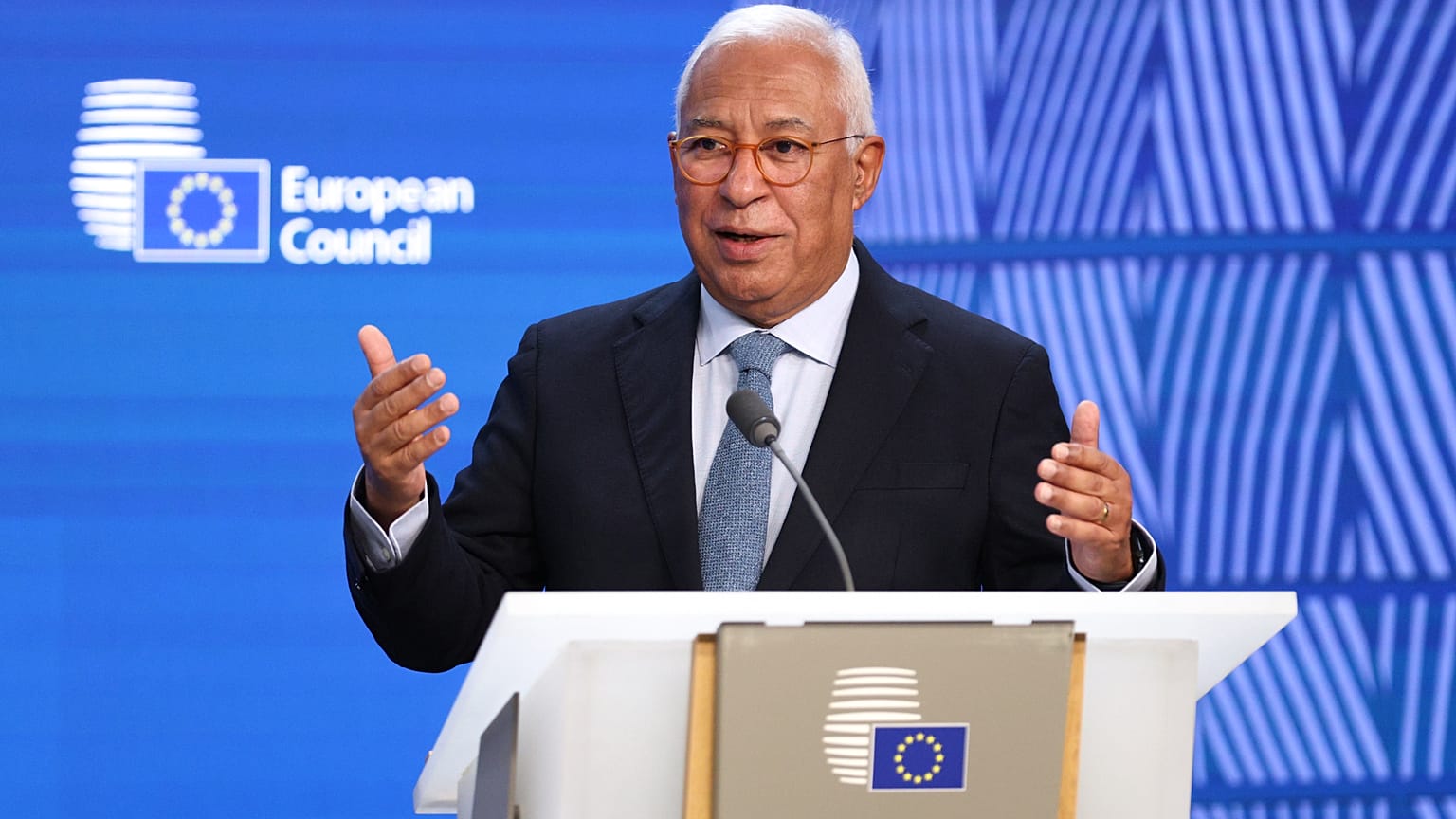
"I am confident that this proposal is a good basis for moving towards a final agreement for three reasons. First, this is a budget that matches our ambitions. Second, it keeps national contributions within reasonable limits. And third, it includes a balanced basket of new own resources," Costa said, presenting his proposal.
However, the cut is more modest in 2025 prices, and the proposal includes postponing the repayment of EU joint debt, which the frugals are unlikely to consider a reduction.
An eventual delay in the agreement on the budget would mean several EU programmes would not be ready in time for 2028, and the negotiations would be further complicated by elections in several key countries like France, Italy and Poland.
"The new negotiating framework for the next multiannual European budget is very disappointing," a source from the Élysée told reporters. "As it stands, this proposal from the President of the European Council does not constitute a basis for an agreement."
Meanwhile, the budgetary negotiations have already been made more complex as German Chancellor Friedrich Merz said there will be no agreement without unanimous financial support to Ukraine, prompting a backlash from several member states.
Costa's proposal will be the basis for the discussion of EU leaders at the special European Council starting on Thursday in Brussels.
Spending programmes
The fight is not only over the budget's size but over where the money goes. The frugals prefer to be called "modernisers" and want more spending on emerging priorities such as competitiveness and defence.
On the other side, 17 countries from southern and eastern Europe form the "Friends of Cohesion" group, which wants to protect funding for low-income regions through cohesion policy.
Given the group's size, cohesion had barely been touched in earlier compromise proposals. Costa breaks with that for the first time, proposing a €54bn cut for agricultural, fisheries and cohesion funding, around 5% less than the Commission's proposal.
Competitiveness and defence take deeper cuts: €95.5bn, or 16% of the original proposal. Global Europe is hardest hit, losing €45bn, or 21% compared with the Commission's plan.
Administrative costs fare slightly better than under the Irish plan, with a nearly 8% cut to €108bn in current prices rather than 9%.
The Commission's original proposal was already higher than the current budget, so despite the cuts most funding programmes would still see an increase compared with the ongoing MFF.
New digital levy
A key element of Costa's proposal is an ambitious mix of new or revamped EU-wide taxes meant to fill the bloc's coffers with €64bn a year in current prices.
The main novelty is a digital services tax of 3% on annual net turnover from online advertising, digital intermediation services and monetisation of user data. It would apply to companies with EU turnover above €50 million and global turnover above €750 million.
The European Parliament originally proposed the levy, which already exists in France, Spain and Italy. Costa introduced it to replace the Corporate Resource for Europe (CORE), which met insurmountable opposition from member states because it ran counter to the EU's competitiveness agenda.
Opposition to the digital levy mostly stems from fears of US trade retaliation, as most tech giants of that size are American. The calculus appears to be that a Trump administration weakened by its midterm defeat will be less inclined to retaliate.
"These measures would also help create a level playing field in the single market, where American digital giants often face lower taxes than European firms," MEP Danuše Nerudová (Czechia/EPP) told Euronews.
Parliament estimated the levy could raise up to €25bn a year with a 5% call rate and a wider range of online services. Costa's version stays closer to the Commission's estimate of €5bn a year.
Other EU taxes
With CORE abandoned, the most controversial new own resource is the proposal to channel 30% of Emissions Trading System (ETS) revenues to the EU budget, which still faces strong opposition, most notably from Poland.
The Irish presidency had already proposed phasing it in for member states via the Modernisation Fund. Costa goes further with a gradual start: 0% in 2028, rising to the full rate in 2034.
Costa also keeps the proposal for a minimum tax rate of 15% on tobacco and related products. To address opposition from the most affected countries, it would be phased in, starting at 5%, rising to 10% after three years and reaching 15% in 2034.
The compromise also raises the call rate on non-recycled plastic packaging waste from €0.80 to €1.25 per kilogram in 2028.
A less controversial levy concerns member states' contributions based on the amount of uncollected electronic waste. The compromise raises it from €2 to €2.25 per kilogram.
Arguably the least controversial new resource is the Carbon Border Adjustment Mechanism (CBAM), a tariff on carbon-intensive imports. Costa proposes raising the share of revenues going to the EU budget from 75% in the Commission's proposal to 100%.
The proposal also gives a mandate to explore a new levy on crypto-assets, another Parliament idea. The tax was deemed not ready to generate revenue from 2028 and needs more technical and legal work.
A proposal from Eurogroup President Kyriakos Pierrakakis, who is also Greece's finance minister, to feed the EU budget with revenues from the allocation of radio spectrum for 5G and 6G networks has also been picked up for specific radio bands.
Joint EU debt
Costa's plan also cuts repayments of NextGenerationEU debt for 2028-2034 by €10bn in current prices. That is a significant reduction given the recent spike in interest rates, which has pushed up repayment costs.
Repayment of the post-pandemic joint debt would still run from 2028 to 2058, but its "profile" has changed, an EU official told reporters, without detailing what that means for rolling over existing debt with new debt.
"We slightly change the way the capital is paid," the EU official said. "It will start being paid as of 2028. Not in the same amount, but it will start being paid as of 2028."