












The Royal Navy's HMS Vengeance nuclear submarine has set a new record by completing a 217-day mission. For about seven months, the crew had almost no contact with the outside world.
HMS Vengeance, one of the Royal Navy's nuclear armed submarines, has returned to Scotland after completing a 217 day deployment.
 ADVERTISEMENT
The submarine has beaten the 205 day record for a deployment set by HMS Vanguard in April.
However, these two back to back records are seen less as a display of the Royal Navy's strength and more as a sign of problems within the nuclear submarine fleet.
According to experts, the steadily lengthening deployments are linked to delays in completing maintenance on ageing submarines and to the heavy psychological pressure on personnel.
Designed for three month missions, now staying underwater for seven
Nuclear submarine specialist David Cullen told UK daily The Guardian on 15 November that Vanguard class submarines were originally designed for missions of roughly three months.
Cullen added that even that time span was seen as a long time to remain "underwater in a metal box with no contact to the outside world".
Vanguard class submarines, which carry a crew of about 140, initially undertook missions lasting three to four months. In the past even 100 day deployments were rare, whereas today some patrols are said to last more than twice that.
Longer missions mean that already cramped submarines have to carry larger quantities of food and other supplies.
The crew have to live for months alongside extra provisions stored in passageways and any other usable space.
The UK government links the extended deployments to budget cuts, which it says have slowed submarine maintenance work.
Why is HMS Vengeance so important?
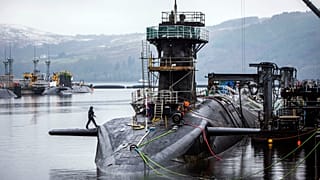
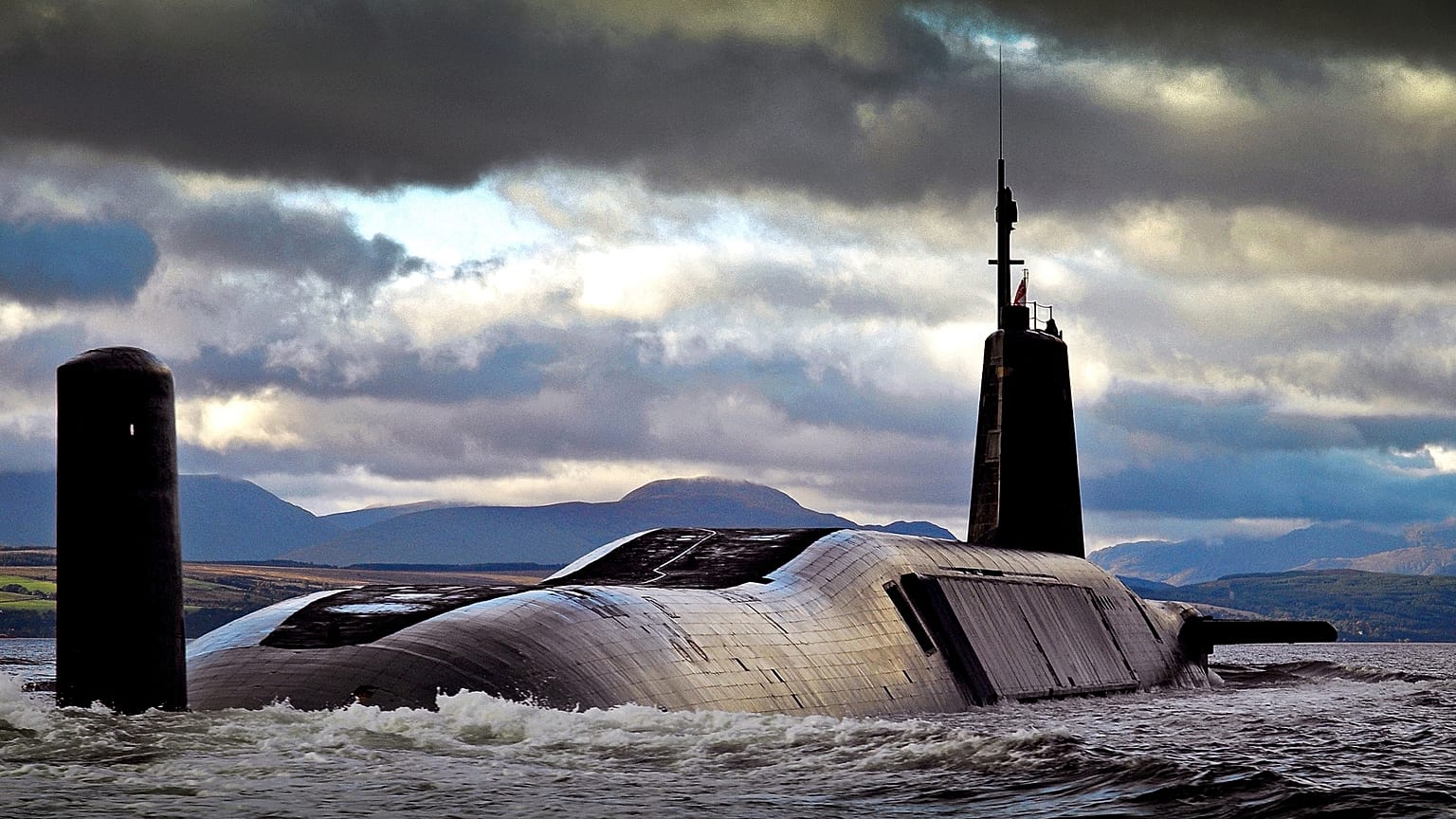
Launched in 1998, HMS Vengeance is one of Britain's four Vanguard class nuclear submarines.
Approximately 150 metres long and weighing 17,526 tonnes, the submarine was designed to carry Trident ballistic missiles.
There are 16 missile launch tubes on board.
Trident missiles can carry several nuclear warheads that can be directed at separate, independent targets. This technology is known "multiple independently targetable re-entry vehicle" (MIRV).
Vanguard class submarines sit at the centre of Britain's nuclear deterrence strategy.
Under the Royal Navy's policy of continuous at sea deterrence, at least one nuclear armed submarine is always on patrol.
The aim of this strategy is to ensure that even if Britain's other military infrastructure were badly damaged in a major attack, the country could still respond with nuclear weapons from the sea.
However, submarines in the fleet spending long periods in maintenance increases the burden on the boats that are able to deploy.
Crew cannot speak to their families for months
Serving on nuclear submarines is regarded as one of the most psychologically demanding duties in the Royal Navy.
Ballistic missile submarines such as HMS Vengeance spend most of their deployments submerged and in radio silence to avoid their position being detected.
Although submarines can, when necessary, move to shallower depths and communicate via special antennas, contact between the crew and the outside world is extremely limited.
Sailors can receive messages from their families once a week, of no more than 120 words, known as "Familygrams".
However, these messages are examined by navy officials before being passed to the crew.
Officials can censor bad news or sensitive information that they think could harm personnel's performance on duty.
On top of that, sailors are not allowed to reply to messages from their families.
As a result, crew members may remain unaware for months of major developments in their families, or be unable to respond to the news they do receive.
Harassment faced by women sailors also in the spotlight
Working conditions in Britain's submarine fleet have in recent years also been in the news over allegations of harassment and discrimination against female personnel.
In 2022 Sophie Brook, one of the Royal Navy's first female submarine crew, said that she had been subjected to constant sexual bullying during her time in service.
After Brook's account, other women in the service shared similar experiences with the public.
In 2024 the then head of the Royal Navy, Admiral Sir Ben Key, apologised, describing misogyny in submarine service as intolerable.
HMS Vengeance's record mission has also heightened concerns about the future of Britain's nuclear submarine fleet.
Vanguard class submarines were originally designed for a service life of around 25 years.
However, delays in bringing the new generation of submarines into service mean that the existing boats are expected to operate for about 40 years.
The first submarine of the new Dreadnought class, HMS Dreadnought, is expected to enter service around 2032.