





























Ireland proposes cutting the next EU budget by 8%, with global cooperation and competitiveness taking the deepest cuts, while agriculture and cohesion funding is reduced by only 3%. It also includes a €55bn-a-year package of own resources. EU leaders will discuss the plan on 15-16 October.
Ireland, which currently holds the EU’s rotating presidency, has proposed trimming the bloc’s next long-term budget by €141bn in a bid to win over the Germany-led ‘frugal’ countries.
 ADVERTISEMENT
ADVERTISEMENT
ADVERTISEMENT
The so-called negotiating box will anchor the sensitive budget talks when EU leaders meet next week. It concentrates most of the reductions on the programmes for economic competitiveness and global cooperation.
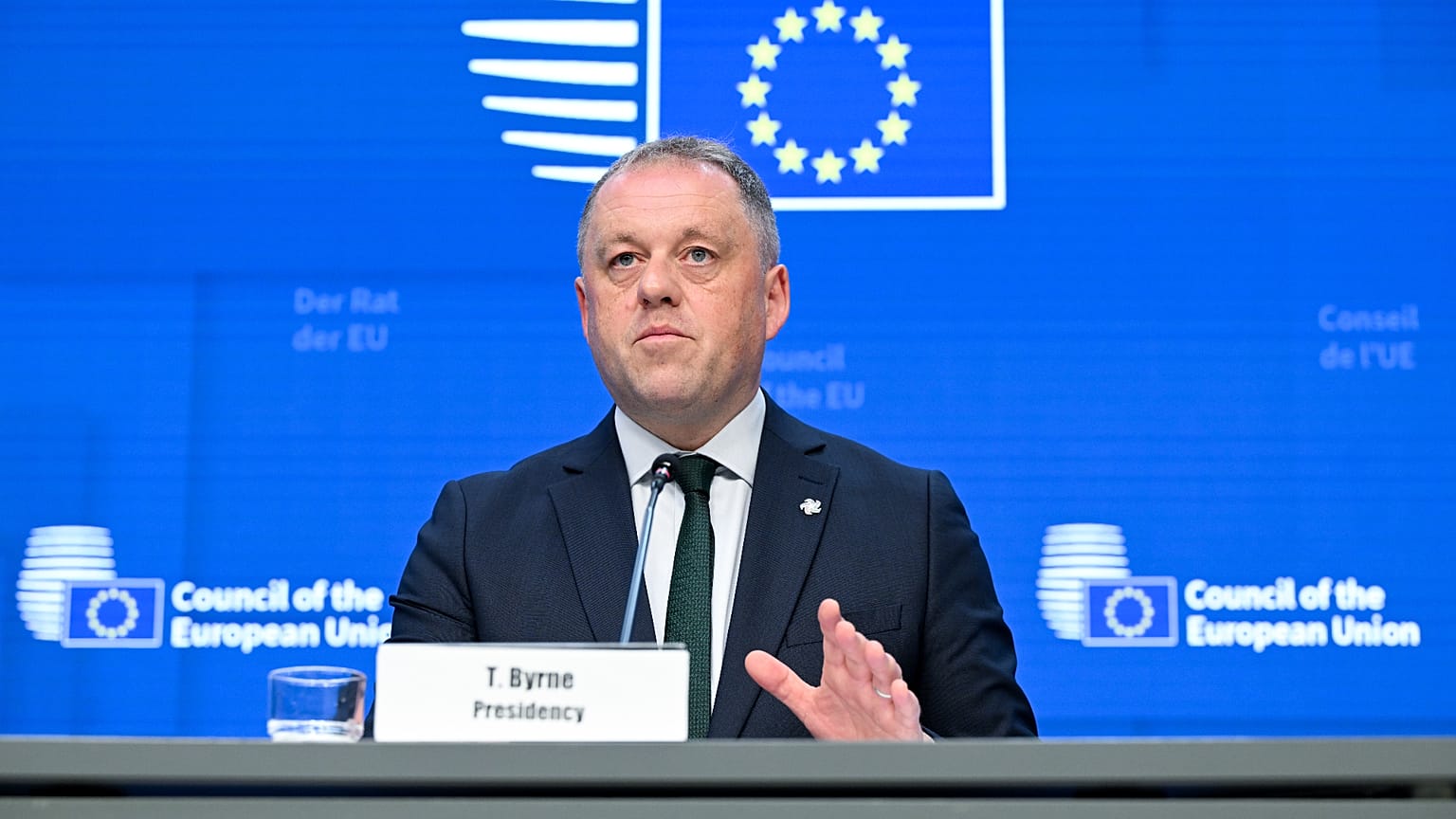
“The negotiating box acts to bridge the many differences between the member states. It brings us closer to resolving the so-called budgetary trilemma,” said Thomas Byrne, Ireland’s Minister of State for European Affairs, who leads on the file.
Byrne said the proposal strikes a delicate balance between financing new priorities such as competitiveness and defence, protecting core policies like agriculture and cohesion, and reflecting the fiscal realities every member state faces.
Negotiating box
EU governments are entering the crunch stretch for finalising the Multiannual Financial Framework (MFF) for 2028-2034.
Dublin proposes cutting the overall volume to €1,622bn in 2025 prices, 8% below the Commission’s proposal and still 30% above the current MFF. In current prices, that comes to around €1,825bn.
The funding dedicated to cohesion, agriculture and fisheries, by far the largest item of expenditure, takes the smallest cut: 3%, to €914bn. The programme for economic competitiveness, research and defence is trimmed by 13% to €456bn.
As expected, EU administration also takes a heavy hit, down 8.8% to €95bn. Member states had called for the cut as many capitals face constraints in their own civil services.
Global Europe, which finances cooperation projects in third countries, is cut by 17% to €157bn. That is unlikely to dent the EU’s network of 145 delegations worldwide, which gives many small member states a global reach.
“I am confident that this revision to the overall volume and the rebalancing of priorities that it acts to address the preferences of Member States, and it will open the door to the next stage of negotiations,” Byrne said.
Own resources
The Irish presidency’s compromise text also includes a new package of own resources, EU-wide levies that would feed directly into Brussels’ coffers, estimated to raise €55bn a year.
The biggest change from the Commission’s initial proposal is that Dublin wants to raise the call rate for the Carbon Border Adjustment Mechanism (CBAM), a tariff on carbon-intensive imports, from 75% to 90%.
The text also allows the Emissions Trading System (ETS) own resource to be phased in for member states supported by the Modernisation Fund, following strong opposition over the revenues capitals would have to give up.
The Commission’s proposals for a tobacco excise duty (TEDOR), a corporate resource for Europe (CORE) and an electronic waste levy are kept, along with the plan for the EU to retain 90% of customs duties.
The box leaves out the three own resources proposed by the European Parliament, which would tax digital services, online gambling and crypto assets, even though recent estimates put their yield at up to €32bn a year.
“We had three tests for new own resources. One, that they command unanimity. Two, that they can deliver substantial funds. And three, that they’d be ready, by the 1st of January, 2028,” Byrne continued.
“It wasn’t clear to us, either on the funds question, or that there could be deliverable on the 1st of January, 2028.”
Political context
The aim is a political agreement by the end of the year, before several key countries head to the polls in 2027. In France, a Eurosceptic candidate is currently the favourite to become the next President of the Republic.
Elections are already complicating the picture. Spanish Prime Minister Pedro Sánchez has called snap elections for 29 November, in the middle of the negotiations. Regional victories for the far-right Alternative for Germany are expected to harden Berlin’s stance.
Germany leads a coalition of six ‘frugal’ countries that want the Commission’s proposal cut by “several hundred billions” and spending focused on emerging priorities such as defence and economic competitiveness.
By contrast, Italy’s Giorgia Meloni is leading a 17-strong front of southern and eastern member states, the ‘Friends of Cohesion’, which put protecting funding for farmers and the poorest regions first.
In June, the then Cypriot presidency of the EU Council proposed a €32.8bn reduction that concentrated the heftiest cuts on competitiveness and defence spending, drawing the ire of the frugal camp.
Ireland’s compromise tries to split the difference, with an 8% cut against Cyprus’s 2%. However, some frugal countries have already expressed their disappointment with the proposal.
"The new MFF negotiating box is unreasonable. The overall volume must come down significantly. The numbers that have been put on the table still present a wildly unaffordable increase, and we are therefore nowhere near an agreement," Jessica Rosencrantz, Sweden's Minister for EU Affairs, said on X.
EU ambassadors will discuss the Irish proposal on Sunday, before ministers take it up at the General Affairs Council on 13 October and leaders at the European Council on 15-16 October.