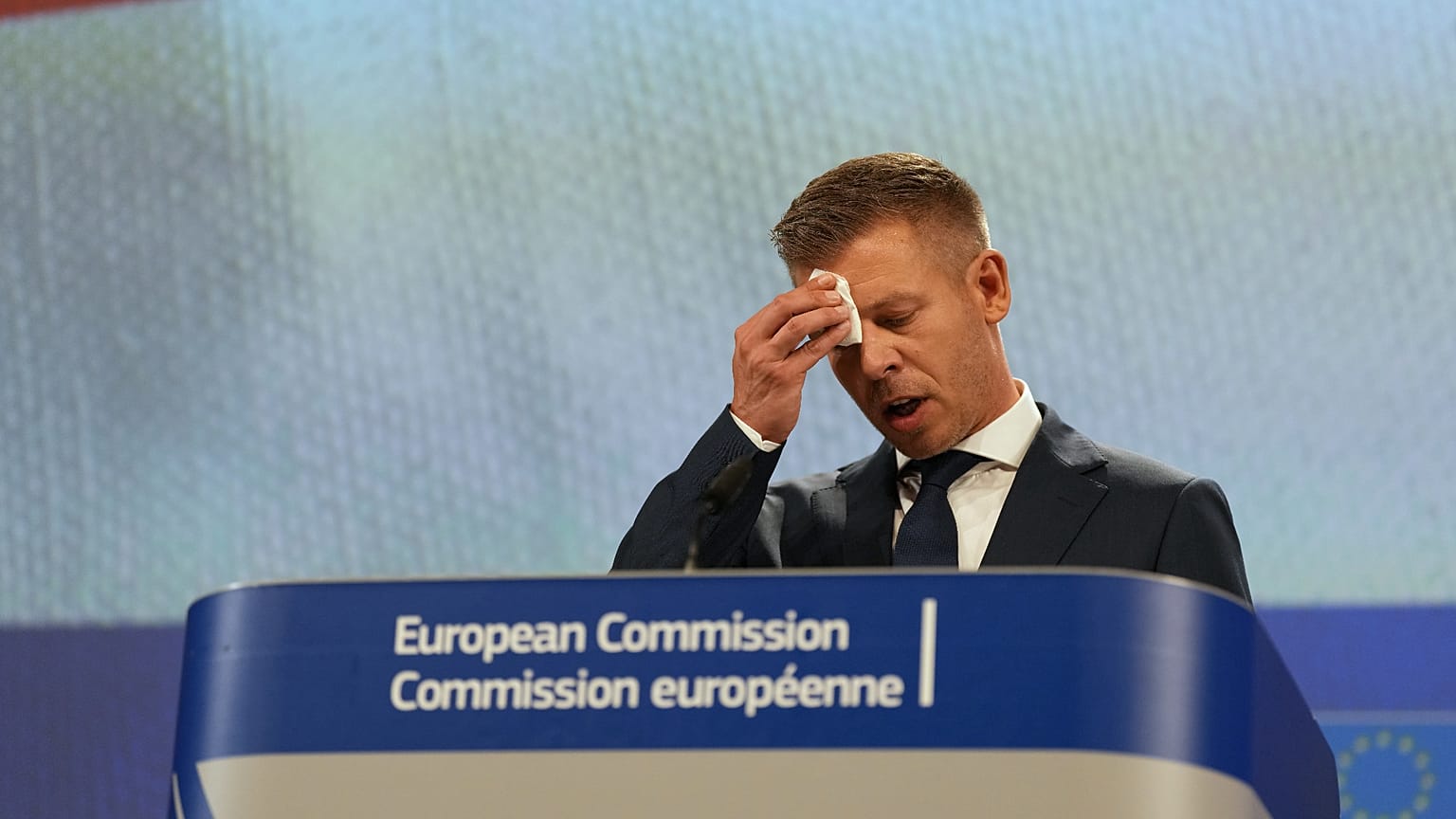













The European Commission says Budapest has met all but one of the conditions for the full €10bn payment. The financial penalty for the missing milestone is expected to be “minimal”, sources told Euronews.
The European Commission has given partial approval to Hungary’s request for €10 billion in funding under the EU’s Recovery and Resilience Facility (RRF), clearing the way for the country to receive almost the entire amount.
 ADVERTISEMENT
The Commission found that Hungary had fulfilled 126 of the 127 required milestones, with one taxation-related condition only partially met.
It remains unclear how much funding Hungary could lose as a result. However, a Commission official, speaking to Euronews on condition of unanimity, said the “financial consequences of the non-fulfilment will be minimal”.
The decision marks a major step towards unlocking EU funds withheld over concerns about the rule of law and corruption, and represents a significant victory for Prime Minister Péter Magyar’s government.
Magyar, who swept to power in a landslide election victory in April, campaigned on a promise to secure the release of EU funding frozen during Viktor Orbán’s 16 years in office.
In May, Magyar and European Commission President Ursula von der Leyen agreed on a roadmap to unlock €16.4 billion withheld over concerns about the previous government’s record on the rule of law and corruption.
Of that amount, €10 billion comes from the EU’s post-pandemic recovery fund, which is due to expire later this year. The payment must be authorised by the end of November to ensure the money can be disbursed before the end of the year.
Hungary announced in late August that it had met the EU’s requirements for the payment, following substantial delays under Orbán. The Commission subsequently launched a verification process.
The country was required to meet 27 so-called “super milestones” alongside more than 127 additional targets. Parliament amended more than 100 laws over the summer to meet the requirements, most of them relating to judicial independence and anti-corruption measures.
Hungary’s revised National Recovery Plan also includes investments to modernise the country’s energy grid and railway network, as well as its rental housing stock.
Following the Commission’s positive assessment, EU member states must also approve the payment before the funds can be released. Euronews understands that their decision is expected to be positive.
In September, the Commission approved the release of €4.2 billion in frozen cohesion funds after Magyar’s government introduced reforms on the rule of law and anti-corruption.
However, a further €2.2 billion remains blocked over concerns relating to academic freedom and LGBTI+ rights. Budapest has yet to provide evidence that the relevant reforms have been implemented.