

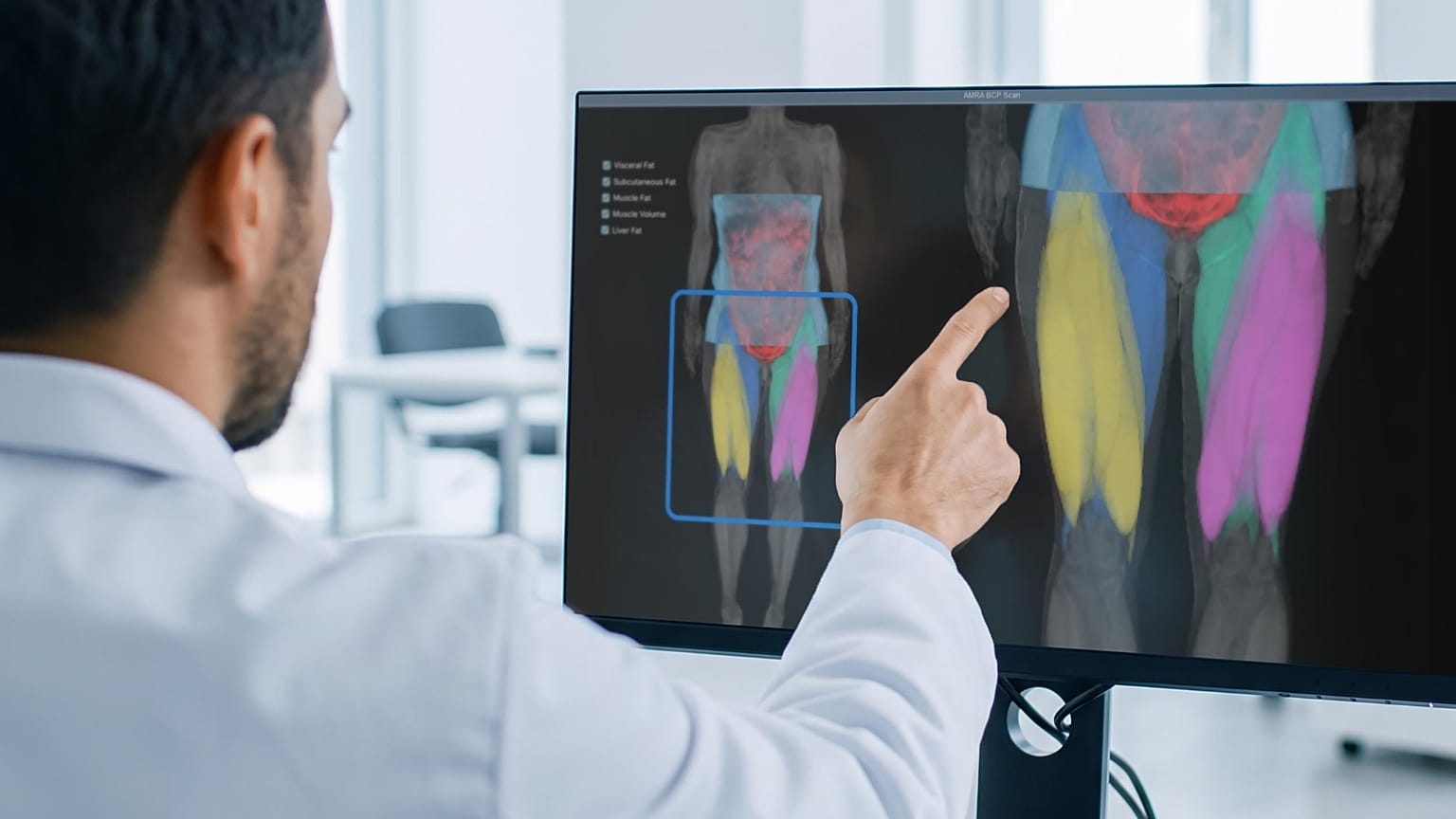













A study of more than 844,000 people across four countries found that relying on body mass index (BMI) alone can both overestimate and underestimate obesity, potentially exposing patients to inappropriate treatment.
Obesity diagnosis should move beyond a uniform BMI-based definition, researchers say, after analysing health data from 844,108 adults across China, the UK, the United States and Spain.
 ADVERTISEMENT
The findings, published in Nature on Wednesday, suggest that current methods of diagnosing obesity may fail to distinguish between people who are already experiencing health problems linked to excess body fat and those who face increased health risks but have no evidence of impaired organ function.
“People with obesity, like everyone else, deserve care matched to their needs: no less, and no more,” Professor Francesco Rubino, senior author of the study and chair of Metabolic and Bariatric Surgery at King's College London, said in a press release.
Currently, obesity is generally classified using body mass index (BMI), a measure calculated from a person's weight and height. However, BMI does not account for how much body fat a person has, where it is distributed or whether it is affecting their health.
In January 2025, a Commission published in The Lancet Diabetes & Endocrinology proposed a new framework for diagnosing obesity, moving beyond BMI alone. It recommended distinguishing between two categories: clinical obesity, where excess body fat impairs organ function or everyday activities, and preclinical obesity, where excess body fat increases health risks but normal bodily function is preserved.
Researchers from King's College London and an international team of collaborators set out to test whether the proposed framework offered a more accurate way of identifying obesity and predicting health outcomes.
Their analysis found that BMI alone both overestimated and underestimated obesity across the four populations studied. Adding waist circumference and waist-to-height ratio to BMI assessments reduced these classification errors, with BMI alone missing obesity-level body fat in up to 8.6% of participants and incorrectly classifying up to 3.1% as having obesity.
The researchers also found that clinical obesity accounted for between 23% and 31% of all obesity cases, with an overall population prevalence of 5.6% to 10.9%.
Importantly, the two categories were associated with markedly different health outcomes. Clinical obesity was linked to a substantially higher risk of death, while preclinical obesity carried a more modest increase in risk.
Most people classified as having preclinical obesity at the start of the study — between 77% and 91% across the cohorts — did not progress to clinical obesity over a 10-year period.
“Body mass index alone cannot tell us whether someone is already ill or at risk of illness, or what care they need, leaving people vulnerable to both undertreatment and overtreatment,” Rubino said.
“Preclinical obesity should therefore be neither treated automatically as active disease nor dismissed as harmless. Some people may need preventive treatment, but its intensity should match their individual risk,” he added.
The researchers argue that the distinction could help healthcare professionals better identify who needs treatment for existing disease and who may benefit from preventive interventions, rather than applying the same approach to everyone with a high BMI.
“The marked differences in prognosis between clinical and pre-clinical obesity, consistently observed across countries and ethnic groups, support global adoption of the new framework to improve obesity care and policy worldwide," Professor An Pan, first author of the study from Huazhong University of Science and Technology in Wuhan, China, said.