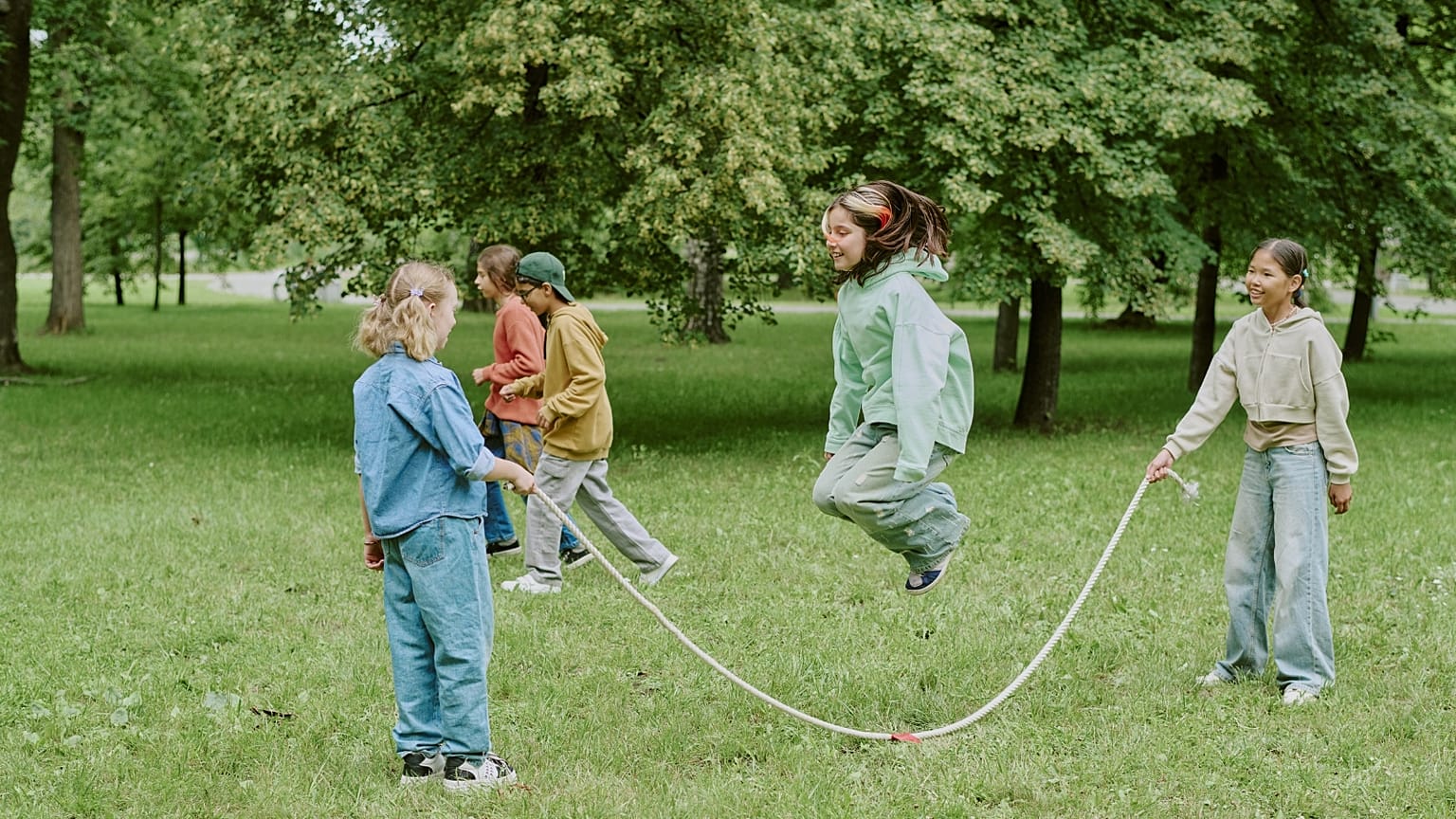













Regular trips to the park from birth to age 11 are linked to better mental health and social skills in children, a new study has found.
Going to the park can help children’s mental health and social skills as they grow up, according to a new study.
 ADVERTISEMENT
Researchers found that children who were taken to the park at least once a week from birth to the age of 11 scored, on average, 16.5% higher in their mental health assessments than those who visited less than once a week over the same period. The benefits remained even after adjusting for socioeconomic status and family problems.
“Parks give children space to be physically active, which is known to support mental and physical health, as well as helping adventurous and imaginative play to build confidence and independence,” said lead researcher Mark Ferguson of the University of Exeter in the United Kingdom.
“We believe parks could be more than places to play, but an important resource for children’s healthy development,” he added.
The study, published in the journal Epidemiology and Community Health, included 4,219 participants and focused on social-emotional development — the skills children need to manage their feelings, build relationships, behave appropriately and cope with everyday challenges.
Strong social-emotional development is an important foundation for good mental health in childhood and later life, the authors noted.
The study found that children tended to show better social-emotional development during periods when they went to parks more often. Children who visited parks more frequently overall also fared better than those who went less often.
Park visits were associated with improvements in both internalising behaviours, such as emotional symptoms and peer problems and externalising behaviours like conduct problems and hyperactivity or inattention.
Researchers also examined whether park visits and social-emotional development varied according to family background. Children from more advantaged areas appeared to visit parks more frequently at a younger age, while those from less advantaged families tended to visit more often as they grew older.
The study suggests parks and playgrounds could help reduce inequalities in children’s development, but only if they are easy for all families to use.
For parks to be beneficial, “communities need good-quality parks that are safe, accessible and welcoming to families from all backgrounds,” said Ferguson.
Because parks are free and open to everyone, they can have an “equigenic effect.” This describes how certain physical or social environments, most notably green spaces, can act as a levelling force that narrows health, psychological, or educational disparities between socioeconomic groups.