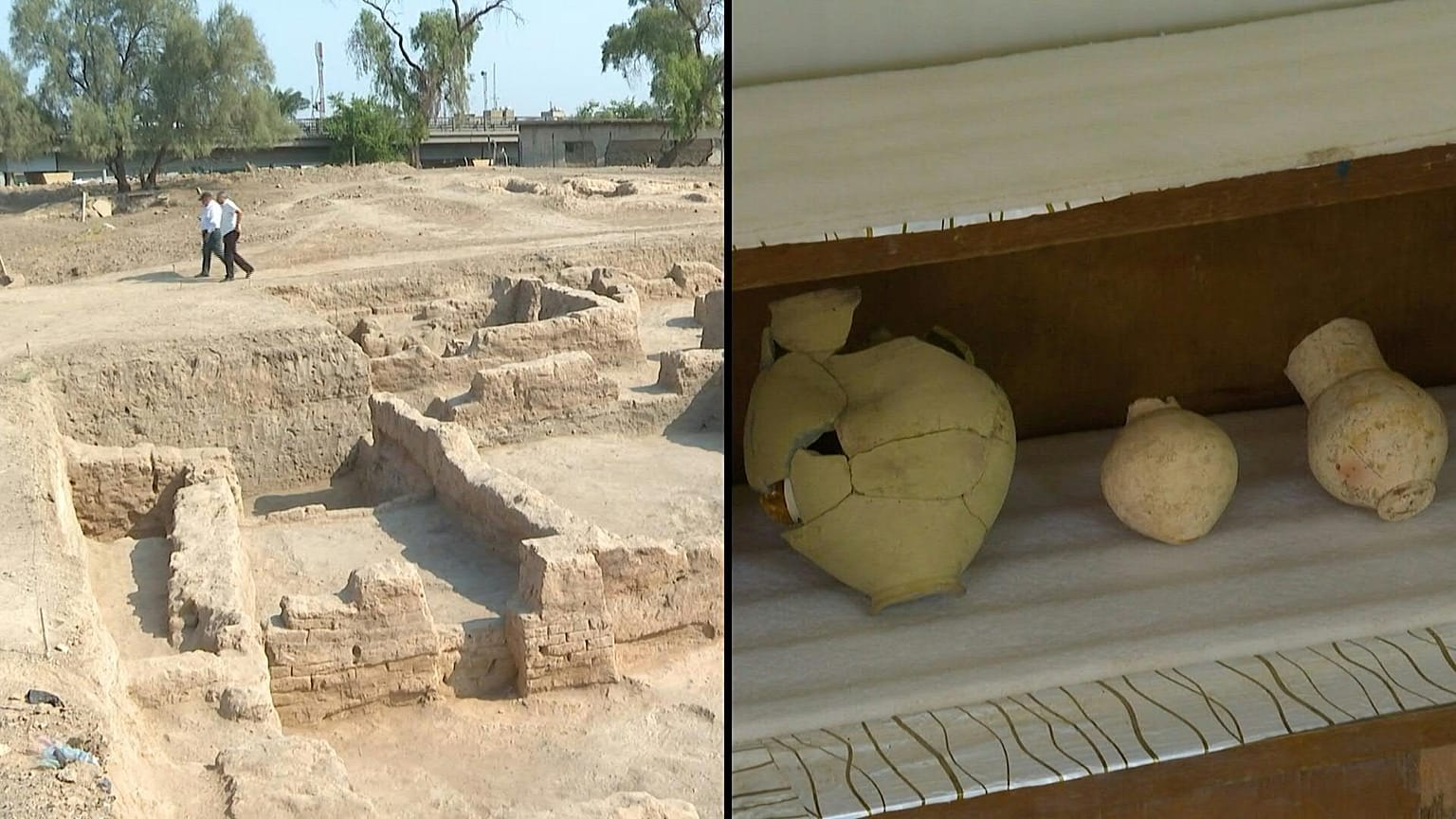














Archaeologists working at Tell Muhammad in Baghdad have uncovered new evidence of daily life in ancient Mesopotamia, including possible bread and beer production facilities. The site dates mainly to the era of Hammurabi, around 2000 to 1600 BC.
Vital signs of day to day life 4,000 years ago have been discovered in the Iraqi capital, Baghdad.
 ADVERTISEMENT
Archaeologists have uncovered new clues to daily life in ancient Mesopotamia at Tell Muhammad, a historic site dating back to the era of the Babylonian king Hammurabi.
Recent excavations have revealed ancient fortifications and two gates, alongside an area believed to have been used for bread production and possibly brewing beer.
"This season was incredible. We discovered an area for production of bread and probably beer, because one tablet was found at the site related to a person receiving barley and making beer, the kurun beer, that is a very important Mesopotamian beer," explained Nicola Aneri, archaeology professor at the University of Catania. "We are still in the process of translating this tablet."
The finds are part of ongoing excavations launched in 2022. A new archaeological park now allows visitors to explore the site, as local and international partners work to preserve Baghdad's cultural heritage and encourage tourism.